

Even if you’ve never used crypto, you’ve probably heard of Ripple ($XRP — one of the largest digital payment networks in the world. But this isn’t just another cryptocurrency; Ripple was built to change how money moves globally.
What is Ripple?
Ripple is a fast, cheap, and scalable payment network running on its own blockchain — the XRP Ledger (XRPL). Unlike Bitcoin, it’s designed for banks and financial institutions, making cross-border payments seamless.
Founded: Originally RipplePay in 2004, became Ripple Labs in 2013
Goal: Move money faster, cheaper, and more reliably than traditional finance
XRP isn’t mined like Bitcoin — the 100 billion XRP supply was pre-mined, with a portion held in escrow for network stability.
How Ripple Works
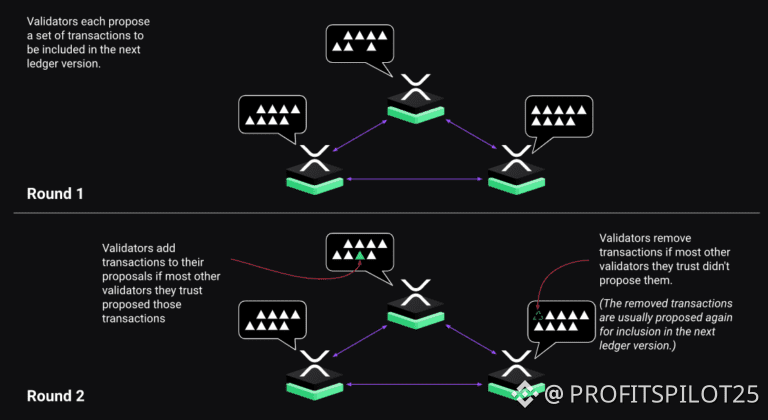
Instead of Proof-of-Work or Proof-of-Stake, Ripple uses a quorum-based consensus system (RPCA). Validators agree on transactions every 3-6 seconds, confirming payments super fast.
Unique Node List (UNL): Each node picks trusted validators → consensus achieved
Transaction speed: 3-6 seconds vs Bitcoin’s 10 minutes
Scalability: 1,500 transactions/sec → heading towards Visa-level speed
💡 Bottom line: Ripple is fast, scalable, low-cost, and built for real-world money movement, not just speculation.
Why Ripple is Different
Centralized ledger, but nodes are free to choose validators
No mining → no environmental cost
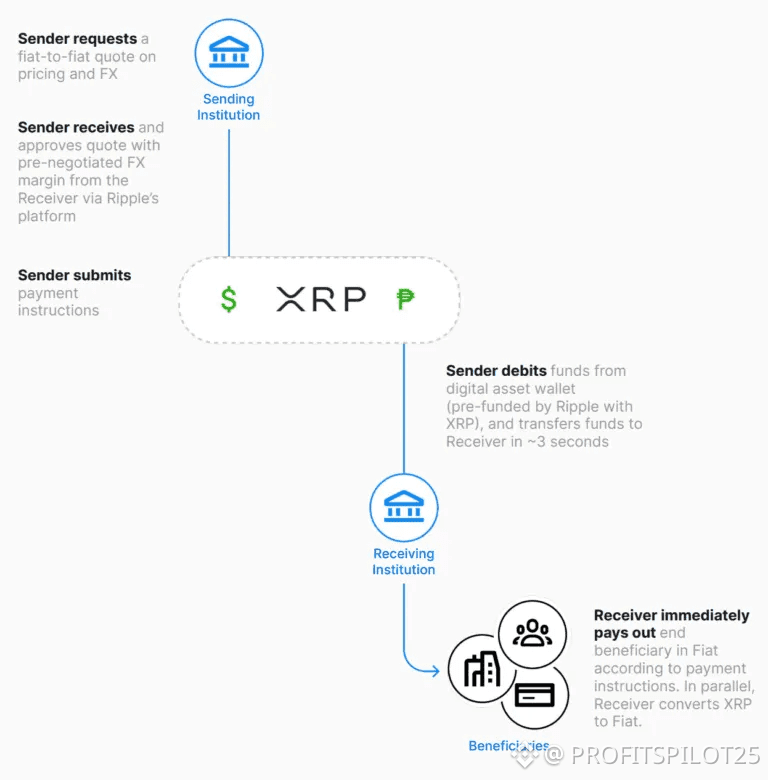
XRP used as a bridge currency → convert any currency quickly
Target audience = banks & financial institutions, not casual users
History in a Nutshell
2004: RipplePay founded
2012: Rebranded as OpenCoin → digital currency network
2013: Ripple Labs launched → XRP becomes main token
2016: Split into Ethereum Classic style → ETH and ETC? Just kidding, Ripple remained, but had early controversies
Growth: XRP became one of top 10 cryptos by market cap, hundreds of banks joined RippleNet
Other Uses & Revenue
XRP Ledger supports IOUs, stablecoins, NFTs, CBDCs
Ripple earns from XRP sales, transaction fees, loans, and acquisitions
Products like ODL (On-Demand Liquidity) use XRP as collateral for instant global liquidity
Regulatory Controversy
2015: Fined by US DOJ for banking regulations
2020: Sued by SEC for unregistered securities offering
Outcome? Still in court → market watching closely
Key Takeaways
✅ Fast, cheap, and scalable payments
✅ Designed for financial institutions, not casual traders
✅ XRP = bridge currency, unlocking global liquidity
✅ Unique consensus system = near-instant confirmations
✅ Regulatory risks exist → potential volatility
🌟 Mind-Blowing Fact: Unlike Bitcoin, XRP can move money across countries in seconds, at a fraction of the cost, without mining or heavy energy use. That’s why banks love it, and why Ripple could reshape global finance.
🔥 Your move: Are you ready to explore XRP before the next big wave hits? Comment & share your thoughts below! 👇
Buy Now 👇 $XRP



#MarketRebound #BTC100kNext? #StrategyBTCPurchase #USDemocraticPartyBlueVault #WriteToEarnUpgrade