
@Plasma is built with a clear and disciplined purpose: to treat stablecoins as core financial infrastructure rather than secondary assets layered onto speculative networks. As stablecoins increasingly power payments, settlements, treasury management, and cross-border flows, the limitations of many existing Layer 1 blockchains have become more visible. Most were designed for experimentation and broad programmability, not for the consistent, predictable movement of money. Plasma addresses this structural gap by aligning its entire architecture around how stablecoins are actually used in practice.
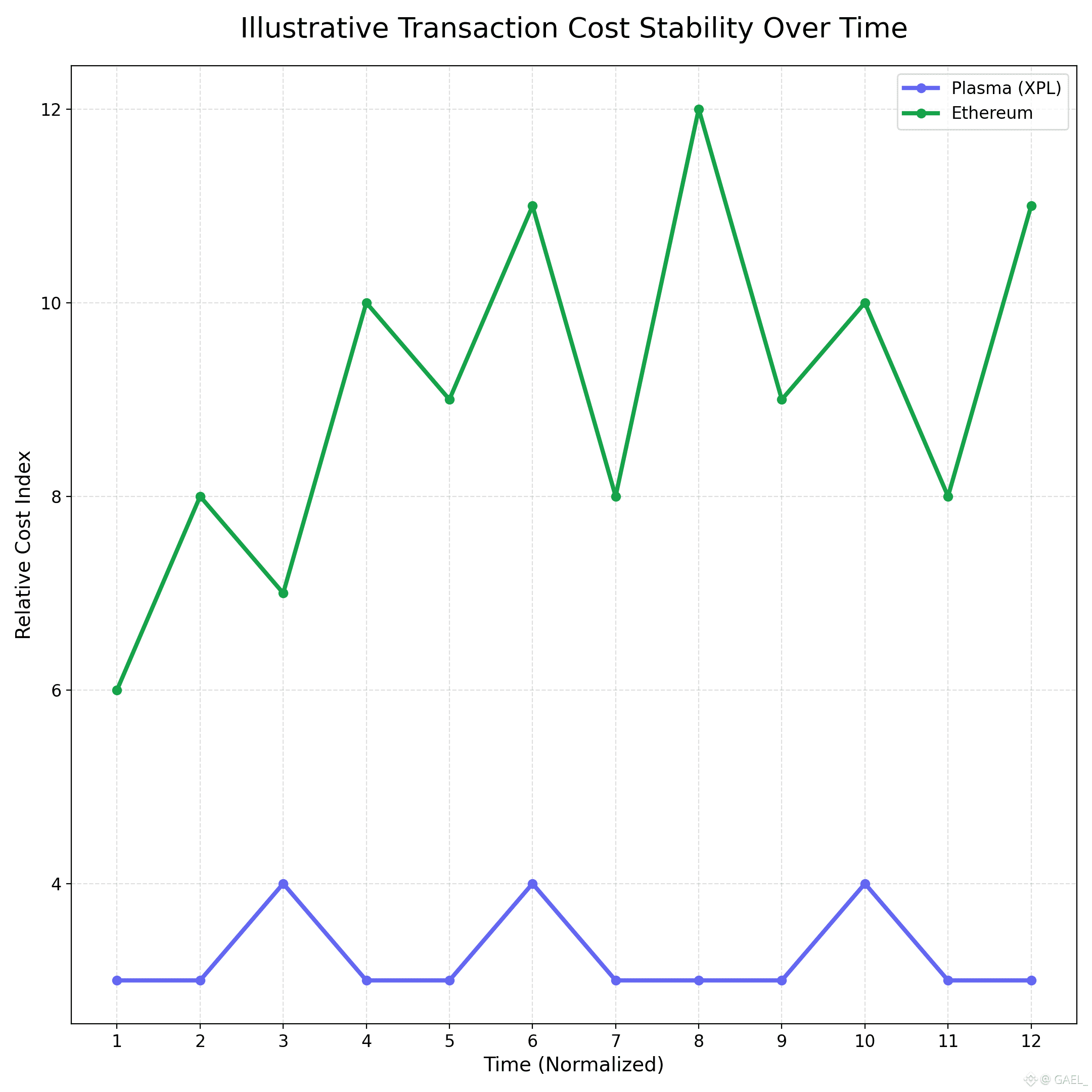
At the protocol level, @Plasma makes stablecoins first-class participants in the network. Instead of forcing users to acquire and manage volatile native tokens just to move value, Plasma introduces stablecoin-native fee mechanisms and gas sponsorship directly into the chain. This design choice removes friction from everyday transfers and reduces cognitive overhead for users and applications. Transactions become more predictable, more accessible, and better suited for real financial activity. By reducing unnecessary complexity, Plasma shifts blockchain usage closer to financial infrastructure and further away from speculative mechanics.
@Plasma consensus design reinforces this financial focus. The network uses a high-performance Byzantine Fault Tolerant mechanism based on Fast HotStuff, enabling deterministic finality within seconds. For payment and settlement systems, certainty matters more than probabilistic confirmation. Plasma prioritizes consistency, reliability, and sustained performance under load, rather than optimizing for short-lived spikes in activity. This makes the network well suited for high-volume stablecoin flows, where delays or uncertainty can introduce real operational risk.
At the execution layer, Plasma maintains full compatibility with the Ethereum Virtual Machine. Developers can deploy existing smart contracts without modification and continue using familiar wallets, libraries, and development frameworks. This approach lowers the barrier to adoption while allowing Plasma to diverge where it matters most: execution assumptions and economic design. Developers retain the benefits of Ethereum’s mature tooling, while users benefit from an execution environment optimized for stablecoin-heavy workloads rather than congested, fee-sensitive usage patterns.
Beyond core execution, @Plasma extends its utility through additional protocol features that support its settlement-first identity. Custom gas token support allows users to pay fees in assets they already hold, reducing dependency on a single volatile token. A trust-minimized Bitcoin bridge brings external liquidity into a programmable environment without relying on custodial intermediaries. These features expand interoperability while remaining aligned with Plasma’s central mission of supporting reliable financial flows.
The $XPL token plays a structural role within this ecosystem. It secures the network through staking, incentivizes validators, and supports long-term protocol sustainability. While stablecoins dominate transactional activity, XPL underpins consensus and governance, allowing Plasma to separate financial utility from network security. This separation helps reduce friction for users while preserving the economic incentives necessary to maintain a robust and resilient network.
@Plasma ’s real strength lies in alignment. Its consensus model, execution environment, fee structure, and economic design all point toward the same outcome: enabling stablecoin-based finance to operate smoothly at scale. Rather than expanding in every direction, Plasma focuses on doing one thing exceptionally well. In a maturing blockchain ecosystem where clarity of purpose is becoming increasingly valuable, Plasma’s disciplined design positions it as durable infrastructure for the next phase of on-chain financial adoption.
