
Most blockchains do not disappear because their technology is broken. They disappear because people try them once, feel confused, see no clear benefit, and quietly walk away. I’ve noticed that real adoption has very little to do with first impressions. It’s about whether users return without feeling like they need to relearn everything again. Retention is the invisible battle most crypto projects lose, and it’s also where Vanar is trying to compete differently.
From my point of view, Vanar is not presenting itself as just another fast or cheap Layer one. It is positioning itself around two barriers that consistently block real-world usage. One is complexity, which it tries to reduce through built-in intelligence. The other is trust, especially from institutions and consumer brands, which it addresses through an eco-focused infrastructure. Together, these two ideas aim to make blockchain feel less experimental and more like modern software people are already comfortable using.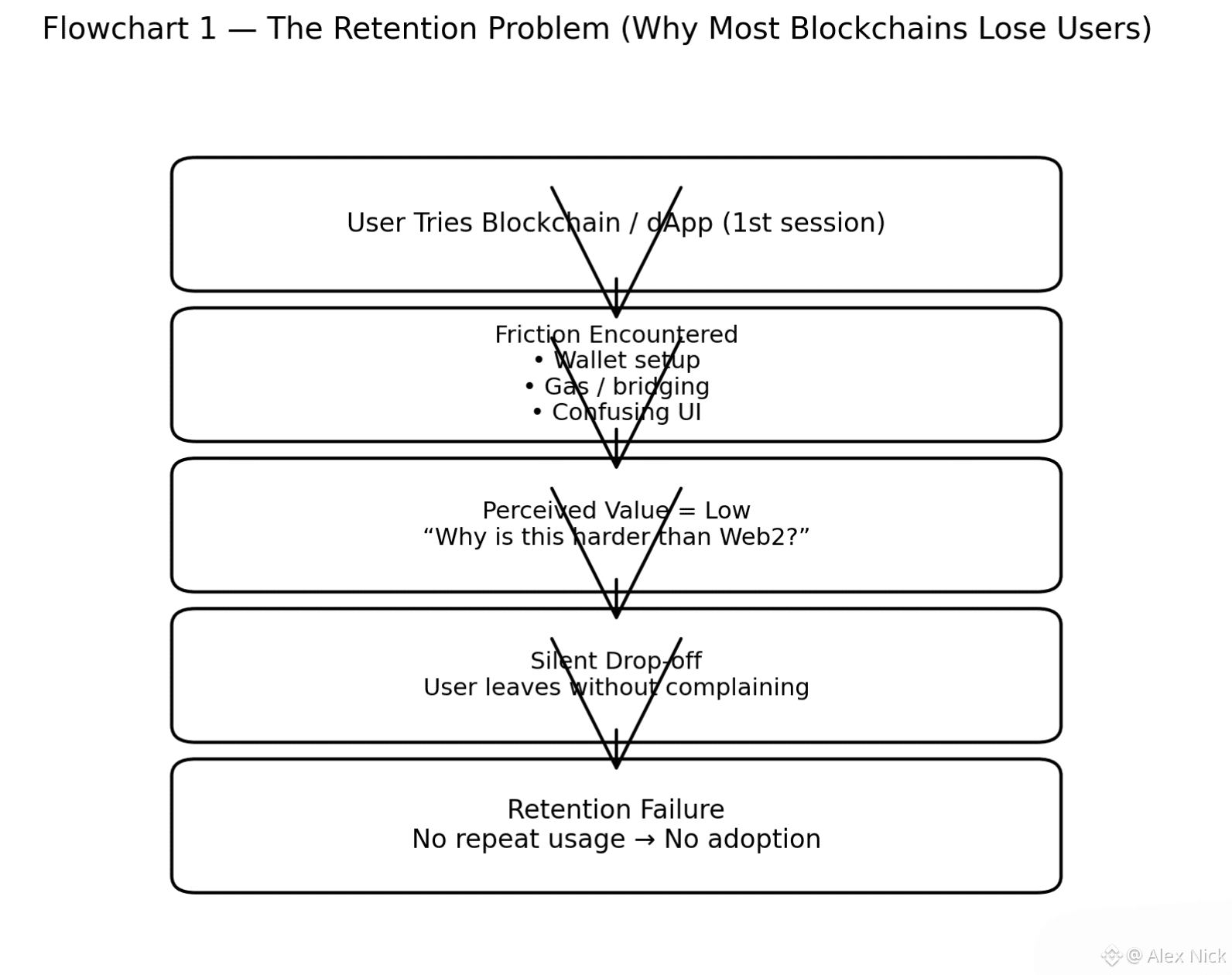
Vanar describes itself as an AI-native blockchain, and that distinction matters more than it sounds. Many projects talk about AI, but in practice the intelligence sits on the surface. A chatbot here, an agent there, while the underlying chain still behaves in the same rigid and technical way. Users still deal with confusing wallets, unclear flows, and slow interactions. Vanar’s approach is built around embedding intelligence deeper into the system so applications can behave more intuitively.
When intelligence lives at the infrastructure level, applications can become adaptive rather than static. Vanar highlights components like its Kayon AI engine, which is designed to help applications query and interpret on-chain data more efficiently. Even if users never hear the name, they feel the result when interfaces respond faster, information is easier to find, and interactions feel guided instead of mechanical. From my experience, users rarely care how something works. They care that it works smoothly.
I keep thinking about gaming and entertainment platforms as a good example. A studio can attract players on day one with branding alone. But retention depends on experience. If assets load slowly, marketplaces feel clunky, or users must manually manage fees and tokens, people leave without complaint. They do not post angry threads. They simply stop showing up. Vanar’s AI-first design is clearly targeting that problem by helping applications reduce friction before users even notice it.
The second part of Vanar’s strategy is sustainability, and this is where the conversation often gets misunderstood. In trading culture, eco design is sometimes treated as marketing fluff. But from a real-world adoption perspective, sustainability is often a prerequisite. Brands, enterprises, and institutions cannot ignore environmental optics, even if individual traders do. If infrastructure carries reputational risk, partnerships slow down or never happen.
Vanar positions itself as a green blockchain, emphasizing efficiency and alignment with environmentally responsible infrastructure. Coverage around the project references collaboration with Google-supported green technologies and a focus on energy-efficient operations. Whether someone personally values sustainability is not really the point. What matters is that partners do. Removing that objection early makes adoption conversations easier and faster.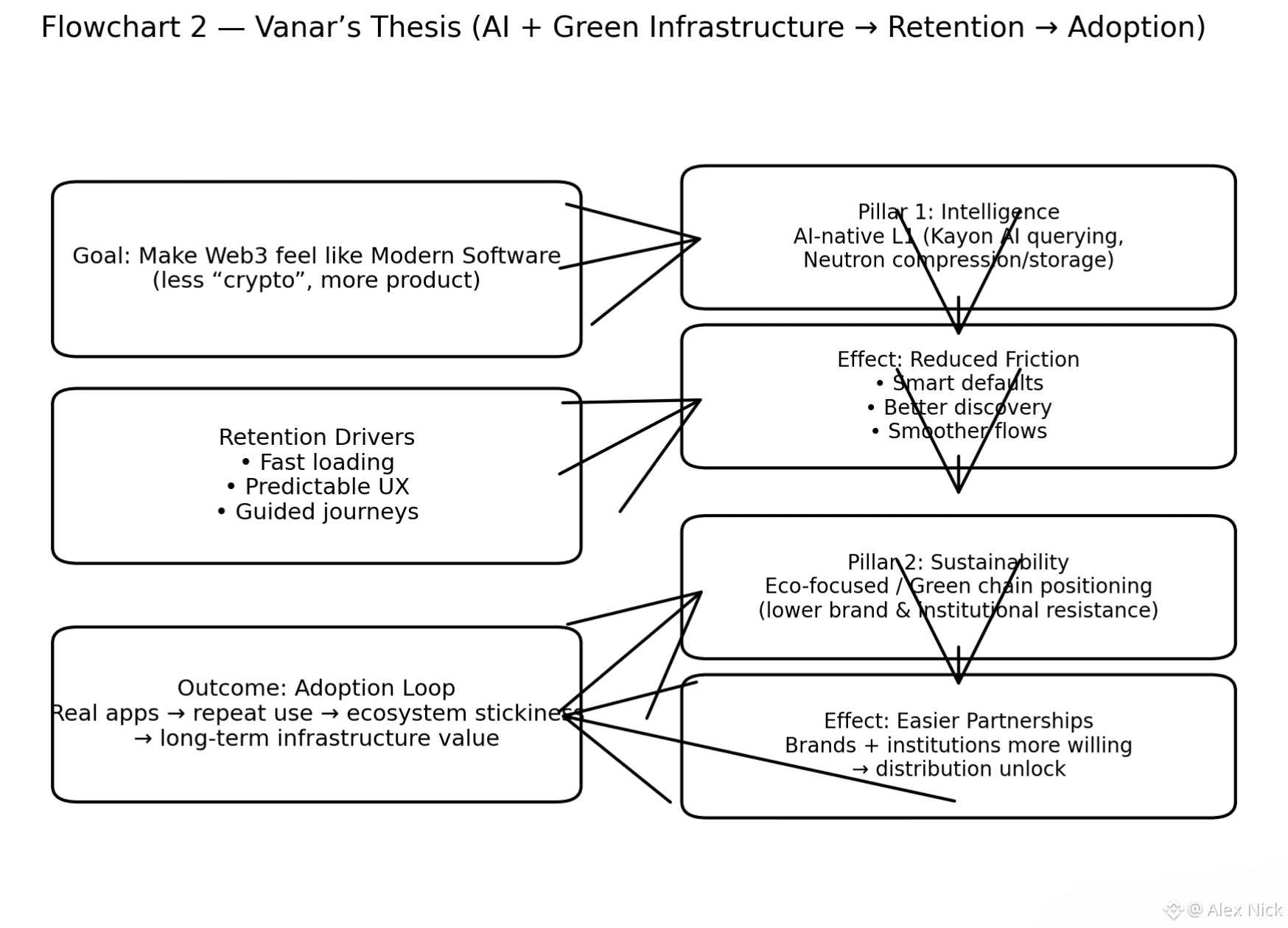
I see this less as a moral argument and more as a practical one. Adoption at scale usually comes through distribution. That means platforms, consumer-facing brands, and enterprise systems. Those groups care deeply about optics, compliance, and long-term responsibility. If a blockchain creates friction in those discussions, it rarely gets chosen. Vanar’s eco-focused messaging seems designed to remove that barrier before it becomes a problem.
This direction becomes clearer when looking at the types of partnerships Vanar highlights. Its collaboration with Nexera focuses on simplifying real-world asset integration, blending scalable infrastructure with compliance-oriented middleware. That matters because assets tied to the real world come with rules, reporting requirements, and identity constraints. Chains that cannot support these realities remain isolated within crypto-native cycles, which tend to rise and fall quickly.
Vanar has also been positioning itself toward areas like PayFi and tokenized assets, emphasizing intelligence as a utility layer rather than a narrative. To me, this suggests a focus on everyday use rather than speculation. The goal seems less about attracting short bursts of liquidity and more about building systems businesses can rely on without constant maintenance or explanation.
There is also a broader trend supporting this direction. The intersection of blockchain and artificial intelligence is no longer just hype. Market research increasingly shows steady growth in this segment, driven by applications that need automation, data interpretation, and intelligent interaction. A growing market does not guarantee success, but it does increase the number of teams looking for infrastructure that already supports these capabilities.
At the same time, it’s important to stay balanced. AI-native chains face a real credibility challenge. Intelligence must be functional, not decorative. If AI exists only in branding or surface tools, users will quickly see through it. The same applies to sustainability. Efficiency must be measurable, not symbolic. Real adoption only happens when these ideas translate into better performance, smoother experiences, and stronger trust.
That’s why I think the most important signals around Vanar will not come from announcements alone. They will come from usage patterns. Are applications seeing repeat users. Are developers staying engaged. Are partners continuing beyond pilot stages. These are the indicators that matter far more than short-term excitement.
When I look at Vanar through that lens, the thesis becomes clearer. If intelligence reduces friction and eco-focused infrastructure reduces hesitation from partners, the network has a realistic path toward mainstream relevance. If either pillar fails to deliver in practice, the story weakens quickly.
For anyone watching VANRY seriously, I don’t think the smartest approach is chasing momentum alone. The real signal lies in retention. Watch how often users return. Watch whether applications feel easier over time instead of more complex. Watch whether partnerships deepen rather than rotate.
