
In the race to bring blockchain into gaming, most platforms focus on speculation first and gameplay later. Serious developers, however, care about something different: performance, stability, and player experience. That is exactly why Vanar Chain is quietly becoming the preferred blockchain for next-generation game builders.
Vanar Chain is not designed as a generic smart-contract network. It is built with gaming workloads in mind. High-frequency actions, asset transfers, player progression, and in-game economies all demand low latency and predictable performance. Vanar’s architecture prioritizes fast finality and consistent throughput, allowing games to run smoothly without the lag that usually breaks immersion.
For developers, this changes everything. Instead of designing around blockchain limitations, they can design around gameplay first. Real-time battles, open-world economies, and multiplayer interactions become technically feasible without sacrificing decentralization.

Another major reason developers are shifting to Vanar Chain is asset control. In traditional games, players never truly own their items. Vanar enables secure, native NFT minting directly within game logic. Weapons, skins, characters, and land can all exist as verifiable on-chain assets, transferable across marketplaces while remaining integrated with gameplay systems.
This opens a new design space. Developers can build long-lasting economies instead of short-lived item shops. Player ownership creates loyalty, trading activity, and organic growth that centralized servers can never replicate.
Vanar also solves one of blockchain gaming’s biggest problems: cost unpredictability. Many chains suffer from volatile gas fees that make micro-transactions impossible. Vanar’s fee structure is optimized for gaming flows, allowing frequent in-game actions without breaking the player experience. This makes free-to-play and competitive models sustainable on-chain.

Equally important is developer tooling. Vanar provides SDKs, APIs, and engine-friendly integrations that fit naturally into existing game pipelines. Studios do not need to rebuild their entire tech stack. Unity and Unreal workflows remain familiar, while blockchain features integrate in the background.
Security is another deciding factor. Game economies attract bots, exploits, and manipulation. Vanar’s validator structure and data integrity layers protect in-game assets and player balances at the protocol level. For studios running competitive or high-value ecosystems, this reliability is critical.
What truly differentiates Vanar Chain is its focus on long-term gaming infrastructure rather than short-term hype. Instead of chasing speculative trends, it invests in performance optimization, scalable storage, and developer support. This is why professional studios — not just indie experiments — are beginning to migrate their flagship titles to Vanar.
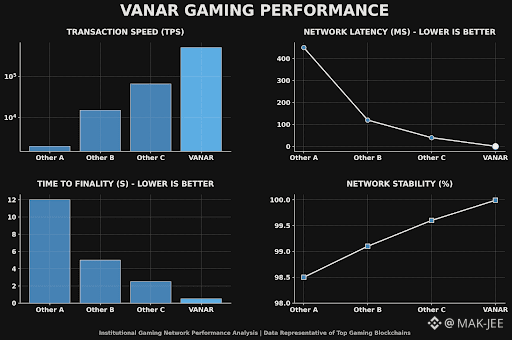
As blockchain gaming matures, the winners will not be the loudest networks, but the ones that quietly enable better games. Vanar Chain is positioning itself as that foundation.
For serious game developers, the choice is becoming clear: build on hype, or build on infrastructure.
