
When I first started digging into the Dusk Foundation, what stood out to me wasn’t marketing noise or bold promises. It was how calm the entire project felt. In a space where most blockchains shout about speed or hype cycles, Dusk has been quietly focused on one question that traditional finance still struggles with every day: how do you move money and assets digitally without exposing everything to the public?
From the beginning, Dusk wasn’t built to fight regulation or escape oversight. It was built for a much harder task — making privacy work with regulation instead of against it. That alone changes the entire conversation around blockchain finance.
Where the Idea Really Started
Back in 2018, when Dusk was founded, blockchains were almost completely transparent by default. Anyone could view balances, transaction history, and wallet activity with a few clicks. While that openness worked for experimentation, it clearly wasn’t suitable for institutions, funds, or real financial products.
The founders recognized something important early on. Financial privacy doesn’t mean secrecy. It means control. Banks, brokers, and asset managers don’t hide transactions because they want to cheat the system. They hide them because markets collapse when sensitive information becomes public.
So instead of asking how to hide everything, the Dusk team asked how to reveal only what is necessary.
That shift shaped the entire protocol.
People like Mels Dees helped anchor the long-term vision, while contributors such as Emanuele Francioni, Toghrul Maharramov, and Dmitry Khovratovich brought deep cryptographic knowledge into the design. Their goal wasn’t to build another privacy coin. They wanted to build a financial blockchain that institutions could actually use.
Building Slowly on Purpose
What I respect most about Dusk is how little they rushed. There was no sudden mainnet launch followed by damage control. Instead, the network developed through multiple phases, each one focusing on stability and security before adding complexity.
Those early stages allowed the team to test cryptography under real conditions, not just theoretical ones. Testnets came first. Audits followed. Incentives were introduced carefully. Only after years of iteration did the main network fully launch in 2024.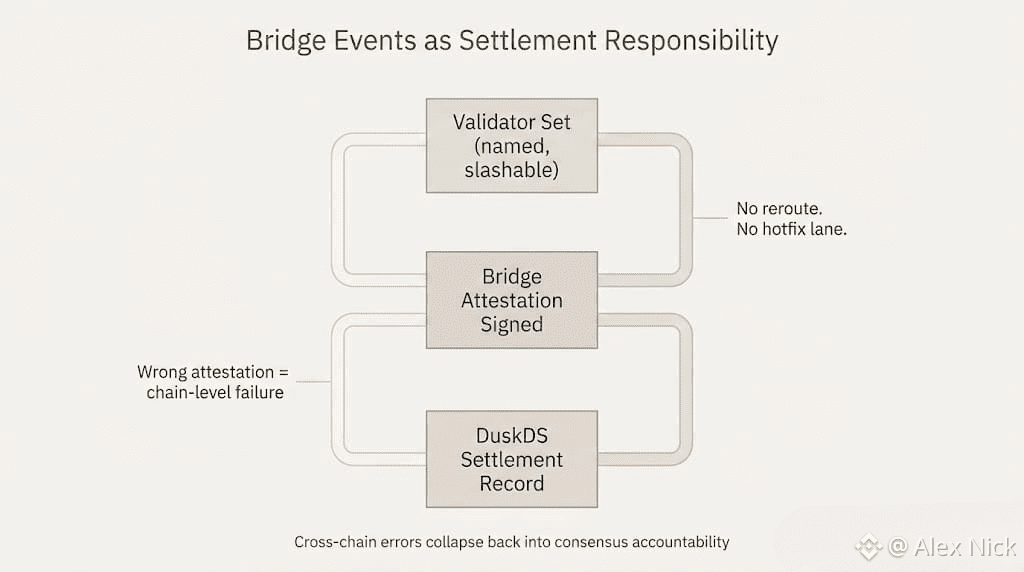
While many projects tried to capture attention quickly, Dusk seemed more concerned with being correct than being early. That patience is rare in crypto, and honestly, it shows.
Privacy Built Into the Chain Itself
What makes Dusk different is not that it uses zero-knowledge proofs many chains do now. It’s that privacy exists at the protocol level, not as an optional feature.
Transactions can be validated without revealing balances or counterparties. That means the network knows everything is correct, but no unnecessary data leaks into public view. For me, this is where Dusk stops being experimental and starts looking like real financial infrastructure.
Even more important is selective disclosure. If a regulator, auditor, or authority needs proof, it can be provided cryptographically without exposing unrelated information. You prove compliance without handing over everything.
That’s how finance actually works in the real world, and Dusk mirrors that logic on-chain.
How Smart Contracts Stay Confidential
Dusk runs its own execution environment that allows smart contracts to operate privately. Contract logic, balances, and outcomes don’t become public data just because they touch the blockchain.
This allows things like tokenized securities, private markets, and restricted transfers to function without revealing sensitive positions. If I think about how funds or institutions operate today, this feature feels essential rather than optional.
Public blockchains made experimentation possible. Dusk makes professionalism possible.
Consensus Designed for Real Finance
Under the hood, Dusk uses a Proof of Stake model with a structure designed to prevent manipulation and targeting. Validators are selected anonymously, committees rotate, and transactions reach finality quickly.
The network also separates how different assets behave. The native DUSK token uses one privacy model, while real-world assets operate under another structure built specifically for regulated instruments.
That separation might not sound exciting, but it’s exactly what institutions need. One size rarely fits all in finance.
Opening the Door for Developers
Privacy-focused blockchains often struggle with developer adoption because tooling feels unfamiliar. Dusk recognized this problem and worked toward EVM compatibility through DuskEVM.
This allows developers to bring existing applications over while adding privacy features instead of rewriting everything. From my perspective, this move could matter more than any technical upgrade. Builders go where friction is lowest.
If developers can deploy familiar contracts and simply choose which data stays private, adoption becomes realistic rather than theoretical.
Partnerships That Actually Make Sense
Dusk’s partnerships tell a clear story. Instead of chasing meme coins or short-term liquidity, they focused on regulated platforms.
Tokenized securities through licensed exchanges. Stablecoins compliant with European frameworks. Infrastructure partners that understand regulation instead of avoiding it.
These aren’t flashy announcements, but they are meaningful ones. Each partnership strengthens Dusk’s position as a settlement layer for real assets rather than speculative trades.
I notice how consistent the direction is. Nothing feels random.
Token Economics That Support Longevity
The DUSK token exists to secure the network, reward validators, and pay for execution. Supply is capped. Emissions decline over time. Eventually, transaction fees become the primary economic driver.
This setup encourages long-term participation rather than short-lived speculation. It also mirrors how infrastructure typically works. Roads, payment rails, and settlement systems don’t thrive on hype. They thrive on usage.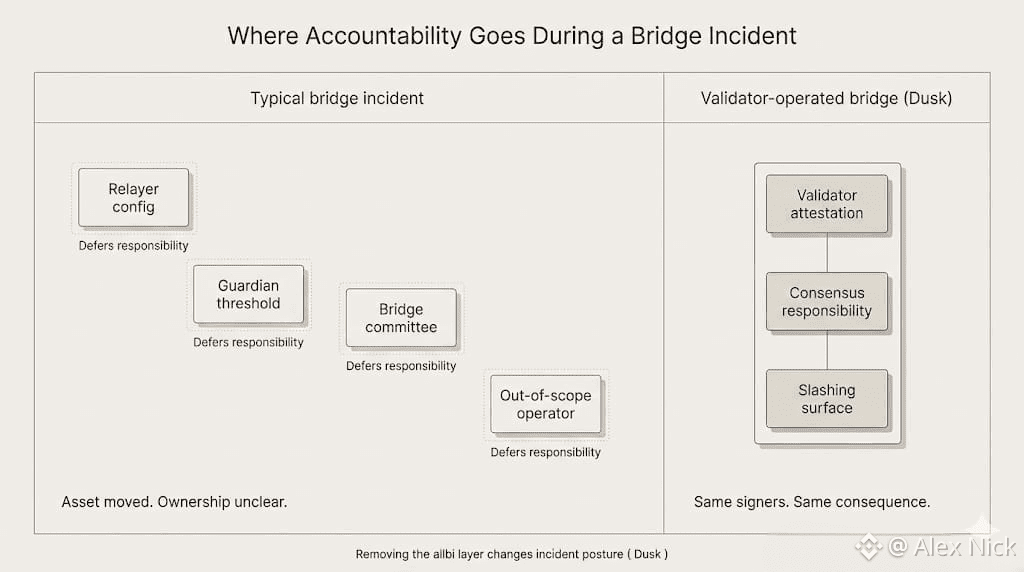
Price movement will always fluctuate, but what matters is whether the token supports real activity. Dusk seems designed with that in mind.
Why Dusk Matters in the Bigger Picture
As real-world assets move on-chain, privacy becomes unavoidable. No major institution will tokenize trillions of dollars on a network where every position is public.
At the same time, closed private databases defeat the purpose of blockchain entirely.
Dusk sits between those extremes.
It allows assets to live on-chain, remain verifiable, and still respect confidentiality. That balance may end up being the difference between tokenization staying niche or becoming mainstream.
For me, Dusk feels less like a crypto experiment and more like infrastructure waiting for the world to catch up.
A Future Built Quietly
Dusk has never been loud. It doesn’t dominate headlines. It doesn’t chase trends. Instead, it keeps building.
And sometimes, that’s exactly how the most important systems emerge.
If the future of finance demands privacy, compliance, and accessibility at the same time, then networks like Dusk may become the silent backbone beneath it all.
