
Plasma was born from a single, practical question: if stablecoins are increasingly the on-chain equivalent of money, why must they live as second-class citizens on general-purpose chains that force users to hold volatile native tokens just to move dollars? The team behind Plasma set out to answer that by building a Layer-1 where stablecoins are the primary asset, not an afterthought a payments-first chain that rearranges the normal tradeoffs of blockchains (gas, finality, throughput, and security) around the needs of remittances, merchant rails, and institutionally reliable settlement. The result is a stack that pairs full EVM compatibility with payment-friendly primitives so developers can reuse Ethereum tooling while delivering a user experience closer to traditional rails: instant, predictable settlement and the ability to send USDT without forcing senders to buy a separate gas token.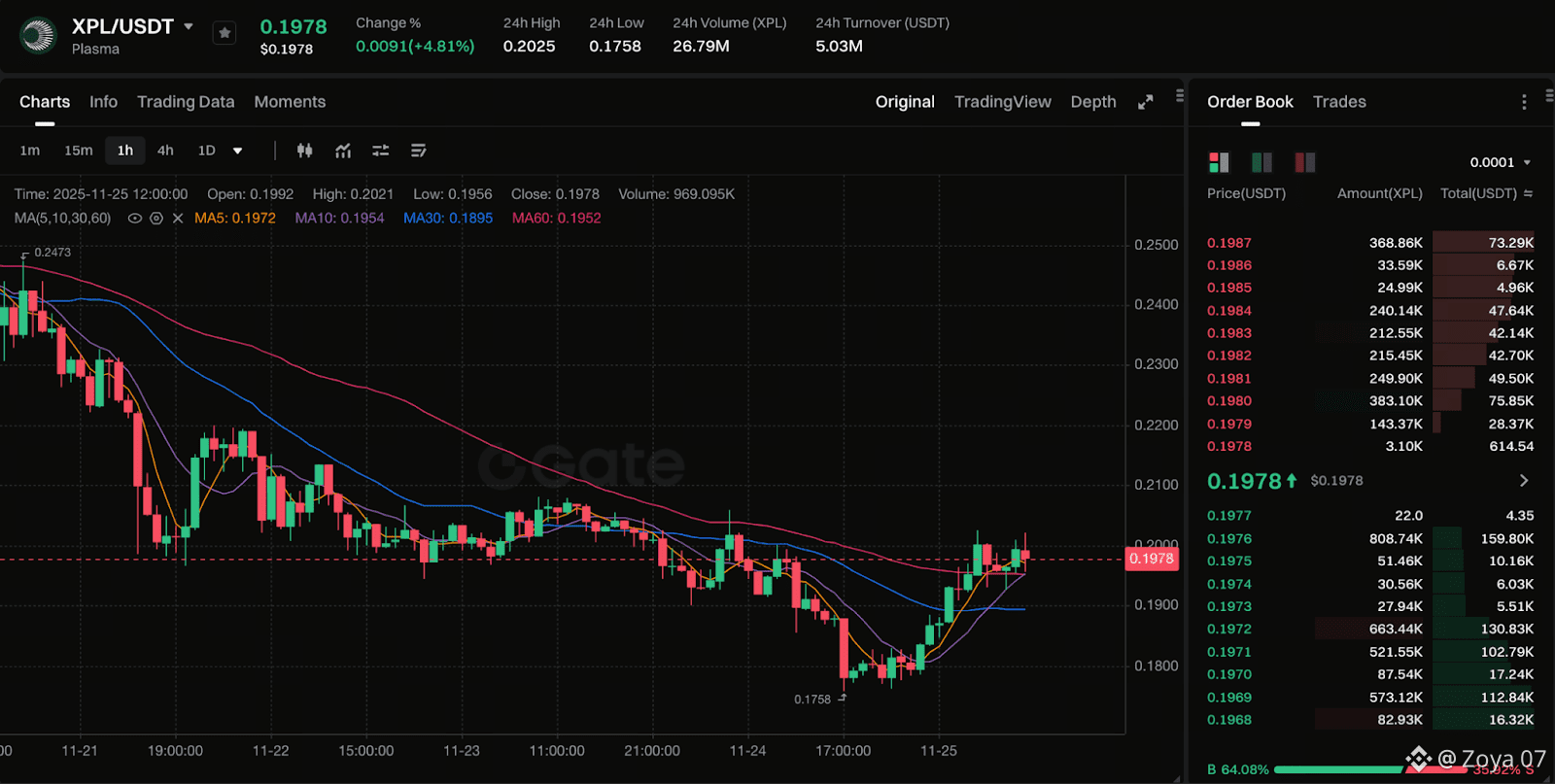
At the protocol level Plasma introduces PlasmaBFT, a BFT-style consensus derived from Fast HotStuff that is optimized for low latency and deterministic finality. The goal of PlasmaBFT is to make finality feel immediate so users and the businesses that depend on them stop guessing whether a payment is settled. In lab and testnet reporting the project highlights very high throughput and rapid confirmation times, positioning the network to handle the small, high-frequency transfers that payment systems demand. That same design emphasis shows up in operational choices: block production and commit procedures are tuned to minimize reorg risk and produce a clear, auditable settlement point for each transfer, which is critical when the ledger is being used to settle real money flows.
User experience is a core differentiator. Plasma implements native support for gas payments in stablecoins and has mechanisms for “gasless” or zero-fee USDT transfers that remove the classic onboarding friction the need for users to buy native tokens before they can send money. This stablecoin-first gas model reduces cost and cognitive load for end users and merchants while enabling stablecoin issuers and custodians to integrate on-chain settlement into existing workflows without the overhead of token management. In practice this means wallets and merchants can offer straightforward dollar transfers that behave like familiar payment apps rather than crypto-native abstractions.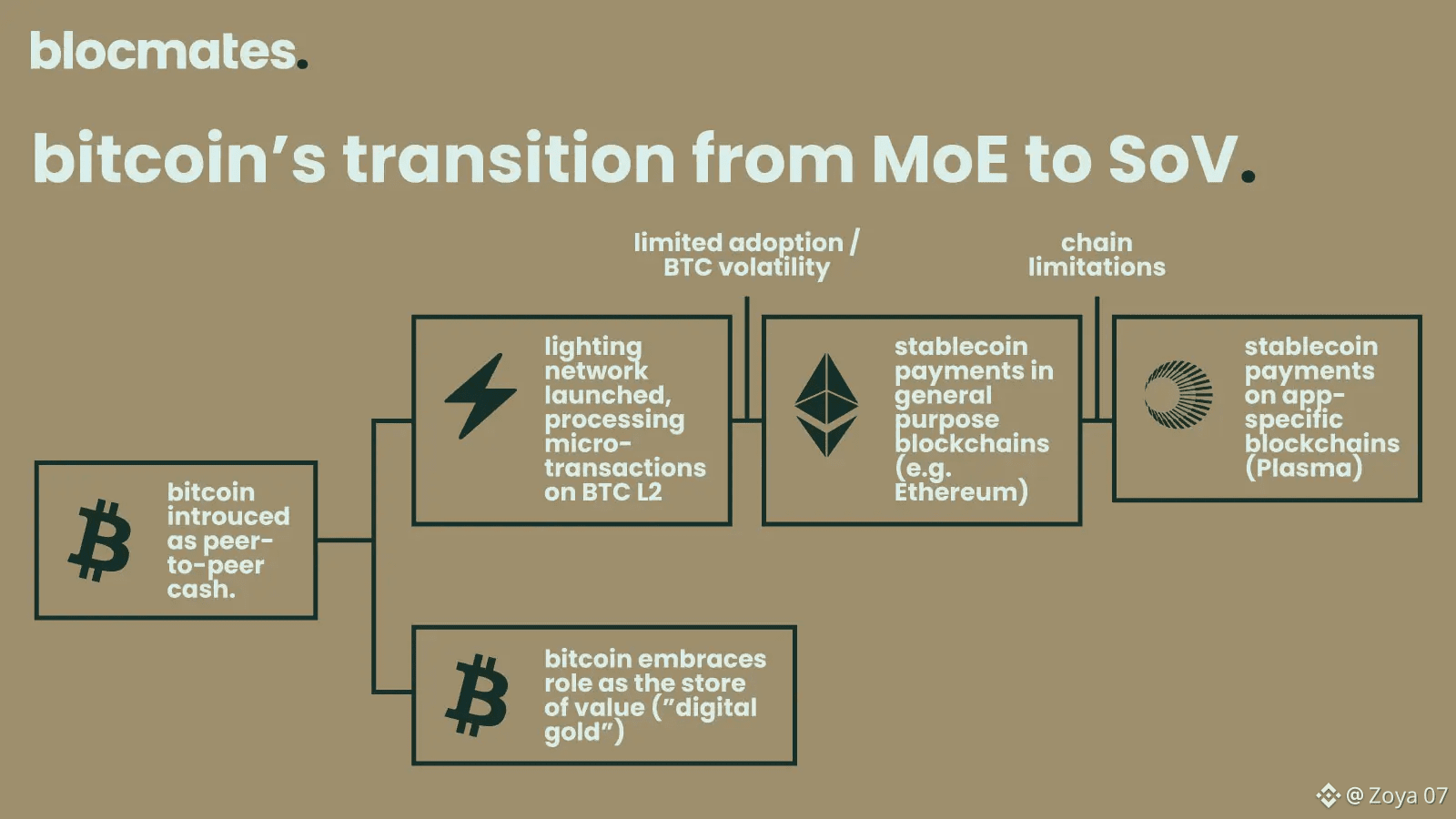
Security and neutrality matter when money moves at scale, so Plasma layers a Bitcoin-anchored settlement model on top of its PoS/BFT consensus. The chain uses a trust-minimized bridge and Bitcoin anchoring to inherit some of Bitcoin’s security properties and to offer an additional public audit trail that can increase confidence among institutions worried about censorship or single-party control. That architectural choice is as much about market positioning as it is about cryptography: by tying settlement assurances to Bitcoin the project markets itself as a neutral settlement layer that can interoperate with existing custody arrangements and with counterparties who want the extra reassurance of Bitcoin-anchored finality.
Economically, Plasma issues XPL as its native token which plays roles in governance and staking while the chain’s fee model is designed so that XPL is not a hard requirement for basic payments. The project’s documentation and ecosystem descriptions emphasize that stablecoin transfers can be subsidized, paid in stablecoins, or handled by relayers so that end users don’t need to hold XPL to participate in the economy. Market listings and trackers show XPL trading on major aggregators after the mainnet rollout, and the token has been used to bootstrap validator economics and governance participation even as the payments UX remains stablecoin-centric. Those market and launch details underscore the dual reality: infrastructure can be tuned for fiat-like usability while still maintaining native token economics for network security and decentralization.
Plasma’s product map goes beyond raw transfers. The team and partners have explored an integrated set of offerings from a stablecoin-focused neobank to on-chain rails for merchants and institutional settlement primitives that lean on the chain’s low latency and predictable costs. Developers can deploy standard EVM contracts (via Reth compatibility), allowing DeFi innovators and payment providers to port or extend existing smart contracts into an environment designed for money movement rather than speculative activity. That combination of developer familiarity and payments-oriented primitives is precisely what drives interest from remittance corridors, merchant acquirers, and fintech builders who want predictable settlement without giving up composability.
No platform is without tradeoffs. Optimizing for payments means design decisions that favor throughput and finality over some aspects of maximally decentralized censorship resistance, and Bitcoin anchoring introduces cross-chain complexity that must be managed carefully. There are also operational questions around who covers gas when transfers are subsidized, how custodians and relayers are trusted or incentivized, and how privacy and compliance needs will be balanced in different jurisdictions. Finally, as with any new Layer-1, adoption depends on an ecosystem of wallets, custodians, exchanges, and merchants integrating the chain; network effects determine whether a payments-first design becomes a new rail or remains a niche experiment.
Viewed from a distance, Plasma represents a deliberate rethinking of blockchain priorities for the era when stablecoins function as programmable money. By making stablecoins first-class citizens, offering predictable, near-instant finality, and anchoring security to Bitcoin while preserving EVM tooling, Plasma aims to bridge the gap between crypto rails and conventional payment infrastructure. Whether it becomes the settlement backbone for global stablecoin flows will hinge on two linked outcomes: can it deliver production-grade reliability and cost advantages at scale, and can an ecosystem of custodians, wallets and merchants choose a stablecoin-centric Layer-1 over the many existing options for settlement and custody? The early technical claims, mainnet activity, and market attention show a project with momentum the next chapters will be written in real deployments, merchant integrations, and how regulators and institutions decide to engage with a chain built explicitly to move dollar-like assets.If you want, I can turn this into a short explainer thread for X, extract the technical differences between PlasmaBFT and other BFT protocols into a one-page cheat sheet, or draft a simple integration plan for a payments company that wants to accept gasless USDT transfers tell me which format you prefer and I’ll produce it next.

