
#ETHWhaleMovements #sol #TrendingTopic
As the cryptocurrency market matures, short-lived hype cycles are slowly giving way to infrastructure-driven growth. In early 2026, two names continue to dominate serious discussions among developers, investors, and institutions alike: Ethereum (ETH) and Solana ($SOL ). Their rivalry is not about price alone, but about shaping the future architecture of blockchain technology.
Ethereum ( $SOL ):Stability Meets Long-Term Vision
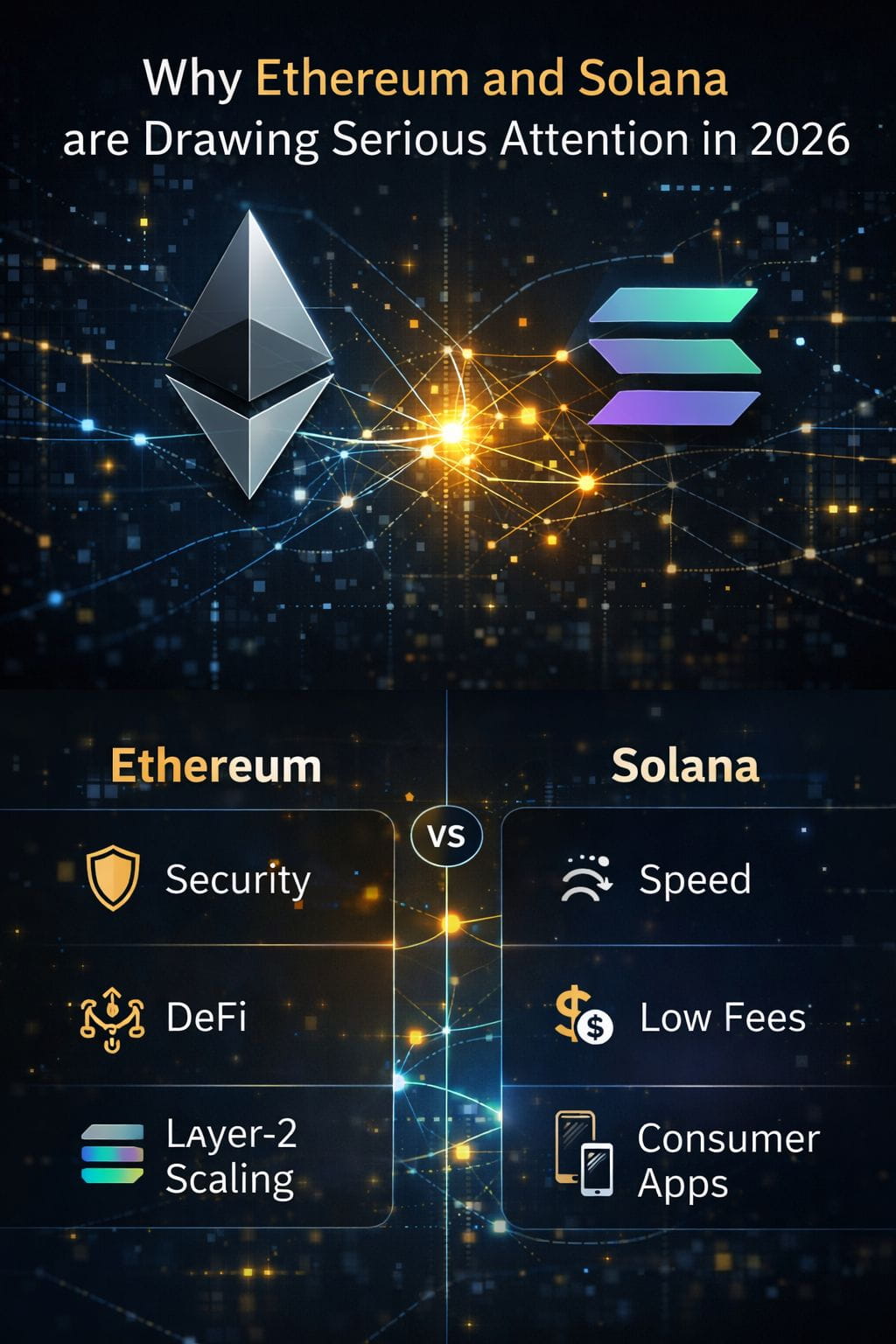
Ethereum remains the most widely used smart contract platform in the world. Its strength lies not only in its first-mover advantage but also in its evolving ecosystem. With layer-2 solutions such as Optimism, Arbitrum, and Polygon reducing congestion and transaction costs, Ethereum has shifted from scalability concerns toward sustainable expansion.
Institutional adoption continues to favor Ethereum due to its security, decentralization, and developer trust. Many decentralized finance (DeFi) protocols, stablecoins, and enterprise blockchain experiments still rely heavily on Ethereum’s network. Rather than competing on speed alone, ETH positions itself as the backbone of Web3 reliability.
Solana ($ETH ): Performance Driving Mass Adoption
Solana approaches blockchain from a different angle. Its high throughput and low fees make it especially attractive for applications that require real-time performance, including NFT marketplaces, gaming platforms, and consumer-facing apps.
In recent months, Solana’s ecosystem has shown renewed strength, with increasing developer activity and improved network stability. For many projects, Solana offers a practical environment where blockchain technology feels less experimental and more usable at scale.
Why This Moment Matters
The ETH-vs-SOL discussion is no longer a zero-sum debate. Instead, it highlights how blockchain is evolving into a multi-chain reality. Ethereum leads in decentralization and institutional confidence, while Solana excels in speed and user experience.
For investors and builders, understanding these distinctions is crucial. Choosing between ETH and SOL is less about predicting a winner and more about recognizing where each network fits in the broader crypto landscape.
Final Takeaway
Ethereum and Solana represent two philosophies of blockchain growth: resilience versus performance. As adoption accelerates, both are likely to coexist, serving different needs across finance, technology, and digital ownership. Ignoring either would mean missing a key chapter in crypto’s ongoing transformation.