

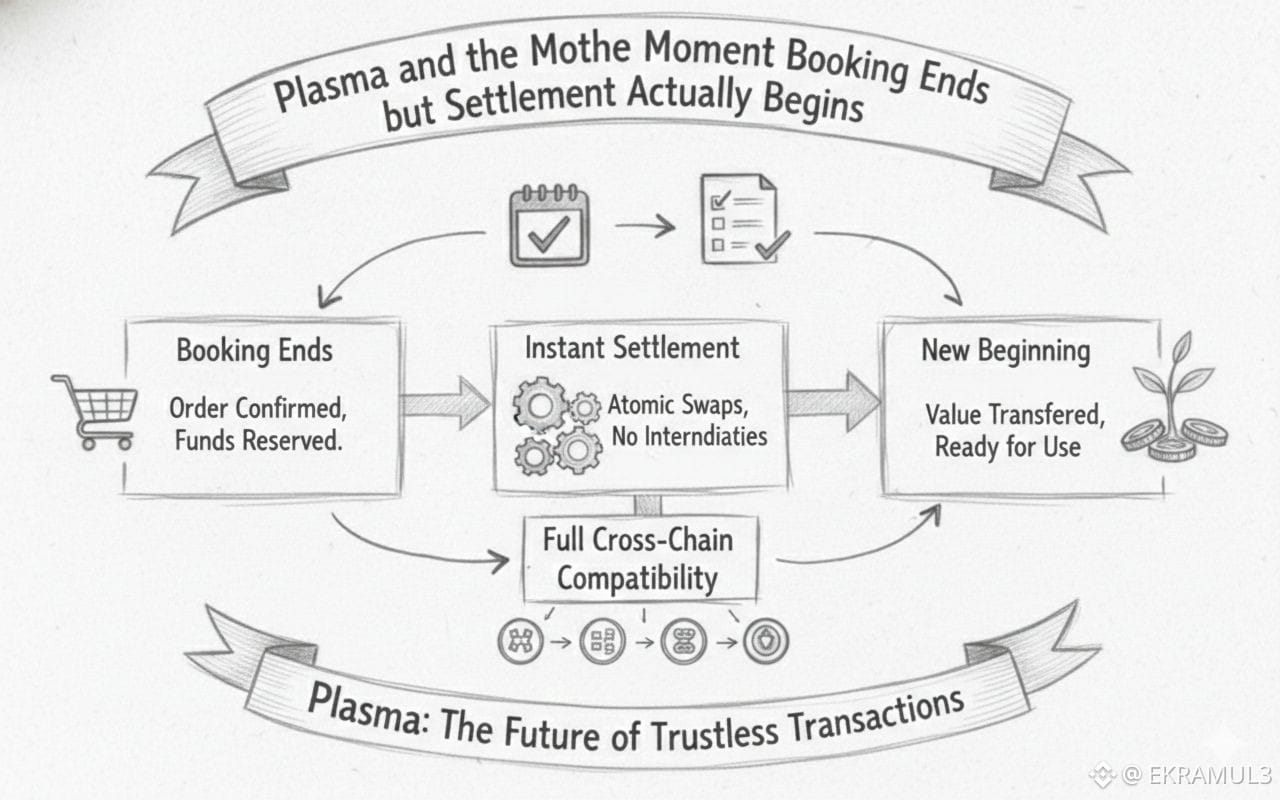
 In traditional finance, there is a moment most consumers never see the gap between a transaction being booked and a transaction being settled. Balance sheets reflect the booking immediately: the liability shifts, the receivable appears, and the accounting system records an event that implies completion. But completion is not what happened. What happened is an obligation, not a transfer.
That invisible gap is where operational risk accumulates. Treasury teams hedge around it, netting systems batch around it, compliance waits inside it, and disputes usually emerge because of it. Blockchains have attempted to close this gap, but most of them merely changed the mechanics of booking, not settlement. A token transfer confirms on-chain quickly, but settlement the part that matters in economic terms often remains probabilistic, fee-sensitive, or dependent on post-transaction reconciliation.
Plasma’s point of entry is not speed it is settlement discipline.
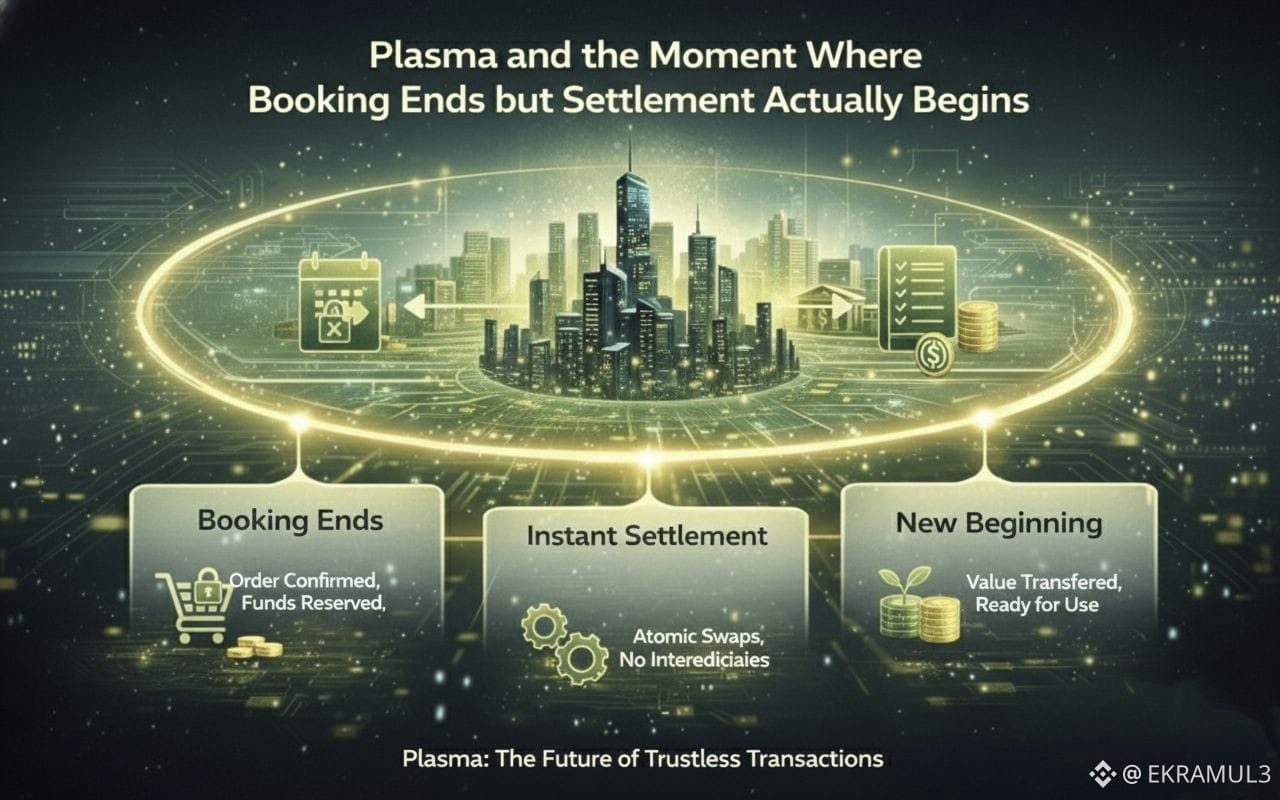 Plasma’s architecture assumes that the world of payments and value transfer does not care how fast a block was produced; it cares whether the economic event has cleared without ambiguity. PlasmaBFT enforces that discipline at consensus. The network operates in sub-second rounds, but what actually matters is not the timing it is the irreversibility. A transfer on Plasma is not “broadcast and hope”; it is acknowledged, finalized, and economically binding in one continuous motion. Booking and settlement compress into a single decision surface.
This compression is what makes Plasma interesting for stablecoins. Stablecoins already behave like money in practice, but the rails they ride on still behave like trading infrastructure. Centralized exchanges settle in milliseconds internally, but withdrawals and deposits are subject to retries, confirmation counts, and unpredictable sequencing. Stablecoin transfers across chains suffer from liquidity fragmentation, bridging variability, and delayed reconciliation. For serious payment flows remittances, settlement, corporate disbursement, payroll, merchant acceptance this friction is the bottleneck.
Plasma does not approach the problem by adding middleware; it modifies the foundation. Gasless transfers remove the pre-settlement operations layer where users need a native asset to express intent. Stablecoin-first gas removes pricing asymmetry between booking and execution. Bitcoin anchoring adds neutrality and tamper resistance to the final state, increasing confidence for actors who cannot tolerate probabilistic settlement.
The most overlooked piece is not performance; it is posture. Plasma behaves like a chain that assumes financial applications will soon demand audit-grade truth between parties that do not necessarily trust each other. In that world, “speed” alone becomes almost irrelevant. What matters is the ability to ask a binary question:
Has this value moved, or is it still an obligation?
On most networks, the answer depends on context, block depth, congestion, fee markets, or external messaging. On Plasma, the answer is deterministic. The chain treats stablecoin transfers the way clearing houses treat funds movement as a state transition that leaves no parallel interpretation open.This is where the market shift appears. Most chains today still conflate “user experience” with wallet design, onboarding flows, or simplified key management. Financial UX is built on something different: settlement confidence. If the chain guarantees settlement, the interface can afford to be simple. If the chain does not, every interface must compensate by adding disclaimers, retries, confirmation windows, and hedges.
Plasma’s bet is that stablecoin adoption will not scale through spectacle, yield, or tokenomics. It will scale when settlement becomes boring boring enough that merchants stop refreshing dashboards, compliance stops buffering transactions, and capital stops waiting for “just one more block.”
At that point, booking and settlement converge. The ledger stops telling a story about what should happen and starts presenting a record of what already did. Stablecoins stop acting like tokens and start behaving like money. And the chain underneath stops being evaluated for innovation and starts being evaluated for survivability.
Plasma is building for that evaluation.
Not for hype. Not for optics. Not for cultural currency inside crypto.
For the moment when the global stablecoin economy asks a very simple, very old question:
Can you close the books without lying about the settlement?
Most blockchains cannot.
Plasma is attempting to.

