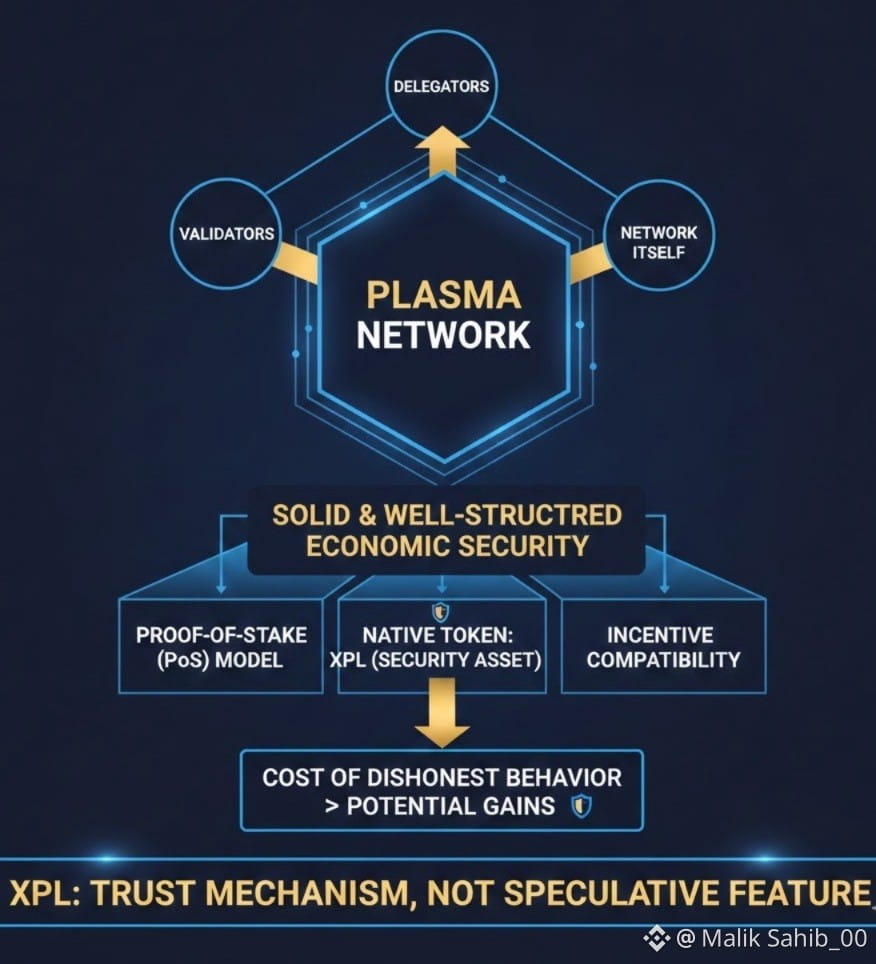
I believe the economic security of the Plasma network is a solid and well-structured foundation, not merely a noisy and speculative feature. Plasma is based on a Proof-of-Stake (PoS) model, with its native token, XPL, as the primary security asset. By staking XPL, validators, delegators, and the network itself are economically compatible, ensuring that the cost of dishonest behavior far outweighs any potential gains. This compatibility of incentive mechanisms transforms XPL from a simple token into a trust mechanism.
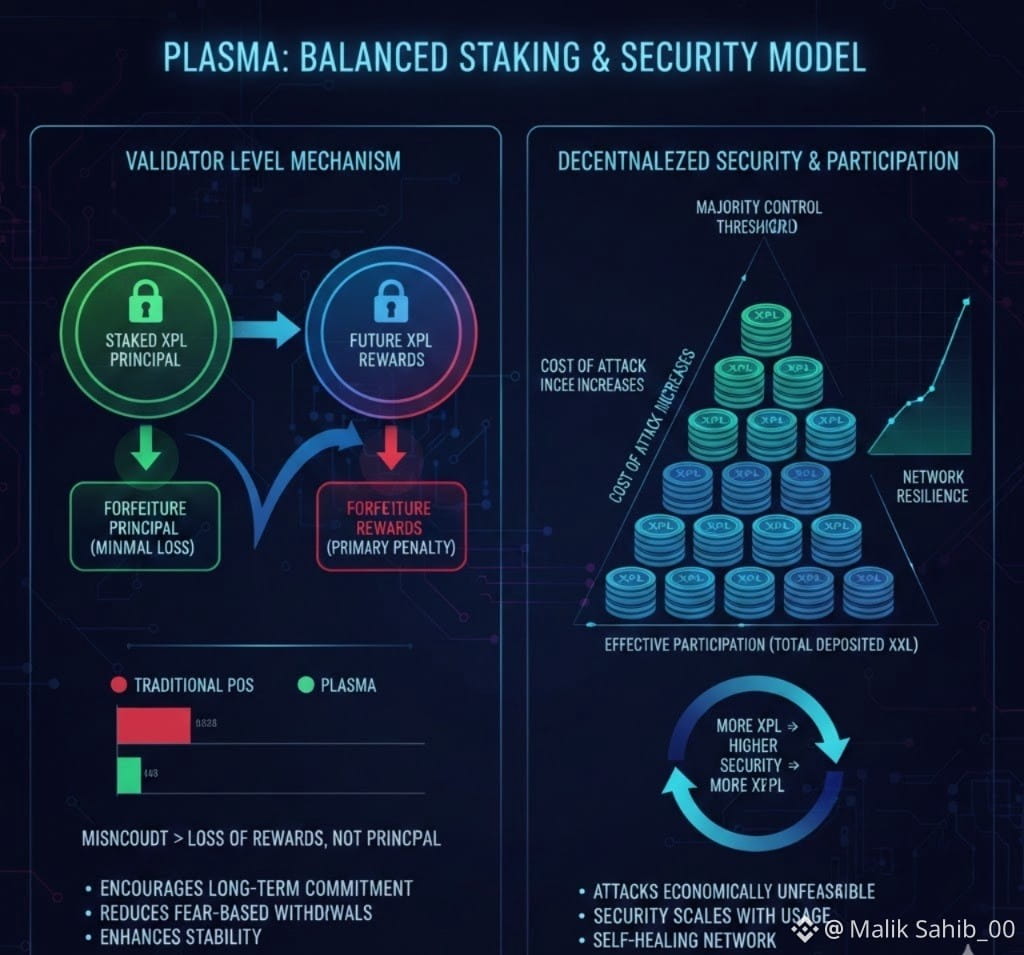
At the validator level, Plasma offers a balanced staking and forfeiture mechanism. Validators must lock a significant amount of XPL to participate in the consensus process and validate blocks. Unlike PoS systems that overly rely on forfeiture of collateral, Plasma prioritizes forfeiture rewards over forfeiture principal. This means that misconduct primarily results in the loss of future rewards, rather than the permanent loss of staked assets. My analysis suggests that this design encourages long-term commitment, reduces withdrawals due to fear, and enhances validator stability without compromising network security.
Decentralized security naturally emerges from this structure. Deposited XPL balances represent "effective participation," making large-scale attacks economically infeasible. The more XPL deposited, the higher the cost of attacking the network, as attackers need to control a majority of the balances. Security increases with participation, establishing a direct link between network usage and resilience.
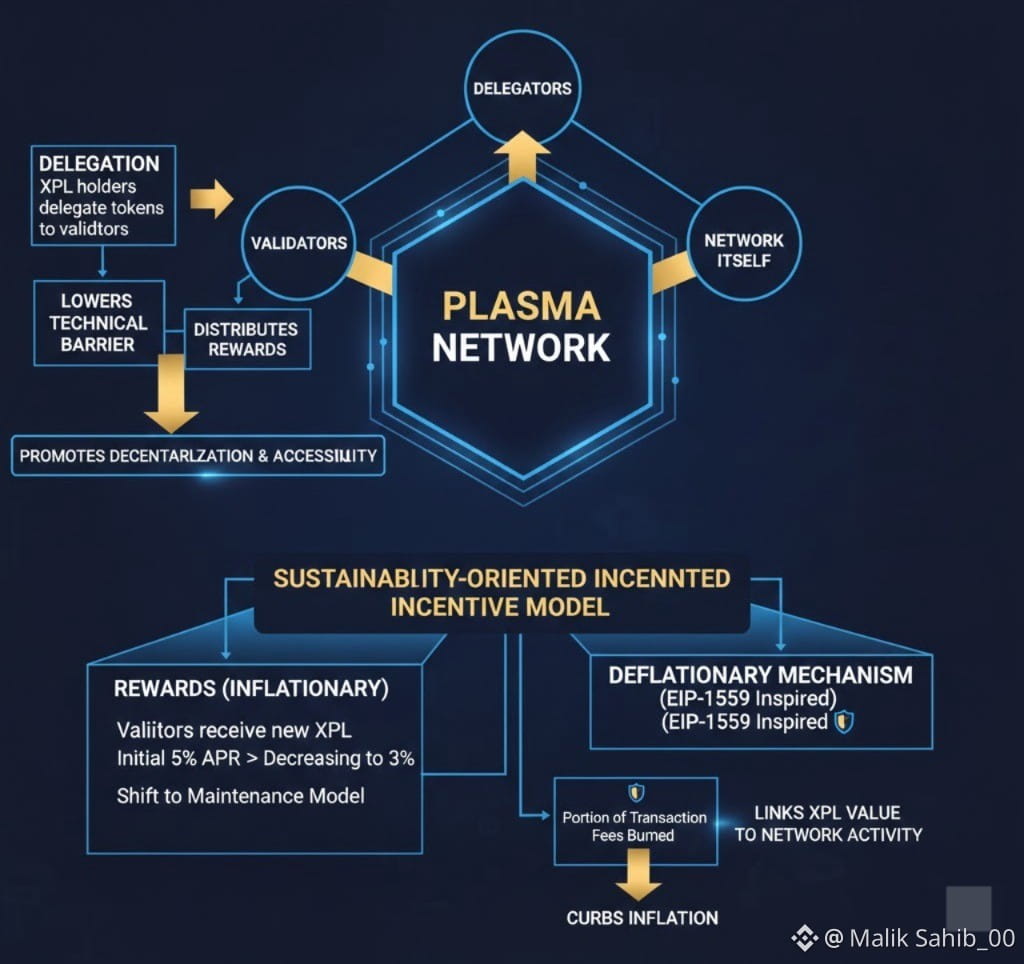
The Plasma platform further expands the scope of secure participation through a delegation mechanism. XPL holders who do not run validator infrastructure can contribute by delegating their tokens to validators. This lowers the technical barrier to entry, increases total deposits, and distributes rewards more broadly across the ecosystem. I believe this promotes decentralization while maintaining network accessibility.
This incentive model is designed for sustainability. Valuers receive new XPL tokens as rewards, with an initial inflation rate of 5% per year, gradually decreasing to 3%. This marks a shift in incentive mechanisms from pursuing rapid growth to a maintenance-oriented economic model designed for long-term operation. To curb inflation, the Plasma protocol introduces a deflationary mechanism inspired by Ethereum EIP-1559, which burns a portion of transaction fees. This directly links the token's value to actual network activity.
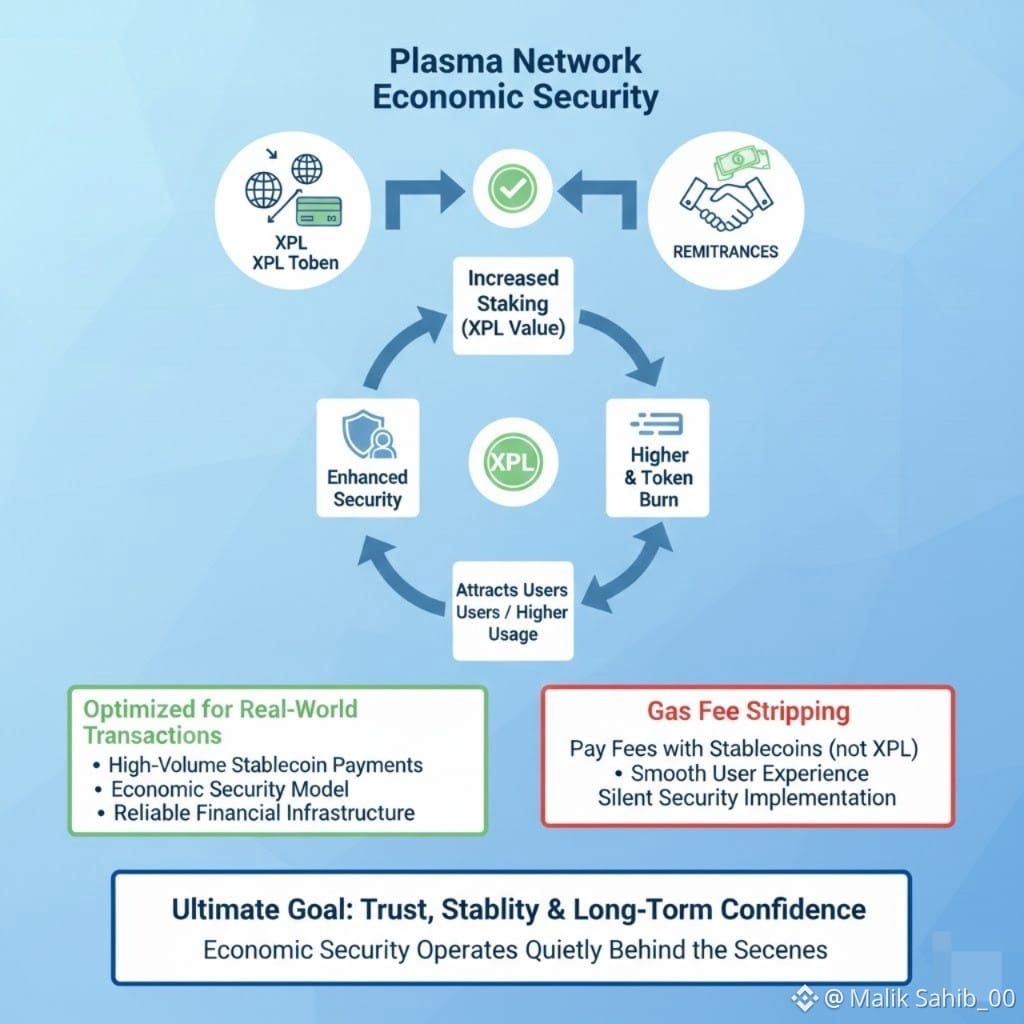
This creates a virtuous cycle: increased storage enhances security, stronger security attracts users, higher usage drives up fees and burns more tokens, and higher token value incentivizes users to store even more. Because Plasma is designed specifically for stablecoin payments, this economic security model is optimized for high-volume, real-world financial transactions. Gas fee stripping allows users to pay fees with stablecoins instead of XPL, maintaining a smooth user experience while silently implementing security mechanisms at the protocol level.
Plasma's ultimate goal is to provide a reliable financial infrastructure where economic security operates quietly behind the scenes, fostering trust, stability, and long-term confidence in the network.