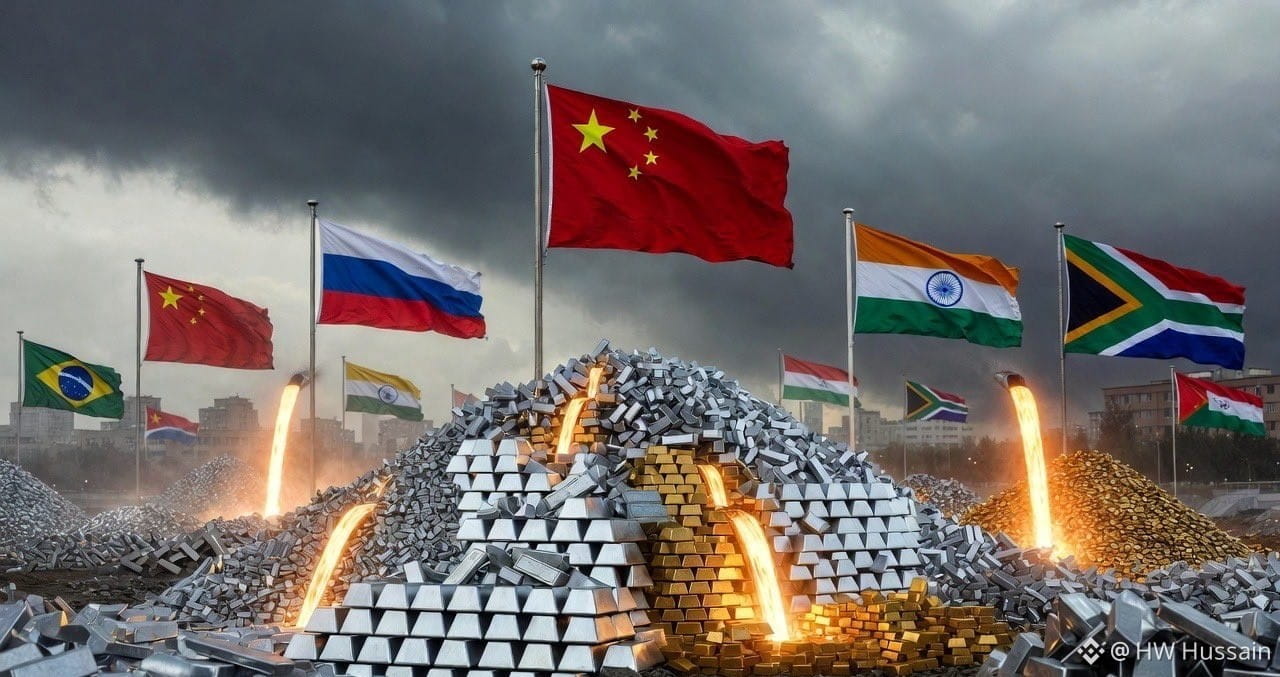
In recent months, gold and silver have moved back into the global spotlight — not just as inflation hedges, but as tools in a much larger economic shift.
This isn’t about short-term price action.
It’s about power, reserves, and control.
🌍 The Quiet Accumulation
China and the BRICS nations have been steadily increasing their holdings of physical gold and silver. These purchases are largely funded by trade surpluses — excess U.S. dollars earned through exports.
Instead of recycling those dollars back into U.S. assets, they’re being converted into hard, tangible reserves.
This marks a clear strategic pivot.
💵 Why This Matters for the Dollar
Gold and silver exist outside the traditional financial system. They can’t be frozen, sanctioned, or printed.
By accumulating metals:
Reliance on the U.S. dollar is reduced
Exposure to sanctions and financial pressure decreases
Long-term monetary independence increases
For nations seeking to challenge the current dollar-centric system, precious metals provide leverage that fiat currencies cannot.
⚔️ An Economic War, Not a Military One
While global attention remains fixed on wars, alliances, and diplomacy, a parallel conflict is playing out quietly.
This is a balance-sheet war.
History shows that during periods of geopolitical stress and monetary transition, countries with strong hard-asset reserves gain negotiating power. Gold and silver become not just stores of value, but instruments of influence.
📊 The Bigger Picture
Gold and silver are no longer just “safe havens.”
They are becoming strategic assets in a multipolar world.
As trust in fiat systems erodes and global blocs reposition, the role of precious metals is expanding again — not at the margins, but at the center of global finance.
Those watching only politics may miss it.
Those watching metals may already see where this is heading. 🌍💰