
The transformation from Virtua to Vanar in late 2023 wasn’t just cosmetic rebranding with new token ticker. It represented fundamental architectural reimagining where entertainment-focused metaverse platform evolved into AI-native infrastructure designed specifically for payment systems that traditional blockchains struggle to handle. The one-to-one token swap from TVK to VANRY preserved holder value while enabling strategic pivot toward becoming what the team calls cognitive blockchain layer where data doesn’t just sit passively but actively participates in financial transactions through intelligent processing and automated decision-making.
Vito Lee understood this potential early. As first private investor and Head of APAC for Virtua starting in 2018, he deployed personal capital based on skin-in-the-game philosophy before most people recognized blockchain’s entertainment applications. His transition to Cross-Border Venture Architect role expanding businesses from Asia-Pacific into Middle East and North Africa regions brought experience scaling platforms across cultural and regulatory boundaries that proved invaluable as Vanar evolved toward global payment infrastructure. They’re not building theoretical technology hoping someone finds uses—they’re solving specific problems that merchants in Istanbul, commodity traders in Dubai, and remittance users across emerging markets encounter daily when existing payment rails fail them.
The Consensus Mechanism That Prioritizes Reputation Over Raw Power
Vanar’s Proof of Reputation consensus mechanism represents departure from typical blockchain validation approaches where either computing power or token stake alone determines who secures network. The system integrates delegated proof-of-stake model allowing VANRY token holders to delegate their holdings to chosen validators, enabling broader participation beyond just those running infrastructure directly. This delegation process lets stakeholders earn yield while contributing to network security without requiring technical expertise or expensive hardware that concentrates power among wealthy participants.
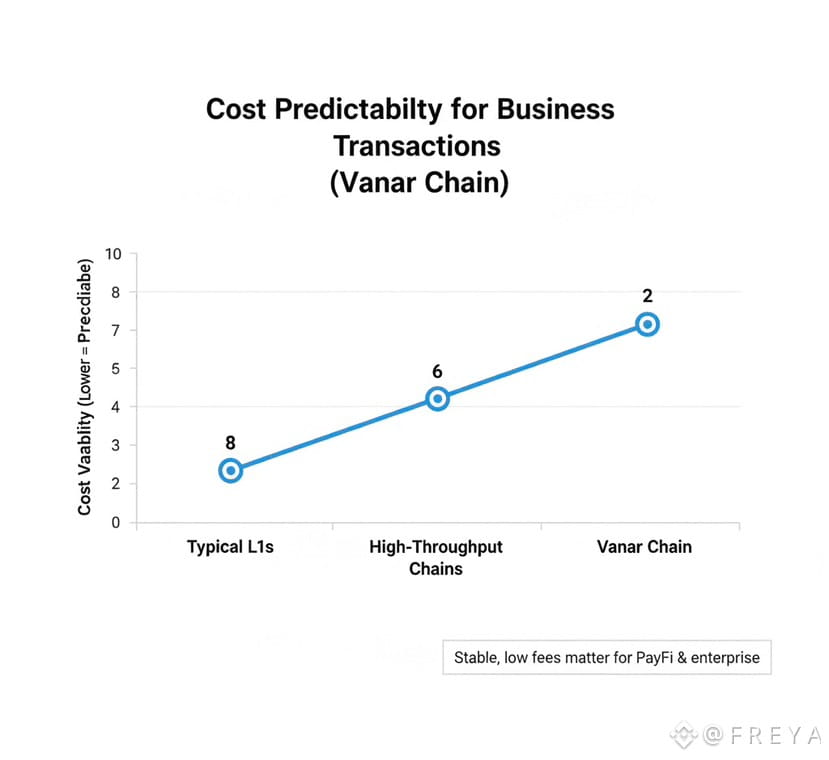
What makes this interesting is how reputation scores determine validator rewards rather than just stake size. Validators maintaining higher reputation scores receive greater incentives, creating positive feedback loop motivating consistent high-quality performance. The reputation component gets reinforced through Proof of Authority framework onboarding reputable stakeholders as validators based on established track records rather than just capital deployment. This alignment between validators’ interests and network security leads to governance where qualified entities uphold high standards because their ongoing earnings depend on maintaining trust among users and stakeholders.
The economic structure behind staking creates multiple participation pathways. Minimum staking requirement of one thousand VANRY tokens with periods ranging from thirty days to full year accommodates different risk tolerances and liquidity preferences. Annual percentage yields between eight and fifteen percent depending on lockup duration provide competitive returns compared to traditional savings vehicles while the validator node system requiring one hundred thousand VANRY ensures serious commitment from those actually securing network operations.
If it becomes successful, this reputation-weighted approach could demonstrate that network security doesn’t require either massive energy consumption from proof-of-work mining or extreme wealth concentration from pure proof-of-stake systems. The hybrid model attempts capturing benefits of both decentralization and quality control by making reputation itself valuable asset that validators must maintain through consistent reliable performance rather than just initial capital deployment.
Building Bridges That Actually Connect Different Worlds
The Router Protocol integration through Nitro Router activation marked major expansion in Vanar’s cross-chain capabilities beyond just EVM-compatible networks. This collaboration enables seamless connections between Vanar Chain mainnet and both EVM and non-EVM compatible chains, breaking down barriers that typically fragment liquidity and user bases across isolated blockchain ecosystems. The integration promises smoother, safer, and faster exchange processes across various blockchain networks rather than forcing users through complex multi-step bridging procedures that introduce friction and security risks.
For Vanar Chain specifically, the Nitro Router bridge to mainnet brings enhanced liquidity and stronger security creating environment where network transitions become smoother and more secure. The modular approach addresses market fragmentation head-on rather than accepting it as unavoidable characteristic of multi-chain blockchain landscape. Router Protocol’s vision to bring new wave of users to Web3 space aligns with Vanar’s goal building unified and inclusive ecosystem rather than another isolated blockchain competing for limited user attention.
The entertainment and gaming focus gains immediate practical benefits from these cross-chain capabilities. Gamers need cost-effective and secure transactions plus easy cross-chain asset exchange allowing them to move value between different game ecosystems without losing significant portion to fees or waiting extended periods for settlement. Developers and stakeholders get empowered to create new business models and explore profitable areas that weren’t viable when constrained to single blockchain’s liquidity and user base. The partnership opens doors to innovative prospects where gaming assets, AI-driven experiences, and financial primitives can interact across previously separated networks.
The Base chain expansion announced in early 2026 demonstrates continuing commitment to cross-chain functionality. This facilitates AI agents managing compliant payments and tokenized assets across multiple networks rather than limiting capabilities to Vanar’s native chain. We’re seeing infrastructure built for interoperability from ground up rather than retrofitted afterward when isolation proves limiting. The cross-chain strategy recognizes that mainstream adoption requires working within existing blockchain landscape rather than demanding everyone migrate to single new platform.
The Biometric Layer Solving Bot Problems Without Surveillance
The Humanode Biomapper C1 SDK integration into Vanar’s core infrastructure in October 2025 addressed crucial problem facing DeFi and gaming applications: how do you verify human uniqueness without compromising privacy or creating surveillance infrastructure that tracks individuals across platforms? The biometric Sybil resistance allows applications to confirm that each participant represents actual distinct human rather than bot or multiple accounts controlled by single person attempting to game systems designed for fair distribution.
The implementation maintains user anonymity while providing trustless identity verification, critical balance for platforms wanting security benefits of identity confirmation without creating honeypot of personal data vulnerable to breaches or government seizure. Developers gain tools for identity checks that don’t require collecting sensitive information or trusting centralized identity providers whose databases become attractive targets for hackers and authoritarian regimes. The technology reduces bot risks that plague airdrops, governance votes, play-to-earn game economies, and liquidity mining programs where Sybil attacks let sophisticated actors claim unfair portions of rewards.
For gaming applications this matters enormously because competitive integrity depends on ensuring players can’t create unlimited accounts to manipulate leaderboards, farm rewards, or exploit systems designed around assumption of one-person-one-account. The DeFi applications benefit similarly from preventing governance attacks where whale creates hundreds of wallets to appear as diverse community while actually controlling majority of voting power. The biometric verification provides cryptographic proof of humanness without revealing who specific human is, maintaining privacy while defeating attacks depending on unlimited pseudonymous accounts.
The Pilot agent integration released alongside biometric capabilities enabled natural language on-chain interactions where users can execute blockchain transactions through conversational interfaces rather than navigating complex wallet software and manually constructing transaction parameters. Together these technologies lower barriers for mainstream users who understand what they want to accomplish but lack technical expertise to translate intentions into proper blockchain operations. I’m talking about making blockchain accessible to people who don’t want to become blockchain experts just to use financial applications or play games.
The PayFi Focus That Distinguishes Vanar From Generic Chains
Vanar’s positioning around PayFi—payment finance combining traditional payment infrastructure with blockchain capabilities—represents strategic focus differentiating it from general-purpose blockchains trying to serve every possible use case. The platform targets tokenized real-world assets with compliance-ready queries, meaning financial instruments, property titles, supply chain documentation, and other real-world value representations can exist on-chain while maintaining regulatory compliance through queryable audit trails and automated compliance checks.
The Kayon AI engine provides onchain reasoning capability where smart contracts don’t just execute predetermined rules but actually query data, validate compliance requirements, and apply real-time decision logic based on understanding context rather than just matching exact conditions programmed by developers. This transforms blockchain from dumb database executing instructions into intelligent system that can adapt to complex regulatory requirements, market conditions, and business logic without requiring manual intervention or off-chain computation feeding results back to blockchain.
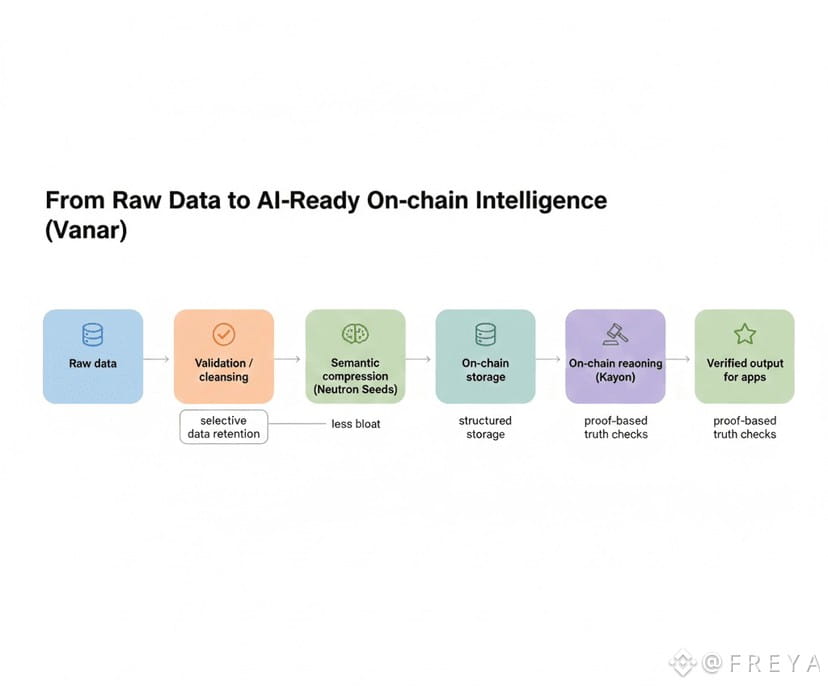
The Neutron compression technology storing legal, financial, and proof-based data directly onchain solves crucial problem for payment systems: how do you maintain complete audit trail without blockchain storage costs becoming prohibitive as data accumulates? The five-hundred-to-one compression ratio means twenty-five megabyte files reduce to fifty kilobytes while maintaining ability to reconstruct complete original. For payment systems this enables storing invoices, shipping documentation, compliance certificates, and transaction receipts onchain where they can’t be lost or altered rather than depending on external storage that might disappear when companies fail or cloud providers experience outages.
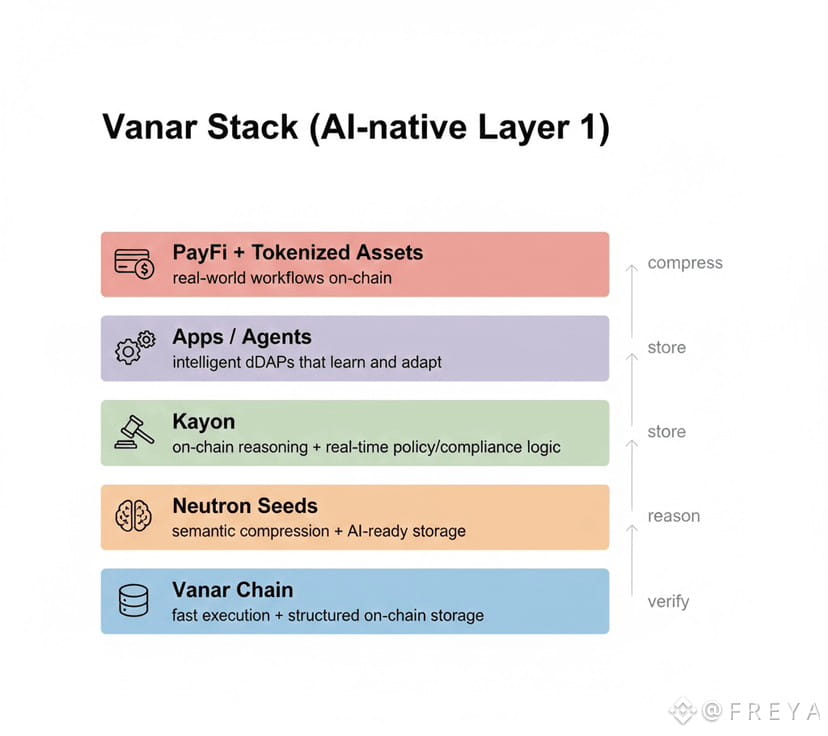
The April 2025 AWS disruption affecting major exchanges demonstrated vulnerability of systems depending on centralized cloud storage. Vanar’s approach of storing data natively onchain through Neutron’s four-stage pipeline—AI compression, quantum-aware encoding, indexing, and recovery—ensures information remains accessible even during centralized infrastructure failures. The quantum-aware encoding prepares data for future security requirements when quantum computers threaten current cryptographic standards, building longevity into architecture rather than facing expensive migrations later.
The Worldpay Collaboration Bridging Blockchain and Traditional Finance
The Worldpay partnership announced in early 2025 connected Vanar’s blockchain infrastructure with payment processor handling 2.3 trillion dollars annually across 146 countries. This relationship matters because Worldpay already facilitates over fifty billion transactions yearly providing essential fiat infrastructure for users globally. Their involvement validates Vanar’s technical approach while providing distribution channel reaching mainstream merchants and financial institutions that wouldn’t normally interact with blockchain platforms.
The collaboration explores cutting-edge Web3 financial products designed enhancing speed, security, and transparency of transactions. Integrating Vanar’s high-performance blockchain with Worldpay’s extensive payment infrastructure paves way for new joint services making blockchain more accessible to businesses and consumers worldwide. The opportunities include web3 payment gateways handling both fiat and cryptocurrency seamlessly plus stablecoin solutions that let merchants accept digital dollars without volatility risk or complicated conversion processes.
Both parties share vision of harnessing blockchain technology’s potential in financial services by combining Vanar’s scalable infrastructure with Worldpay’s global reach and payments industry expertise. The partnership aims delivering highly secure, user-friendly, and sustainable solutions meeting needs of modern financial markets. For Vanar specifically, this relationship provides pathway to actual payment processing at scale rather than remaining theoretical infrastructure hoping real-world adoption materializes eventually.
The strategic significance extends beyond just technology integration. Worldpay brings established relationships with banks, card networks, regulatory bodies, and compliance frameworks that blockchain startups typically spend years attempting to establish. Their participation signals to traditional finance institutions that Vanar’s approach merits serious consideration rather than dismissal as speculative cryptocurrency project. The BCW Group’s involvement providing technical services for transaction validation, ecosystem expansion, and use case development ensures enterprise-grade implementation rather than proof-of-concept demonstration that never reaches production deployment.
The Education Strategy Building Tomorrow’s Developers Today
The Pakistan university roadshow running October through November 2025 demonstrated strategic thinking about ecosystem development extending decades rather than just quarters. Visiting universities from Peshawar to Karachi including UET, NUST, FAST, LGU, UMT, Bahria University, and Comsats, Vanar teams conducted interactive seminars, live product demonstrations, and student competitions focused on organizing research and exploring practical AI applications in academic work.
The memorandums of understanding signed with universities granted all students and faculty members—not just event attendees—three months free access to myNeutron Pro subscription along with exclusive discounts afterward. Early events in Islamabad, IMSciences, and Pak-Austria Haripur drew hundreds of students curious about how AI memory could help manage coursework, improve development workflows, and enable more efficient group project collaboration. One student described spending first ten minutes of every session just re-explaining research topics that AI tools had forgotten from previous conversations, perfectly capturing problem myNeutron solves.
Irfan Khan, Vanar’s Head of Ecosystem, articulated long-term vision clearly: three years from now these students will be building products and companies defining Pakistan’s tech sector. What they learn about AI today will help them improve their creativity and research. The initiative follows earlier roadshow editions in Korea and Singapore with plans expanding to Turkey, Africa, and Malaysia. Partner universities gain recognition as official Neutron AI institutions receiving early product features, specialized training, and preferential licensing creating sustained relationships beyond just one-time campus visits.
The broader context matters here. Pakistan ranks ninth worldwide for peer-to-peer crypto adoption according to Chainalysis. The finance ministry earmarked two gigawatts of surplus electricity for Bitcoin mining and AI data centers in May, converting idle generation capacity into catalyst for high-tech employment and foreign investment. Web3 Pak, the nation’s largest decentralized technology community, counts over seven thousand members across forty universities creating ready talent pipeline for future development. Vanar’s investment in education builds foundation for ecosystem growth measured in years and decades rather than just immediate user acquisition metrics.
Confronting The Reality Between Vision and Adoption
The ambitious technical infrastructure, strategic partnerships, and education initiatives create impressive foundation, but they don’t guarantee the sustainable adoption that determines whether Vanar becomes essential infrastructure or interesting technology that never reaches critical mass. The token price trading around 0.008 to 0.009 dollars despite all development activity suggests market remains skeptical about whether capabilities translate into value capture justifying current valuation let alone significant appreciation.
The myNeutron subscription transition from free to paid model represents crucial test. If users valued product enough during free access period, they’ll maintain subscriptions when pricing activates. If free access primarily drove usage, paid conversion rates will disappoint and revenue projections won’t materialize. The VANRY token integration where subscriptions require tokens for payments and trigger burn mechanisms through usage only creates value if people actually subscribe rather than abandoning product when it stops being free.
The gaming validation through World of Dypians with over 3.6 million monthly players and 737 million total transactions demonstrates technical capability supporting large-scale applications. But gaming represents just one use case, and network effects from single successful game don’t necessarily translate into broad platform adoption across multiple sectors. Vanar needs multiple successful applications across gaming, PayFi, AI tooling, and tokenized assets to justify positioning as general AI-native infrastructure rather than specialized gaming chain with additional capabilities.
The regulatory landscape presents ongoing uncertainty where compliance-ready infrastructure might not satisfy regulators whose requirements evolve faster than projects can adapt. The PayFi focus on real-world assets and traditional payment integration brings Vanar into jurisdictions where financial services regulation applies, creating compliance obligations beyond typical blockchain platforms. Success requires navigating evolving rules across multiple countries while maintaining technical capabilities that attracted partners initially.
The next several years determine whether Vanar’s unique positioning around AI-native blockchain infrastructure, cross-chain capabilities, biometric identity, and payment finance creates sustainable competitive advantages or whether established platforms add similar capabilities faster than Vanar can build network effects from early positioning. The technical infrastructure exists. The partnerships are real. The education initiatives create pipeline. What remains uncertain is whether these pieces combine into ecosystem where millions of developers build applications and billions of users interact with infrastructure without knowing or caring that Vanar powers their experiences. That gap between impressive technology and mainstream invisibility represents the distance Vanar must traverse to achieve the mass adoption their architecture was designed to enable.