

Yesterday evening, while fixing a slightly wobbling chair at home, I learned a familiar lesson. Everything looked solid from the outside. The bolts were tight, the legs aligned. Yet the chair refused to feel stable. Only after turning it over did I notice a tiny missing stabilizing bracket underneath. A cheap, forgettable piece. Without it, the entire structure was unreliable. That moment felt uncomfortably close to how most blockchain performance narratives sound today.
Most networks obsess over what’s visible from above: TPS screenshots, finality charts, and claims of being fast enough. The structure looks impressive until you actually sit on it for hours. What drew me to Plasma was that it doesn’t sell the chair. It sells the bracket. Instead of chasing peak numbers, it insists on behaving the same way every single day.
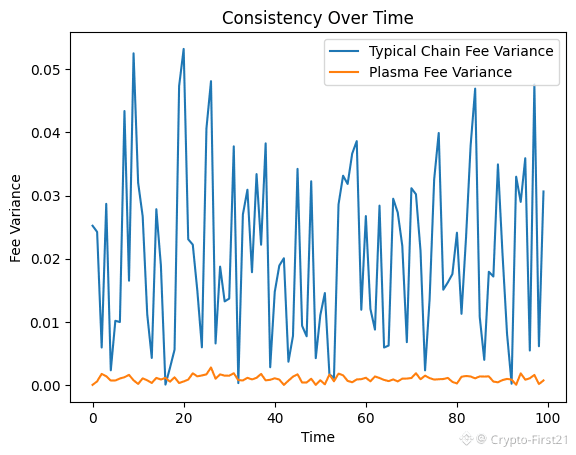
Speed, in real infrastructure, isn’t about the maximum you can hit once. Systems don’t fail at their peaks, they fail at their edges, during uneven demand, boring repetition, and prolonged stress. Plasma treats performance as something you sustain, not something you screenshot. That perspective matters because today, by value, most on chain activity is stablecoins. Payroll, remittances, merchant settlements. These flows don’t want brilliance or drama. They want predictability. Variance is the enemy.
This is where fast enough quietly breaks trust. A network optimized to be able to perform a maximum of ten thousand transactions every second under ideal conditions looks impressive and functional at its maximum capacity. However, there is no way to predict the effect of unexpected changes in demand or if any of the validators may choose instead to optimize for yield rather than ensuring they are maintaining minimum uptime. Median fees may stay low, but tail risk explodes. For a trader, that’s an annoyance. For a payroll system, it’s a deal breaker.
Plasma appears designed around that exact failure mode. Zero fee USD transfers aren’t a marketing trick, they’re a constraint. Removing fees removes an entire class of incentive games no bidding wars, no congestion tax, no surprise penalties for showing up at the wrong time. What remains is pressure on consistency. The system must behave the same way whether traffic is calm or stressed. That’s hard. It just doesn’t look exciting.
There’s also a regulatory texture many chains avoid. Institutions don’t fear low throughput, they fear unpredictability. A system that behaves differently under stress creates compliance risk. Plasma’s architecture reflects that reality by separating repetitive, low variance payment flows from speculative activity. Salaries shouldn’t compete with trading spikes. That design choice narrows flexibility on purpose. You give up the ability to monetize chaos, and in return you gain the ability to be trusted.
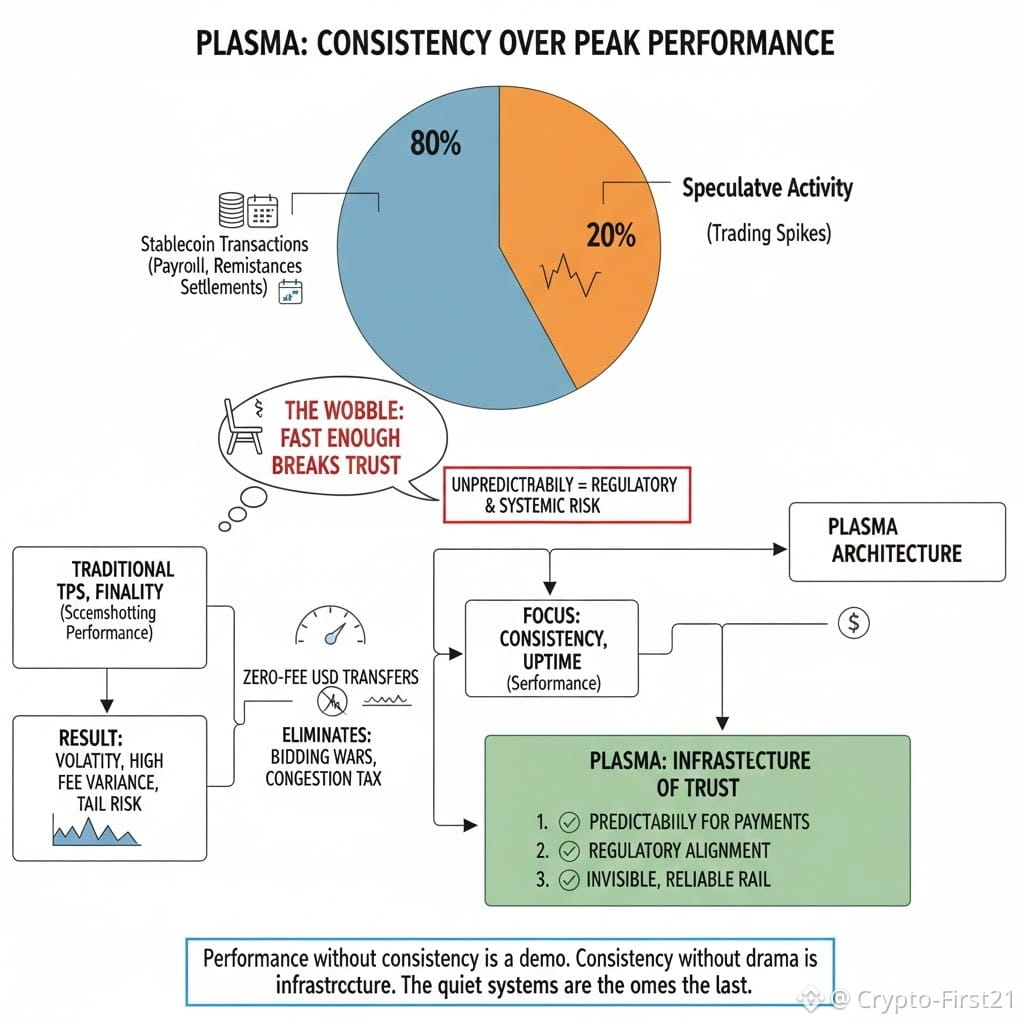
Validator incentives tell the deeper story. Where many networks reward opportunism, Plasma rewards uptime and steady block production. Over time, that pushes operators to minimize variance instead of chasing volatility. The result is a network that feels invisible. And invisibility, for payments, is the goal. The best rail is the one users stop thinking about.
When you look past medians and into fee variance, the difference becomes obvious. Some chains advertise sub cent fees but hide brutal spikes in the 95th percentile during stress. Plasma removes that tail risk entirely for a specific class of transactions. The cost is not hidden, it’s paid in opportunity. Plasma won’t extract value from congestion or trend on benchmark charts. It accumulates trust slowly.
We’ve seen this pattern before. Early internet infrastructure chased bandwidth records, what won was reliability. Cloud computing didn’t succeed by being the fastest once, it succeeded by being boring every day. Payments work the same way. Users are not likely to perceive systems as being 99% reliable if they only fail 1 out of 100 times, because user's perceptions of any system that fails at all will completely overshadow their memory of any previous reliability.
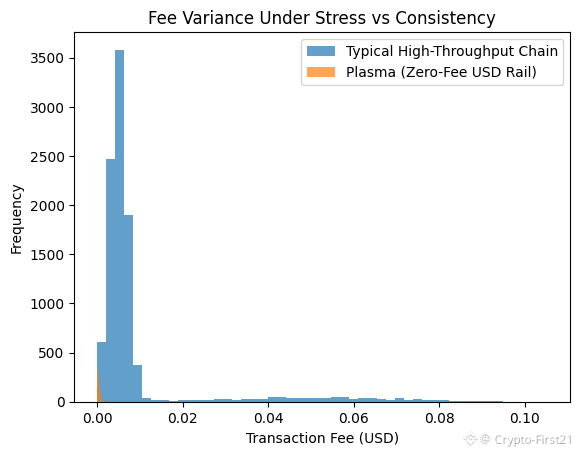
Plasma’s focus on consistency over records is an attempt to remove those moments entirely, or at least push them far enough out that the network fades into the background. Critics are right that this sacrifices flexibility. Designing for sameness narrows the design space. But that tradeoff reveals how Plasma thinks about adoption, not as raw activity or noise, but as regularity and repetition. Trust that compounds quietly.
Most systems don’t fail because they lack ambition. They fail because they lack discipline. They build impressive furniture and forget the stabilizers underneath. Plasma isn’t trying to impress you today. It’s trying to stay standing when nobody is watching. Performance without consistency is a demo. Consistency without drama is infrastructure. The quiet systems are the ones that last, and fast enough is usually where the wobble begins.

