
Who is Jesse Livermore? Why do all the big names mention the founder of the stock market, Jesse Lauriston Livermore (July 26, 1877 [2] - November 28, 1940) was an American stock investor. Livermore is considered a pioneer of day trading and is the main character in Edwin Lefèvre's best-selling book (Reminiscences of a Stock Operator). Livermore was once one of the richest people in the world, but later committed suicide due to depression caused by relationship problems.
In the era when Livermore lived, listed companies rarely disclosed accurate financial statements. It took a lot of effort to even understand the current stock quotes. Various manipulations in the market were extremely rampant. The basis of Livermore's stock trading is called "technical analysis" today. His trading principles, such as the effects of emotion on trading, have been repeatedly studied by later generations.
Some of Livermore's big moves, such as his short selling before the San Francisco earthquake in 1907 and Black Thursday on Wall Street in 1929, are legendary trades that make him one of the greatest investors of all time.
In the field of speculation in the last century, Jesse Livermore was a god. Americans called him the "Big Bear of Wall Street", Chinese called him the "King of Wall Street Speculation", and some scholars even translated his name into Chinese as "Li Fu Mo". His trading rules are still regarded as classics by countless people. He experienced ups and downs throughout his life, and successfully predicted two major stock market crashes in the history of the United States, one of which made him a profit of more than $100 million, but he eventually went bankrupt at the age of 57 and shot himself at the age of 63.
Livermore's life trajectory
Livermore was born into a poor farmer's family in Massachusetts in 1877. He could read newspapers, especially the financial editions, at the age of five.
In 1891, Livermore, who dropped out of junior high school, went to Boston alone to make a living. He worked in a brokerage firm, doing the most menial job: copying price data.
In 1892, he began his trading career and earned his first $1,000, equivalent to more than $200,000 today.
In 1900, at the age of 22, he suffered his first margin call.
In 1901, at the age of 23, he made a comeback and made another profit of $50,000, but his position was liquidated again because he failed to adapt to the quotation rules.
In 1902, it made a comeback and began to make profits.
In 1907, J.P. Morgan, then president of Morgan & Co., had to ask Livermore to stop short selling U.S. stocks. He made $3 million from this transaction.
In 1908, he mistakenly bought cotton based on insider information from cotton tycoon Percy Thomas, resulting in a huge loss of $2.7 million.
In 1914, the 37-year-old Livermore owed millions of dollars in debt. Finally, he found an opportunity at a brokerage firm, which provided him with a credit line that allowed him to trade only 500 shares, and he rose again.
In 1929, Livermore created a miracle in the U.S. stock market crash and made a profit of more than 100 million U.S. dollars, equivalent to about 100 billion U.S. dollars today. He also reached the peak of his life.
In 1934, five years later, Livermore went bankrupt, but no one knows how. He did not fall into poverty because of the trust pension fund.
In 1940, 63-year-old Livermore shot himself.
Livermore's trading strategy has three important principles
First, determine the general direction of the market - determine the trajectory line - confirm the basic trend.
Second, form a buying strategy - explore the market - test the market with a light position. Don't act rashly and bet your entire fortune on impulse.
Third, wait patiently for the market to verify all your judgments and finally determine the trend. Only when the market fluctuates greatly can you make big money.
Livermore has a trading philosophy that most investors cannot do: never spread out losing positions. Once you are deeply involved in a losing trade, you will unconsciously have the urge to add more positions to reduce your cost price. Unconscious impulses cannot be suppressed for a long time, so traders tend to expand rapidly after their first few successful profits, and then be controlled by their unconsciousness.
Livermore's strength lies in that he has a slightly deeper understanding of each trading concept, and his execution ability is slightly better than that of ordinary people. For example, his grasp of timing, his work experience as a stock price blackboard quotation machine in his youth, gave him a prerequisite that is slightly better than that of ordinary people. At that time, a large number of stock prices had to change in a short period of time and were updated on the blackboard. Livermore started by listening to the price and writing the price, and then he was one step ahead of others. He guessed the approximate change of the stock price almost accurately and wrote the stock price on the blackboard before the quotation clerk opened his mouth and offered the price. This is why he is called the "magic boy", because he is slightly better than ordinary people in grasping the timing of stock price changes.

Livermore's two short selling processes
In 1906, Livermore studied all other factors and believed that the market was about to peak. He selected four leading sectors for testing and shorted at least two stocks in each sector. The result was that all the shorted stocks fell. Livermore began to increase his positions step by step, and his strategy of testing the market won the first battle.
After that, the New York stock market continued to fluctuate. He used the trial method to confirm his judgment of the general trend, and then shorted again, this time heavily shorting several leading stocks. At this time, the market lost its bullish momentum, and more and more stocks fell wildly, bringing many speculative opportunities.
The basic financial problem soon emerged and concentrated in one place: short-term loans. This problem had been brewing for several months and finally broke out on October 24, 1907. The stock market fell sharply, and Livermore had been shorting and continued to increase his positions when he saw the bear market.
Since there were no buyers in the stock market at that time, the buying dried up. Suddenly, the cash was gone and the buying disappeared. J.P. Morgan, the president of the American financial giant Morgan Company, also realized the seriousness of the problem and advised Livermore not to sell short. The next day, Livermore closed his position and increased market confidence. At this time, he had $3 million in cash.
From the winter of 1928 to the early spring of 1929, Livermore went all out in the strong stock market, but he was always alert to the market's U-turn signal, which was bound to appear. According to experience, the best way is to sell "early" in a strong market, especially when the holdings that need to be "disposed" are huge. In the early summer of 1929, the bull market was still hot, and Livermore finally sold all his heavy positions one by one. He listed the leading stocks that he thought had "risen too much."
All of Livermore's experience and intuition "screamed at him" that the market was over. But he knew that timing was everything, and it was not whether the top came, but when it came that mattered. He had made the mistake of acting too early before, and when he was right, he lost everything because he acted too hastily. He decided to use the old method - to test the market, and began to short with a small position.
He initially shorted a few stocks, testing small amounts. The market continued to rise, and he had to close his positions, losing $250,000, a small amount. But after paying close attention to the economic situation in the United States and abroad, he believed that the world was facing a serious deflation.
He started the second attempt to test his strong hunch, but the market did not go as he expected, so he had to close his position. Nevertheless, in late summer, he started the third attempt. This time, the short sale made a profit. Although the amount was not large, it was a profit at least. Now he was completely sure of his judgment.
In the summer of 1929, Livermore set up a short-selling scheme while the market was still strong enough to accept his trading volume. As the market finally reached its peak, more and more signals emerged: the public had invested in the stock market at full speed, and it seemed that as long as they entered the market, they could make money; the "leading stocks" gradually became weak, adjusted, and set new highs to no avail, and fell as soon as someone sold stocks against the trend to attract stock turnover.
On a trading day in the fall of 1929, the market crashed at full speed as soon as it opened. By noon, more than 8 million shares had been sold; the next day, the market fell 11.7% in one day. In this stock market crash, Livermore made $100 million.
The Fall of Livermore
Many people say that Livermore's poverty was one of the reasons for his suicide, but this is not the case. Livermore still had a $5 million fixed fund after his death, which is equivalent to about $100 million today.
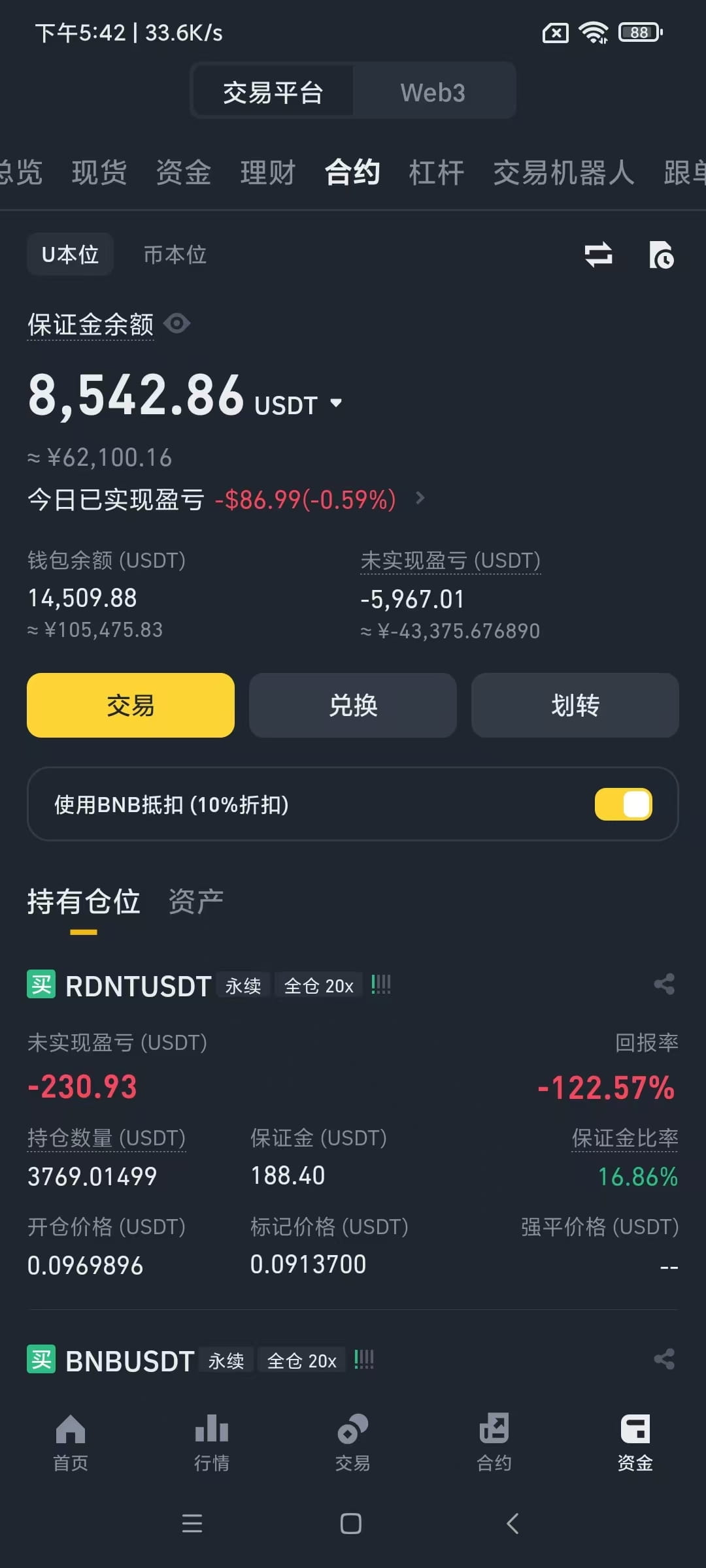
A more reasonable reason is that Livermore committed suicide because of depression caused by the failure of his marriage. His actress wife Wendt was addicted to alcohol and had a bad reputation, which caused him to suffer from depression more than once and even threw away his trading discipline. After the US stock market crash in 1929, he jumped into the market again, but the market continued to fall and he suffered losses.
Soon after, his wife divorced him and squandered all his property, causing him to declare bankruptcy again. The following year, his ex-wife shot his eldest son in a drunken argument, leaving him disabled.
Finally, on November 28, 1940, Livermore, a Wall Street trader who had experienced many ups and downs in his life, created a brilliant record alone. His breakthrough trading method was passed down to later generations. He was accused of being one of the culprits of the stock market crash in 1929 and shot himself.
He left a will saying: My life is a failure.


