
2024 has been a turning point for digital assets, most notably Ethereum’s upgrade to Dencun, the approval of Bitcoin exchange-traded funds (ETFs) and the implementation of the Markets in Crypto Asset Regulation (MiCA).
Bitcoin’s record highs in the wake of the US presidential election have spurred major asset management firms into action, with Bitcoin exchange-traded funds alone attracting more than $621 million in new investment.
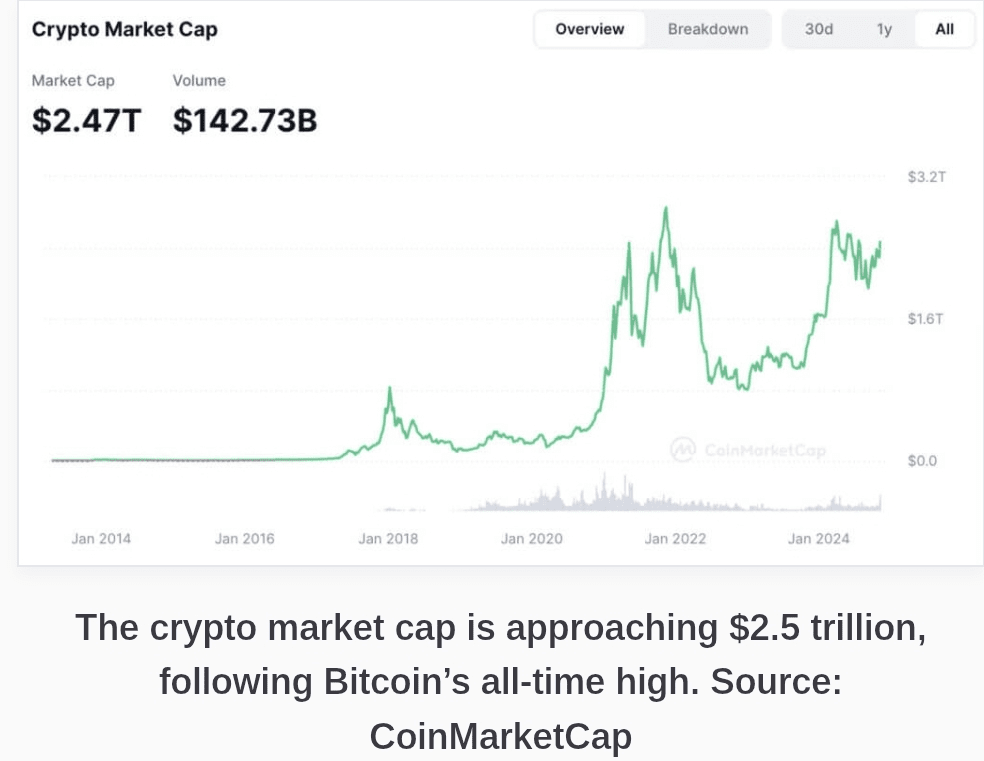
With Bitcoin’s market cap expected to reach nearly $1.5 trillion by Q4 2024 and the total cryptocurrency market cap approaching $2.5 trillion, interest in digital assets remains stronger than ever.
Surveys indicate that more than half of institutional investors are now involved in digital assets, and companies across industries are eager to enter this dynamic sector.
The highly decentralized and volatile nature of cryptocurrency markets requires specialized tools for effective portfolio management. Many investors still rely on inefficient models for cryptocurrency management, leading to increased risk, data fragmentation, and inconsistent reporting.
Therefore, the demand for robust crypto asset management systems that provide investors and institutions with the security, scalability, and efficiency needed to manage digital assets has never been greater.
Dealing with cryptocurrencies via blockchains and exchanges
Managing crypto assets across blockchains and exchanges is complex and requires constant oversight due to the 24/7 fluctuations in prices, liquidity, and market sentiment. Unlike traditional asset management, the unique requirements of cryptocurrencies can be overwhelming for investors and fund managers, especially those who juggle multiple tokens across different networks and exchanges.
Specialized asset management software simplifies liquidity management and streamlines diversification across assets by connecting investors to different exchanges through a single interface. These comprehensive platforms seamlessly handle tasks such as buying, selling, and portfolio management.
For example, some platforms offer licensed asset managers, wealth managers, and financial advisors a unified solution for managing multiple portfolios. These platforms support efficient asset management by enabling investors to track, secure, and manage digital assets across exchanges. Advanced features like automatic portfolio rebalancing help ensure assets stay aligned with investment goals, while real-time data tracking makes it easier to make informed decisions.
Digital asset management platforms are of particular value to asset managers, institutional investors, and family offices. Through a centralized dashboard, users can easily manage and distribute multiple portfolios to clients, improving oversight and regulation.
Additionally, digital asset management tools offer multiple trading algorithms that improve efficiency. Licensed asset managers and financial advisors can trade at optimal prices on major exchanges. Users gain the flexibility to manage diversified portfolios efficiently and securely with integrated portfolio tools, automated trading, and secure storage.
Simplify cryptocurrency management
While there is no one right way to manage assets, following strategies created by experts is more likely to yield positive results than relying on guesswork. Platforms that enable portfolio multiplication help investors navigate complex holdings with ease. Asset management tools designed for professionals allow licensed managers to efficiently create, manage, and track expertly developed portfolios. Instead of analyzing different portfolio models individually, one-click diversification simplifies the process for asset managers and financial advisors.
Cryptocurrency management platforms leverage an intelligent trading engine that ensures optimal trade execution across markets. By finding the best prices, this feature reduces friction and improves transaction efficiency, making it easier for traditional asset managers to enter the crypto space. It is an invaluable tool for those seeking high-quality trades across a wide network of options.
Another important feature of digital asset management platforms is their use of intelligent trading engines that ensure optimal trade execution. By finding the best prices across markets, these features lower the barriers for traditional asset managers entering crypto, increasing trading efficiency and reducing friction.
Security and compliance with professional trust
Security has always been a major concern for professional investors. Crypto asset platforms offer multi-layered wallet protection, including cold storage options that protect digital assets. Users benefit from simplified administrative tools such as invoicing, transaction reporting, and tax management.
Platforms that comply with regulations from institutions such as the Financial Conduct Authority (FCA) not only provide a personal experience for asset managers, they build trust and enhance professional appeal.