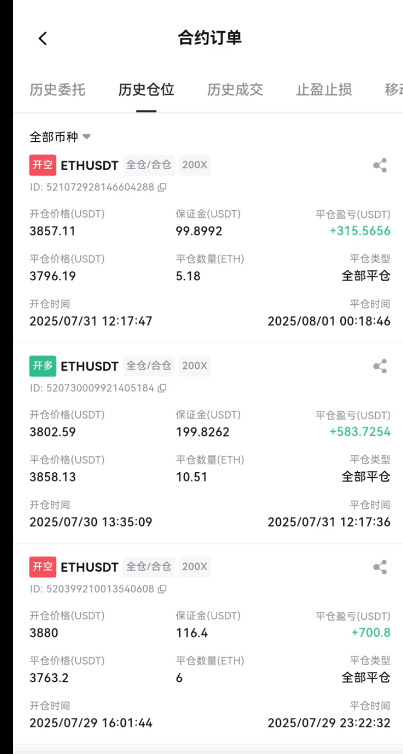
Having been in the crypto space for a long time, I've seen too many people make money by luck, only to lose it all again by skill. I started with an initial capital of 10,000 and have now achieved a seven-figure asset through experience gained from repeated liquidations and missed opportunities. Today, I am sharing the 10 practical rules I've kept under wraps, especially for those with small capital looking to break through; I recommend saving and reviewing them.
1. Capital management: Don’t be greedy with small capital; seek 'stability'.
Small capital entry, the most taboo is to consider yourself as a 'gambling god'. Don't think about catching 3 waves in one day and doubling your money; being able to capture 1 effective fluctuation (like mainstream coins moving 5%-8%) is enough. More importantly, remember: never go fully invested, even if you think the market will rise 100%, you should keep at least 30% of your funds to guard against black swan events — extreme situations in the crypto world can arrive faster than you imagine.
2. Responding to good news: 'Buy expectations, sell facts'; don’t wait to 'catch the bottom'.
Good news in the crypto world is never a 'benefit', but a prelude to a 'trap'. For instance, when a mainstream coin is about to be listed on a major exchange, or a project is about to announce good news, the rise beforehand is 'expectation'; the day the announcement happens is often the time to 'sell'. If you don’t take profits promptly on the day of good news, don’t hesitate when it opens high the next day; exit decisively — many people hold onto the mindset of 'just a little more', ultimately turning profits into losses.
3. Event-driven: 'Withdraw if uncertain'; don't go head-to-head with the market.
Major events in the crypto world (like Federal Reserve interest rate hikes, regulatory policies, industry conferences) have always been the 'catalyst' for market movements. If the market is fluctuating before an event, and you can't grasp the direction, don't think about 'taking a gamble'; it's best to reduce your position by more than 50% in advance, or simply stay in cash and observe. Wait until the event happens and the trend becomes clear (like after a policy is enacted and the coin price stabilizes, or when the conference yields substantial benefits), then it's not too late to enter — better to miss out than to make a mistake; opportunities in the crypto world are abundant, what’s lacking is capital.
4. Medium to long-term strategy: Light positions to bear volatility; 'steady compounding' is king.
When trading medium to long-term contracts (like those with a cycle of more than 1 week), never go heavily invested. Even if you believe a certain coin will rise long-term, only use 20%-30% of your capital to open a position, and use the remaining funds for averaging down or weathering volatility. The core of medium to long-term trading is not 'making quick money', but 'steady compounding' — for example, making 10%-15% a month can lead to 3-5 times returns in a year, which is much better than chasing highs and lows and ultimately facing liquidation.
5. Short-term trading: 'Follow the trend, don’t go against it'; don’t let temptation overcome you during fluctuation periods.
For short-term trading (like 1-hour or 4-hour cycles), there’s just one principle: go with the trend. If the market is moving up, only take long positions; if it’s moving down, only take short positions; don’t think about 'catching the bottom' or 'topping'. Especially during periods of fluctuation (like when the coin price bounces back and forth within a narrow range), it's better to watch the K-line for 2 hours than to rush in — fluctuating markets are most likely to 'trap' you into false breakouts; what you think is a breakout may actually be a trap, and you could end up getting 'cut' back and forth.
6. Learning and communication: 'Build your own system'; don’t be a 'follower'.
The crypto world is full of 'experts'; today someone says 'this coin can rise 10 times', tomorrow they say 'quickly short this coin'. But you must remember: other people's profits have nothing to do with you; blindly following others will likely result in being a 'bag holder'. Those who can truly make money over the long term have their own trading system — such as how to read K-lines, how to judge trends, and how to set stop-loss and take-profit levels. Therefore, you must keep learning: read professional information (like CoinDesk, Messari), study historical market trends, summarize your trading records, and gradually build your own system.
7. Volatility patterns: 'Fast rises, fast drops'; think ahead about 'exit strategies'.
The crypto market has never seen 'continuous rises' or 'continuous drops'. Rapid increases (like a certain coin rising more than 15% in one hour) are often accompanied by rapid pullbacks, even 'spikes'; after a rapid decline, there may also be rebounds. So before opening a position, don’t just think about 'how much you can earn'; also estimate 'if the market goes against you, how much will it drop' — for example, if you are going long, you should clarify 'at which price point it indicates a mistake', and prepare in advance; don’t panic when the market reverses.
8. Stop-loss principle: 'Admit when you're wrong'; stopping losses is more important than making profits.
In the crypto world, only those who know how to stop losses can survive; those who do not will eventually be eliminated by the market. Whether you are going long or short, you must set a stop-loss level at the same time you open your position (for example, for mainstream coins, generally set a stop-loss of 3%-5%). Once the stop-loss is triggered, don’t hesitate; exit immediately. Don’t think 'just wait a bit, it might rebound'; once the market reverses, it can quickly turn your 'small loss' into a 'liquidation' — stop-loss is not a loss; it’s protecting your capital. If you keep your capital, you will have the chance to earn it back.
9. Technical tools: Look at the '15-minute K-line' for short-term trades; KDJ helps you find 'entry points'.
When trading short-term, don't focus on daily charts; it's useless. Focus on the 15-minute K-line, which can help you capture short-term trends. Combine this with the KDJ indicator: when KDJ has a golden cross at a low position (the K line crosses the D line from below), and the coin price stabilizes above the moving average, it's a good entry point; if there's a death cross at a high position (the K line crosses the D line from above), be wary of a pullback. Of course, technical indicators are not foolproof; they should be viewed in the context of the overall market, but they can help small investors avoid many pitfalls.
10. Mindset construction: 'Techniques can be learned, mindset must be honed'; don’t be controlled by 'greed and fear'.
The last point, and the most important one: mindset. Techniques can be learned, strategies can be practiced, but mindset must be honed by yourself. Many people don’t fail to analyze; they are greedy when the market rises thinking 'it can rise further', and reluctant to take profits; afraid when the market drops thinking 'it might drop further', and hurriedly cut losses, ultimately being led by the market. True experts are the ones who are 'not happy when it rises, not anxious when it falls', rationally viewing every fluctuation — the crypto market is a marathon, not a sprint; those who can control their mindset can go further.
The above 10 points are experiences I exchanged for hard-earned money. There’s no shortcut to 'easy money' in the crypto world; only steady accumulation. I hope this can help those of you who are breaking through, and everyone is welcome to engage in discussions in the comments section, let’s walk steadier and further in the crypto world together.