
Today, let’s talk about the matters related to novice cryptocurrency trading, in a simple and easy-to-understand manner, hitting the pain points, so that you can avoid detours on the path of cryptocurrency trading.
Whether you are a complete beginner or a prospective cryptocurrency enthusiast ready to take the plunge, you will gain a lot!
1. Opening an account - The first step is always the hardest
First of all, the first step in trading cryptocurrencies is of course to open an account. Choosing a reliable trading platform is like choosing a trustworthy mentor. There are many major platforms both domestically and internationally, such as Binance, Huobi, OKEx, etc. The key to selecting a platform is to look at its security and user reputation. Don't cut corners by choosing a shady platform, or you might end up losing money without anyone to turn to for help. The account opening process is usually quite simple: download the APP, register an account, and then complete real-name authentication. Some platforms also require advanced authentication, such as uploading an ID card, selfies, etc. Remember, safety comes first, and don't complain about the hassle. We are not trading cryptocurrencies to save this little bit of time.
2. Trading - The first step for new cryptocurrency traders.
Once you have an account, you need to deposit some money. You can deposit funds through a bank card, Alipay, or WeChat Pay, and transfer directly to the trading platform. After depositing, there is a function called 'Deposit Coins' on the platform. Don't misunderstand; it's not about putting more money in, but converting your money into digital currency. New traders are advised to start with mainstream cryptocurrencies, such as Bitcoin (BTC) and Ethereum (ETH). They are like the big brothers in the cryptocurrency space, with relatively smaller fluctuations and lower risks. The operation is not complicated; find the right timing to buy and then hold patiently.
3. Mental strategies - the wisdom of trading cryptocurrencies.
Trading cryptocurrencies is not only a technical skill but also a psychological battle. Mindset determines success or failure; friends need to remember a few key mental strategies:
1. Don't be greedy: Seeing the price of coins soar and thinking about 'getting rich overnight,' only to buy at a high point and suffer a drop that makes your heart tremble. Investment requires caution; greed is the biggest enemy.
2. Have a plan: Set a target price before investing, and decisively take profits when the target is reached; cut losses decisively when it falls below the bottom line. Don't let emotions dictate your actions; planning is the key.
3. Learn to wait: The cryptocurrency space changes rapidly; sometimes you need to patiently wait for opportunities. Don't act blindly or follow the crowd. Learn to analyze the market and know how to seize the moment.
4. Diversified investment: Don't put all your eggs in one basket. Diversifying among different cryptocurrencies can effectively reduce risk.
5. Long-term mindset: Trading cryptocurrencies is not a one-time event; it requires long-term attention and learning. Continuously learn new knowledge and keep up with market dynamics.
4. Simplicity of the great way.
Lastly, I want to tell everyone that the cryptocurrency space is like a martial arts world, full of danger and uncertainty. Friends who are new to this path must be cautious. The key to trading cryptocurrencies lies in wisdom and mindset; as the saying goes, 'Plan before acting, know when to stop and gain.'
Want to understand contract trading? Stay calm! This is definitely one of the highest-risk plays in the cryptocurrency space.
1. Basic knowledge enlightenment: Understand the rules before discussing operations.
1. Perpetual vs. Delivery: Newcomers often encounter perpetual contracts (which have no expiration date and are relatively simple to operate), but this also means that risks persist. Delivery contracts have fixed settlement dates and more complex mechanisms.
2. Leverage is a double-edged sword: The core risk point! Leverage can amplify profits, but it can also multiply losses! A small fluctuation can lead to substantial losses! Newcomers must start experimenting with very low leverage and deeply understand its destructiveness before considering increasing it.
3. Stop-loss is a lifeline: You must set stop-loss! This is the only effective means to control the maximum loss of a single trade and protect your principal! Set a reasonable stop-loss range based on your situation and strictly enforce it.
4. Platform selection must be cautious: Safety is the top priority! Be sure to choose large platforms that have a long history, good reputation, and relatively sound regulation (if any). Carefully compare costs like fees and funding rates. Small platforms have a very high risk of running away!
2. Risk management: Staying alive is more important than making money!
1. Refuse to 'hold positions': Absolutely stop-loss and exit! Capital preservation is always the top priority; don't fantasize that the market will turn around.
2. Stay away from the temptation of high leverage: High leverage (well beyond what you can afford) is a fast track to liquidation! Data shows that accounts using excessive leverage have a very high liquidation rate! Restrain your greed!
3. Never 'all-in': No matter how optimistic you are, keep enough backup funds as a risk buffer (for example, over 30%). The market is unpredictable; leave yourself an escape route.
3. Absolutely forbidden red lines!
Stay away from rapidly rising 'demon coins': Short-term abnormal surges often come with huge risks and can easily lead to becoming the 'bag holder.'
Avoid high leverage all-in: This is the fastest way to liquidation, akin to gambling.
Refuse to trade without stop-loss: This is irresponsibility towards your own funds.
Now, facing the uncertainty of the global economy, layoffs and unemployment have become the norm. Business closures and frequent market fluctuations have led many people's careers to encounter bottlenecks. Perhaps you have heard a lot about the importance of 'second income,' and the cryptocurrency space is becoming a breakthrough for ordinary people to seek a turnaround.
But the question is, is the cryptocurrency space really an opportunity for ordinary people to get out of their predicaments? Or is it a 'turnaround' opportunity, or a 'high-risk gamble'?

1. Cryptocurrency trading: An industry with relatively low barriers to entry.
Unlike traditional investment channels, the barriers to entry in the cryptocurrency market are relatively low. You don't need to have a lot of financial background or possess huge capital; as long as you have the internet and an account on a trading platform, you can start your trading journey. But low barriers do not mean low risk. Many people enter the cryptocurrency space with the mindset of 'making a quick buck' and often find themselves caught off guard by the market's volatility. Ordinary people entering the cryptocurrency space must first understand its high-risk characteristics; it is not simply following trends for speculation but learning to view investments rationally and long-term, or finding a method that suits them.
2. The immense opportunities and hidden crises in the cryptocurrency space.
One of the characteristics of the cryptocurrency market is its immense volatility — this is both an opportunity and a trap. Many early investors in the cryptocurrency space indeed made huge profits during bull markets and turned their fortunes around, but most people overlooked the crises hidden within. Compared to traditional markets, trends in the cryptocurrency space are often harder to predict; news, policies, and market sentiment can lead to dramatic fluctuations. You might make several times your investment in a day, or it could be reduced to zero in an instant. For ordinary investors, learning to avoid risks, mastering technical analysis, and managing funds are the keys to surviving in this market.
3. How can ordinary people turn the tables in the cryptocurrency space?
For ordinary people, the volatility of cryptocurrencies is both a risk and an opportunity. Most importantly, you need to have a clear trading strategy and mindset management. Everyone hopes to turn their fortunes around through trading, but the key is whether you can stay rational and not make impulsive decisions in the face of market fluctuations. Trading in the cryptocurrency space is not a shortcut to overnight wealth; it requires you to have knowledge, discipline, and execution skills for a long-term battle. If you can continuously adjust and adapt to market changes, formulate a reasonable investment plan, and strictly execute it, then the cryptocurrency space may indeed become your opportunity for a turnaround! In the past, I did not think about the underlying objective laws, did not understand the underlying logic of the market, and wanted to get rich without effort, until I experienced a liquidation, which made me start to ponder. The so-called 'death of the heart gives birth to the way'; a liquidation can lead to awakening!
Write a reflection on BTC (Bitcoin) breaking its historical high.
In this cycle, BTC is still one of the highest quality risk assets, showing very impressive data in the asset allocation of high-net-worth families over the decades.
From the perspective of liquidity, thanks to BTC's dominance, it maximizes growth space for BTC; it also siphons liquidity from other crypto assets (e.g., Ethereum / altcoins) to maximize the defense against downside risks.
From the perspective of return rates, comparing Nasdaq and S&P 500 (BTC/NDQ; BTC/SPX), this indicator has reached a historical high in the past two weeks, which means that BTC's investment return rate still leads quality assets in traditional US stocks.
From the perspective of cyclical opportunities, although many people proclaim BTC as digital gold and claim it has decoupled from traditional stock markets, history has repeatedly proven that BTC and US stocks only have leading or lagging relationships, and there is currently no evidence that BTC has escaped the 4-year bull-bear cycle. This means that for macro investors (not short-term traders), there will be at least once a year a low-risk buying opportunity: such opportunities arise during the weak period of OPEX futures delivery in February and March in the first half of the year, during the April Death Cross (when the 50-day moving average crosses below the 200-day moving average), and there are still opportunities for summer lows in the second half of the year.
Even if you unfortunately buy at a local high point, you will usually be able to break even in a relatively short time during a nearly regular strong rebound market.
But other cryptocurrency investors have not been so lucky.
Another interesting point is that when the federal benchmark interest rate > neutral rate (FFR > R*), BTC's dominance will always rise, as it is now. This means that until liquidity improves, BTC will continue to siphon off other assets. A typical example is Ethereum, which was siphoned by BTC during the Federal Reserve's balance sheet reduction (QT) period, experiencing a painful price de-bubbling process.
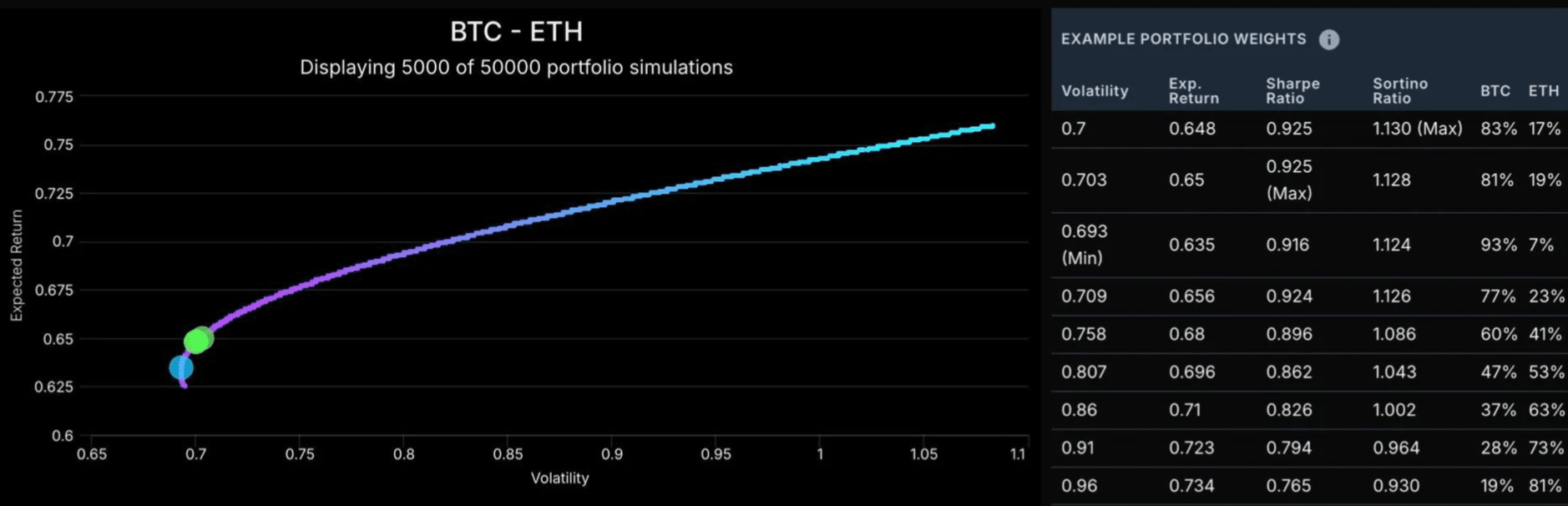
In summary: BTC is still the best asset for middle-class families to maintain stable wealth growth. From the perspective of the Sharpe Ratio or Sortino Ratio, allocating about 80% BTC in a crypto portfolio can maximize the balance between volatility and expected returns.
Finally, I would like to say that in this era, those who seize opportunities are always those who can see themselves and the market clearly. A single tree cannot make a forest; a lone sail cannot go far! In the cryptocurrency space, if you don't have a good community and insider information, I suggest you pay attention and let others help you profit; welcome to join the team!!!#币安HODLer空投HEMI #永续合约DEX赛道之争 $ETH
