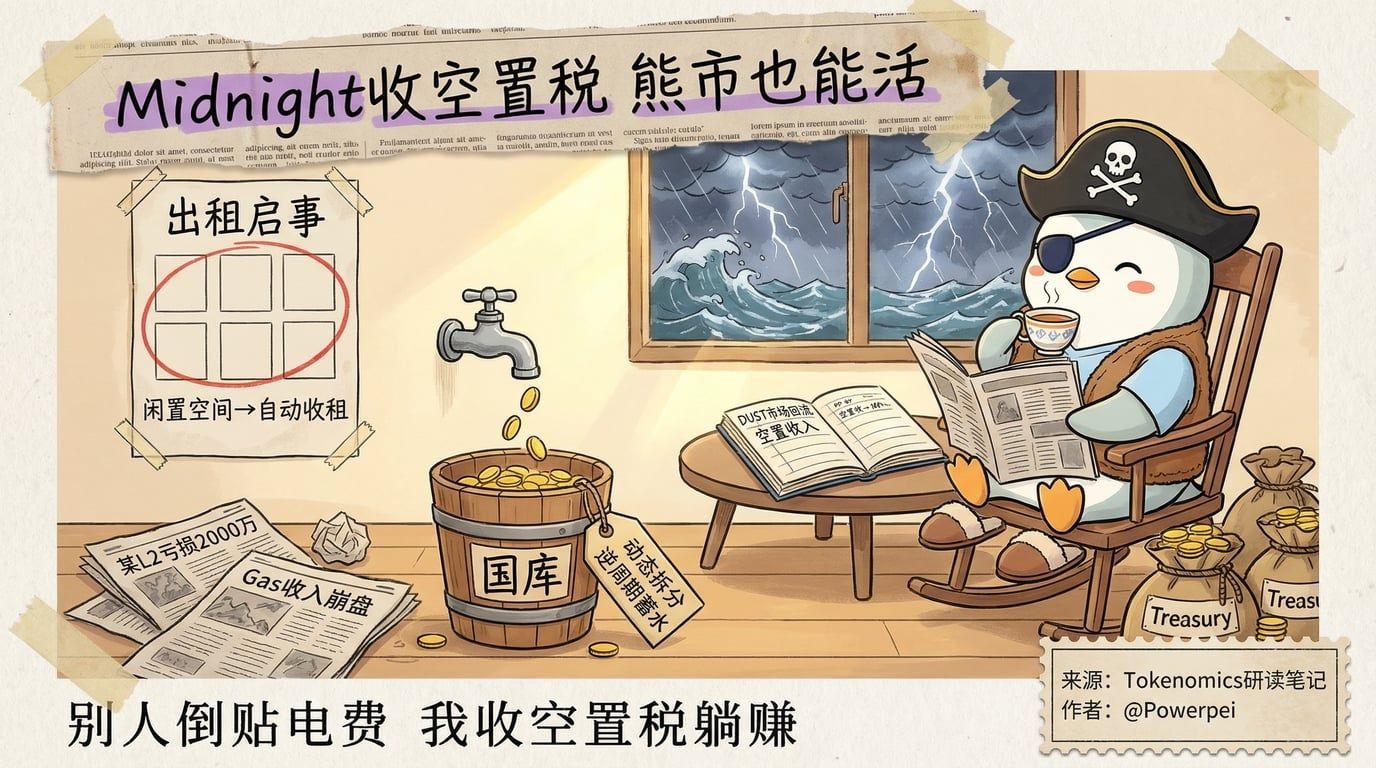
In the past few days, I saw several reports from old L2 projects, and they were just hard to look at.
Due to the drastic drop in on-chain activity during this period.
Their gas revenue simply cannot cover the data availability (DA) fees paid to the Ethereum mainnet, losing money every day.
This is actually a common problem for all public chains now: during a bull market, they rake in fees until their hands are sore, but in a bear market, when no one is playing, they can't even earn back the server electricity costs.
This extremely dependent business model on daily active users is too fragile.
It was while comparing these bad debts that I stumbled upon @MidnightNetwork the latest published Tokenomics white paper hiding an extremely cunning mechanism: On-chain Treasury.
➤ The treasury of the vast majority of public chains is 'eating old capital'
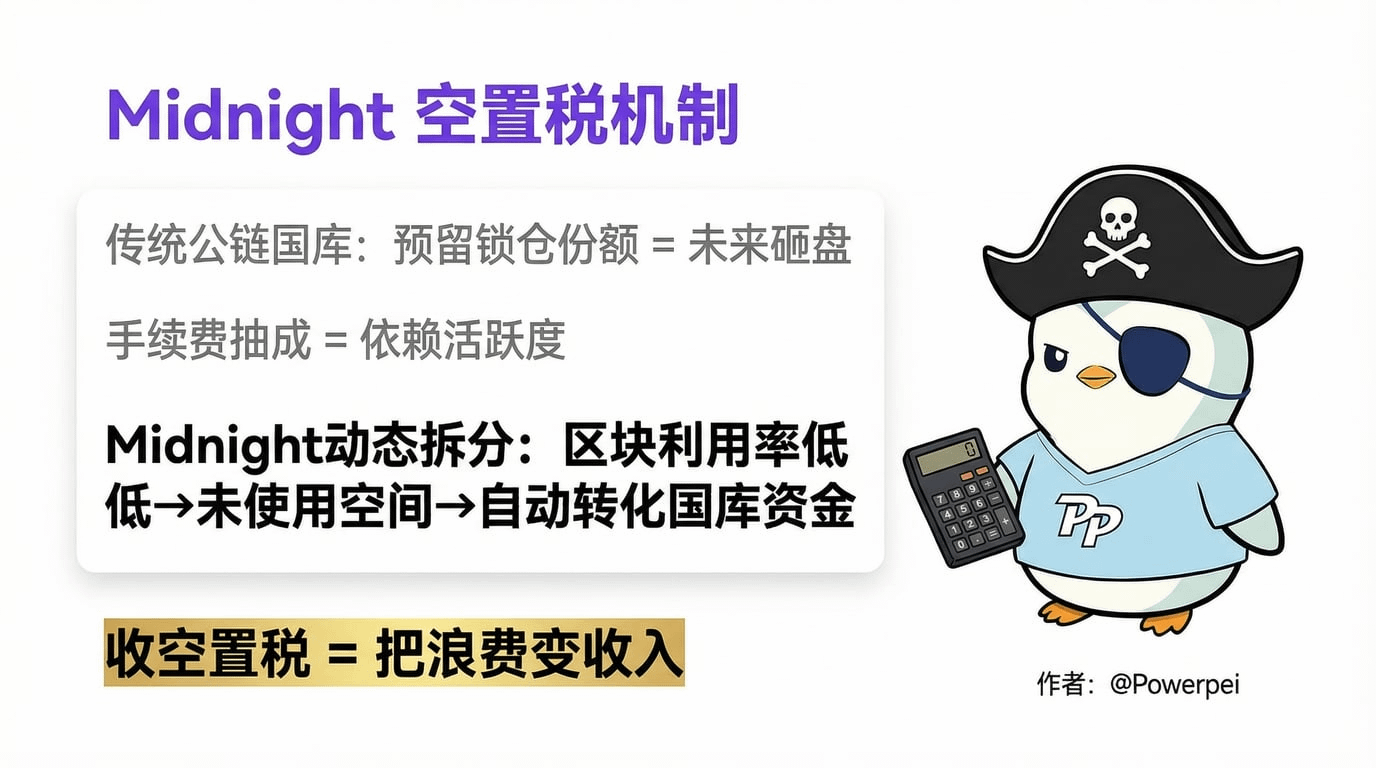
The treasury of the vast majority of public chains
Either it's a pre-reserved locked share (which is essentially using future dumping money to subsidize the present)
Or it could be taking a cut from the existing transaction fees.
But Midnight has set up a counterintuitive feature: dynamic splitting.
When the utilization rate of the network blocks is low (which means no one is trading, and the chain is empty)
The extra block space will not be wasted; this unused value will automatically convert into funds injected into the treasury.
In plain terms, it's collecting vacancy tax from the network.
➤ Breaking common sense: turning 'nobody uses it' into a source of income.
This mechanism is really interesting.
In the past, we judged whether a chain was good or not solely based on whether it was congested.
If it's not congested, it means nobody is using it, and there is no income.
Now Midnight has turned something nobody uses into a source of income.
When the market is quiet, the treasury can actually accumulate water like crazy.
By the time we wait for the need for ecological incentives, the treasury has enough bullets to fund research and give money to developers.
This is equivalent to forcibly writing a set of 'counter-cyclical regulation' economic tools into the protocol's underlying layer.
Moreover, the fees generated from the future DUST capacity trading market will also flow back into the treasury.
This shows that the team genuinely wants to operate this network as a self-sustaining company, rather than just a mining farm that relies solely on issuing tokens.
➤ Long-term layout focus: don't just look at privacy, look at the underlying assets
The current $NIGHT has just been listed not long ago, and the market is still watching its privacy label.
But I suggest those looking at the long term to really ponder over its economic structure.
Privacy is its entry ticket, but this mechanism can transform waste into income for the treasury.
That is its underlying asset that allows it to survive longer than others in this broken market in 2026.#night