
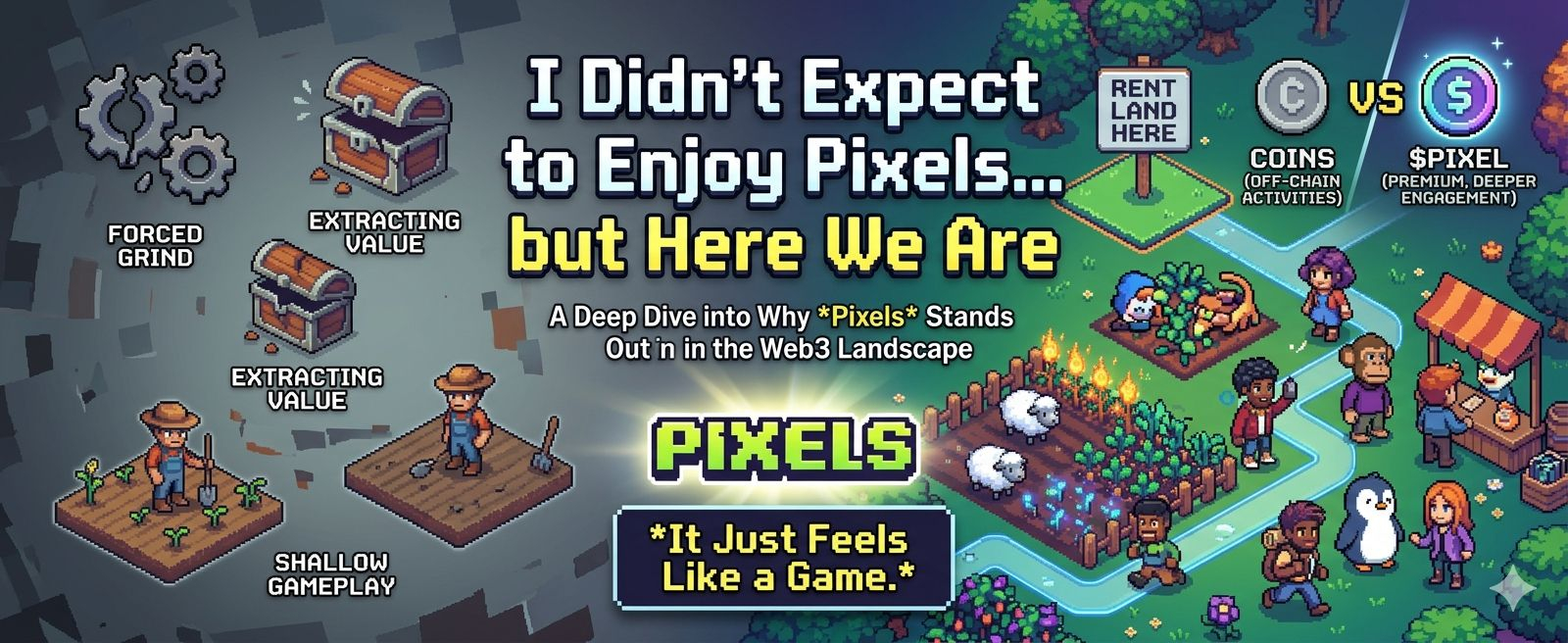
@Pixels There’s a certain pattern you start recognizing once you’ve spent enough time around Web3 games. You load in, everything looks promising for a moment, then slowly the illusion fades. The gameplay feels shallow, the grind feels forced, and sooner or later you realize the entire system is designed more around extracting value than actually being fun. I walked into Pixels with that exact mindset. Just another farming sim with a token attached, right? I’ve seen that story play out too many times to count.
But this one didn’t follow the script.
At the start, nothing felt overwhelming or engineered to push me into spending. I jumped in, got onto those free plots—Specks—and just started playing. No pressure, no hidden barriers creeping up after ten minutes. I could move around, farm, craft, explore… and it didn’t feel like I was being funneled into some monetization trap. That alone caught me off guard. Most “free” experiences in this space are only free until they’re not. Here, it actually felt like I was allowed to exist in the world first before being asked for anything.
The environment itself plays a big role too. It has that old-school pixel aesthetic, something straight out of a 16-bit era, but it runs clean. Smooth movement, no frustrating delays, no weird interruptions breaking immersion. And honestly, that matters more than people think. When things just work, you stop thinking about the tech underneath. You stop analyzing and just… play. That’s what happened here. I didn’t notice the time passing, which is rare for anything tied to tokens.
What really shifted my perspective, though, wasn’t even the farming loop—it was the people. The world doesn’t feel empty. It’s active. Players are around doing their own thing, trading, renting land, interacting in ways that feel natural instead of forced. It doesn’t have that lonely “grind in isolation” vibe that most projects fall into. There’s an actual sense of a living system, where small economies form organically between players.
And then there’s the land system, which I initially assumed would be another overhyped NFT feature. But it’s not just cosmetic or speculative. The limited supply, the different land types, the resource advantages, and especially the ability to rent land—it all ties back into gameplay. It serves a purpose. I’ve watched too many projects push land NFTs that end up collecting dust, but here it feels like part of the core loop rather than an afterthought.
Even the way external NFT collections are integrated surprised me. Normally that kind of thing feels like forced marketing, but here it blends in. Seeing avatars from collections like Pudgy Penguins or Bored Ape Yacht Club doesn’t break immersion—it actually adds to the ecosystem. Pets, items, avatars… everything connects in a way that makes sense instead of feeling stitched together.
But the biggest thing—the part that genuinely changed my opinion—is the economy.
They didn’t break it.
That might sound simple, but in this space, it’s rare. Instead of flooding the system with rewards and letting bots farm everything into the ground, there’s clear control over how resources are generated and used. It feels measured. Thought out. The shift from $BERRY to Coins is a perfect example of that. At first, it might look like just another token adjustment, but it actually makes sense when you look closer. Coins handle the everyday activity off-chain, which keeps things cleaner and reduces abuse, while $PIXEL sits on top for more meaningful actions—things like minting, premium features, and deeper engagement.
That structure changes how the whole experience feels. You’re not immediately thrown into a loop where every move needs to be optimized for profit. You can just play, figure things out, earn naturally through quests or trading, and decide later how seriously you want to engage with the economy. It doesn’t feel like a job pretending to be a game—and that’s a big deal.
At the same time, I’m not blindly convinced. The real question is whether this holds up when things scale. It’s easy to maintain balance at a certain size, but what happens when more players come in, more assets circulate, and the pressure on the system increases? That’s where most projects start to crack. If Pixels can survive that phase without falling into the same inflationary patterns, then it’s doing something genuinely different. If not, then it’s just a better version of a familiar cycle.
Right now though, it doesn’t feel like that cycle.
It just feels like a game—and that alone makes it stand out.