

Stablecoins are "diverting": on one hand, they cling tightly to Ethereum, while on the other hand, they are flowing towards multiple chains.
A very interesting change is happening recently: stablecoins are no longer concentrated on a single chain, but are starting to noticeably "divert".
On one side, funds continue to flow into Ethereum, while on the other side, more and more use cases are shifting to other chains. This structural change is quietly affecting the rhythm of the entire market.#ETH
Money is still flowing into Ethereum, but the method has changed.
First, let's look at the most critical point: funds are still highly concentrated in Ethereum.
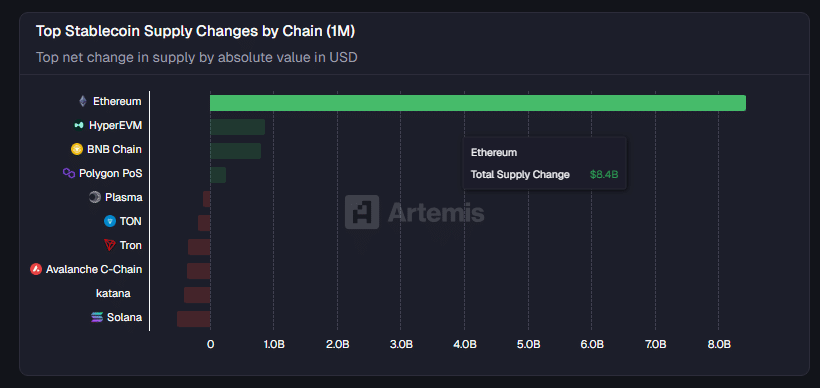
Data shows that the net increase in stablecoin supply on Ethereum has reached 8.4 billion dollars, with a total approaching 180 billion dollars. In other words, large funds are still more willing to put their money here.
The reason is quite simple - deep enough, strong liquidity, high security.
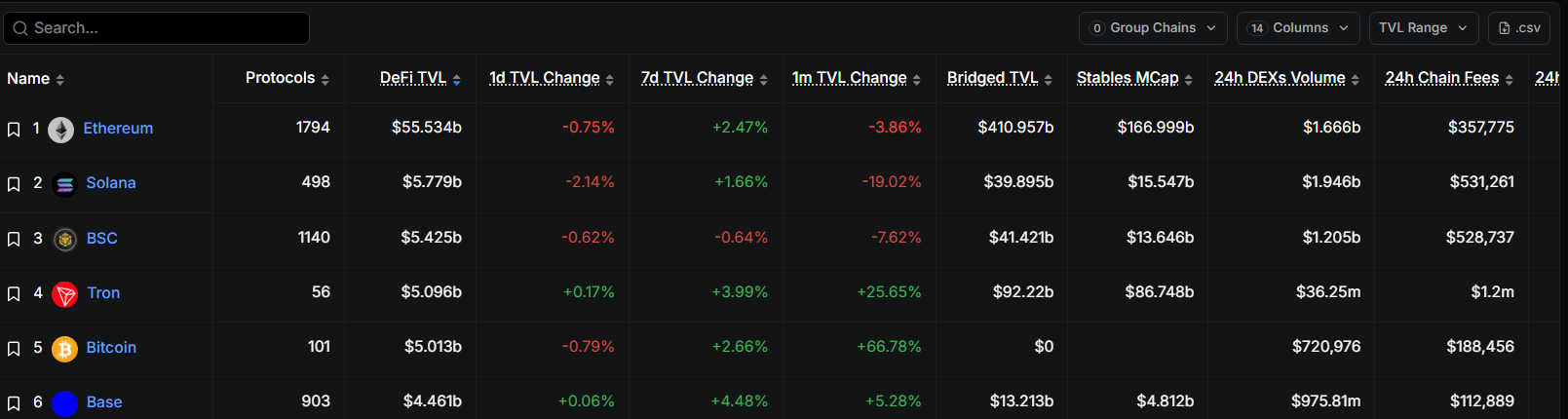
From the DeFi perspective, Ethereum's total locked value (TVL) has reached $55.5 billion, still the 'funding pool' of the entire industry. For institutions, this is more suitable for collateral, lending, and various complex structured operations.
You can understand it as: Ethereum is more like a 'bank'.
But trading and activity are running towards other chains.
Interestingly, although money is in Ethereum, the 'active money' is on other chains.
For example, #solana and #bnb Chain, their TVL is around $5.77 billion and $5.42 billion respectively, not the largest in size, but trading is very active.
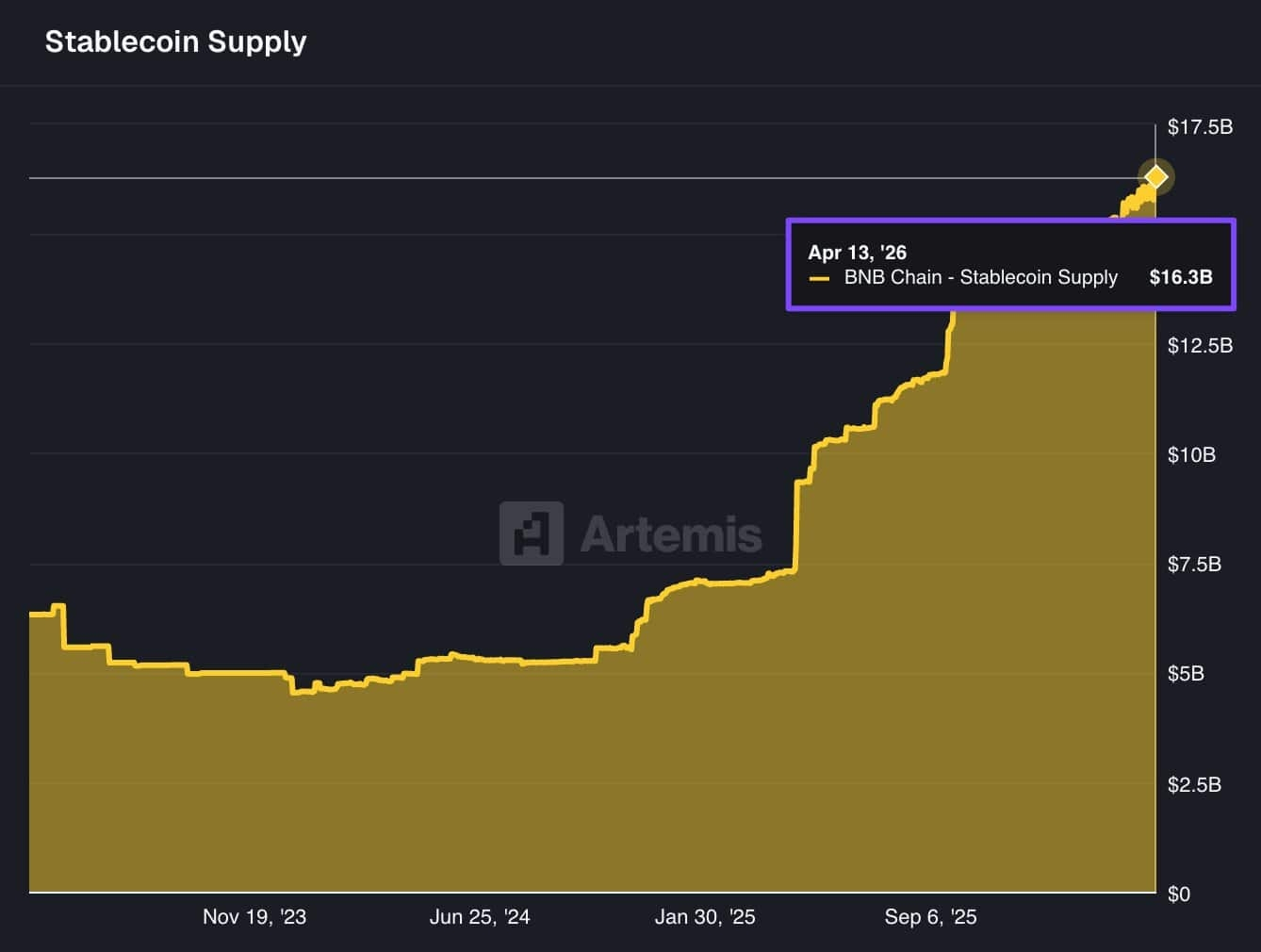
The daily trading volume of stablecoins on these two chains' DEX reached $1.94 billion and $1.2 billion respectively, what does this indicate?
It shows that users are more willing to trade, gamble, and profit on these chains.
The reason is not complicated: faster, cheaper.
So the current structure has become -
Money exists in Ethereum, but transactions happen on other chains.
TRON has become the 'intermediate layer': both storing money and transferring funds.
In addition to Ethereum and trading chains, there is another very special existence: TRON.
Its stablecoin scale has reached $86.7 billion, and the transfer activity has remained very high.
TRON not only takes on part of the 'saving' function but is also an important channel for fund transfers, especially in cross-border transfers and high-frequency capital flow scenarios.
Simply put, it is more like a 'payment network'.
A clearer pattern is taking shape.
If we break down the current multi-chain structure, it is actually very clear:
Ethereum: responsible for storage and liquidity accumulation
Solana / BNB Chain: responsible for trading and market activity
TRON: responsible for transfers and fund circulation
This is no longer a simple competition between chains, but the beginning of 'division of labor'.
New funds are entering, rather than simple rotation.
There is another more critical signal: the market is bringing in new money.
Currently, the total supply of stablecoins has reached $319.9 billion, with over $2.5 billion added in a week. This indicates that this round is not about funds switching back and forth between different assets, but rather new liquidity is entering.
And once the new funds enter, they must find a place to 'use'.
This also explains why:
On one side, Ethereum is becoming more stable
On the other side, other chains are becoming increasingly 'agitated'
Why does it affect prices? The answer is here.
This change in distribution directly affects the way market prices operate.
Ethereum, because it carries a large amount of collateral and locked funds, has a relatively stable price, currently maintaining around $2,300. These funds are 'locked', thus naturally reducing the possibility of sharp fluctuations.
On the other hand, chains like Solana, Arbitrum, and Base, due to faster capital flow, are more prone to short-term volatility and market magnification.
Thus, an interesting phenomenon has emerged:
Stability remains in Ethereum
Volatility has shifted to other chains.
In the end: the multi-chain era is no longer about 'who replaces whom'
In the past, everyone was discussing which chain would replace Ethereum.
But now the answer is becoming clearer: it's not about replacement, but division of labor.
Ethereum continues to be the 'financial center', while other chains are responsible for efficiency and speed.
For the market, this structure is actually healthier -
With a stable base, there is also an active trading layer.
What we need to look at next is not who rises the fastest, but which chain the funds will 'use'.