
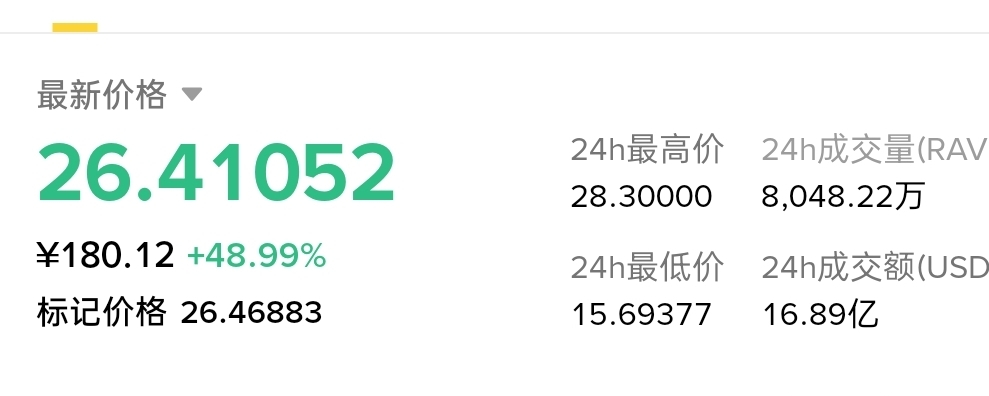
If a coin has been highly controlled (meaning the dealer or exchange can manipulate the price at will), as a retail investor, you are facing a game with extremely asymmetric information and capital. In such a situation of "the human is the butcher, and I am the fish meat", the strategy must shift from "profit-oriented" to "survival-oriented."
In response to this situation, here are a few practical suggestions:
1. Identify the control signal and decisively avoid risks
The coins controlled by the dealer usually have obvious "abnormal" characteristics. If you find the following situations, it indicates that this target is no longer suitable for ordinary trading:
Chart Pattern: Candlestick patterns are extremely regular, often showing long upper and lower shadows ('pin bars'), accurately triggering liquidations on both long and short contracts.
Volume and Volatility Divergence: Prices fluctuate violently, but the number of addresses on-chain is low, or trading volume is primarily concentrated among a small number of wallets (wash trading).
Exchange depth is extremely poor: Only a small amount of capital is needed to raise or lower prices by over 5%.
Countermeasure: If you haven't entered the market, directly blacklist it. If you are already in and making a profit, take partial profits and exit.
2. Strictly prohibit the use of high leverage
The most common harvesting method for controlled coins is **'Point Detonation'**.
Since traders can see the liquidation data in the backend, they only need to inject a sum of money to instantly raise or lower the spot price by 3%-5% to make those who opened 20x or 50x leveraged contracts instantly go to zero.
Countermeasure: * If you must participate, do not exceed a maximum leverage of 2-3 times, or simply stick to spot trading.
Do not set system stop losses, but set psychological stop losses: Traders sometimes specifically look for dense stop loss areas to harvest. For coins with severe control, system stop loss orders can sometimes act as magnets that induce 'pin bars'.
3. Avoid small to medium exchanges, seek 'global average price'
Control often occurs in single-machine coins (coins listed only on one or a few small exchanges).
Large Platform Premium: Try to trade on top global exchanges like Binance, OKX. Contracts on these platforms usually use marked prices (Mark Price), which refer to the weighted average price of several mainstream exchanges globally.
Meaning: Even if a small trader dumps on a single platform, as long as the global average price remains unchanged, your contract will not be liquidated.
4. Reverse Thinking: Utilize 'Funding Rate'
In situations of extreme control where everyone is frantically shorting, **Funding Rate** can become very outrageous (for example, deducting 1%-2% of the principal every 8 hours).
Trap: Many retail investors see the coin price manipulated at high levels and want to short it, but the price doesn't drop, and their principal is first exhausted by the high funding rate.
Countermeasure: Never go against the trend and short controlled coins just out of 'spite'. If the rate is too high, waiting for liquidation is the wisest strategy.
💡 Core Advice
In financial games, admitting that you can't win against traders is not shameful. The essence of the contract market is a game against counterparties. If your opponent is both the rule-maker (exchange) and the capital owner (trader), the only way to win is not to participate in this unfair game, but to look for mainstream assets (like BTC, ETH) that have a higher consensus and are harder to manipulate by a single party.
Last Minute: Wishing everyone gets rich soon!