

U.S. government transfers Bitcoin: market tension rises again
Recently, a wallet transfer from the U.S. government has once again attracted market attention. According to on-chain data platform Arkham, the U.S. government transferred approximately $606,000 worth of Bitcoin to Coinbase Prime on April 16, sparking discussions about potential sell pressure in the market.
Although the scale of this funding is not huge, market sentiment was immediately amplified due to the involvement of historically significant case assets.
Source special: from the 2016 #Bitfinex hacker incident assets
This batch of Bitcoin is not an ordinary holding, but rather assets recovered after the 2016 Bitfinex hacker incident, totaling nearly 94,000 coins #BTC .
Currently, only a portion has been transferred, but due to the sensitive historical context, every movement raises market speculation: is it preparing to sell, or is it entering custody and distribution processes?
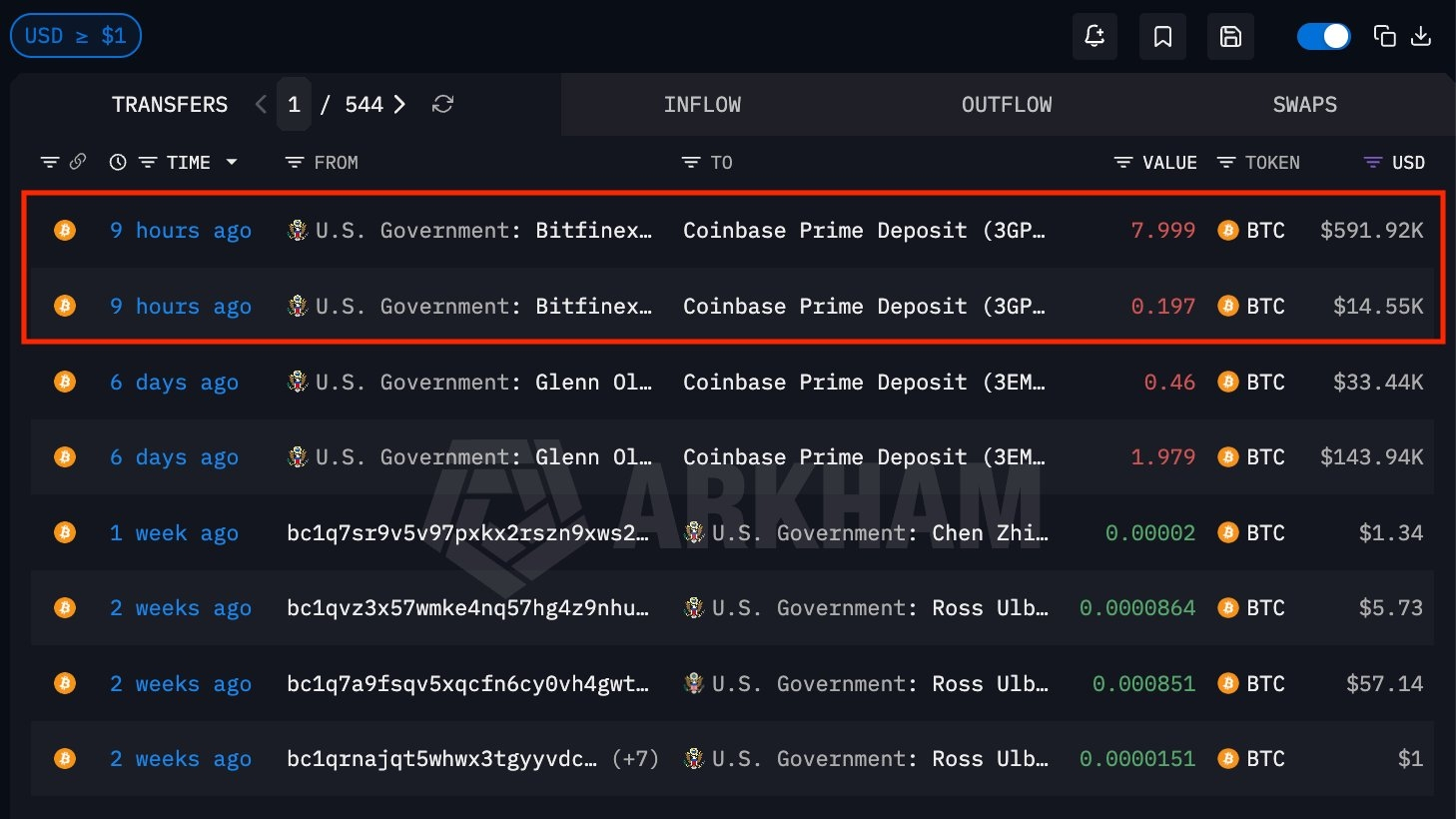
Key question: Is it a sell-off or just holding?
The biggest uncertainty right now is the true purpose of this transfer.
One perspective is that this could be a preparatory move by the government to sell assets, making it susceptible to being interpreted as a potential selling signal. However, a more reasonable explanation is that this is merely part of asset management processes for custody or future return preparations.
In fact, as early as the beginning of 2025, a U.S. court ruled that the related funds should be returned to Bitfinex, but due to complex legal processes, this asset has yet to be allocated.
Market sentiment: Currently, it's still cautious around the $74,000 range.
Despite recent fluctuations near the $74,000 mark, overall market sentiment remains cautious, even dipping into the 'extreme fear' zone at times.
This sentiment doesn’t stem from a single event; it’s a result of a macro environment compounded by multiple factors, including geopolitical issues and energy price fluctuations.
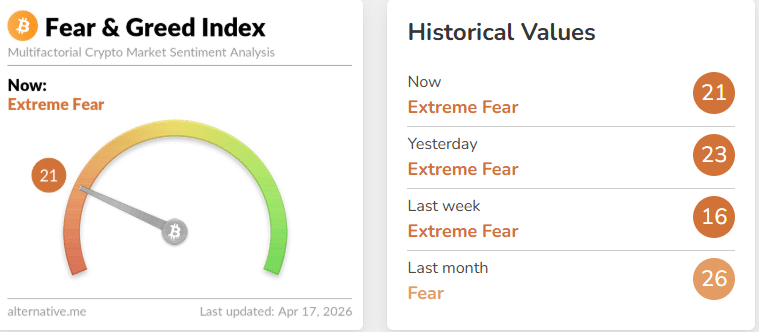
Some analysts suggest that the recent market rebound is related to ceasefire expectations between the U.S. and Iran, with a temporary drop in oil prices also aiding short-term recovery in risk assets, although overall improvement remains limited.
The macro environment remains the dominant variable.
Market institutions generally believe that the current price action is highly dependent on macro factors rather than just on-chain supply and demand changes.
For example, trading firm QCP Capital pointed out that the current rebound is more of a 'phase repair' rather than a trend reversal.
In other words, the market is indeed recovering, but it hasn't returned to a fully stable state yet.

On-chain signals: Whales are starting to accelerate their movements.
On-chain data indicates that a notable recent change is the actions of large holders.
Wallets holding over 100 BTC show clear signs of activity, with a significant influx of Bitcoin into exchanges, typically viewed as potential sell-off preparations.
Analysts from CryptoQuant have noted that this level of capital movement is uncommon recently and could pressure prices in the short term.
Next, the key level to watch is the $75,000 mark.
The core observation point in the market is currently around $75,000. If buying pressure can withstand the ongoing sell-off, there’s still a chance for the price action to maintain an upward consolidation structure.
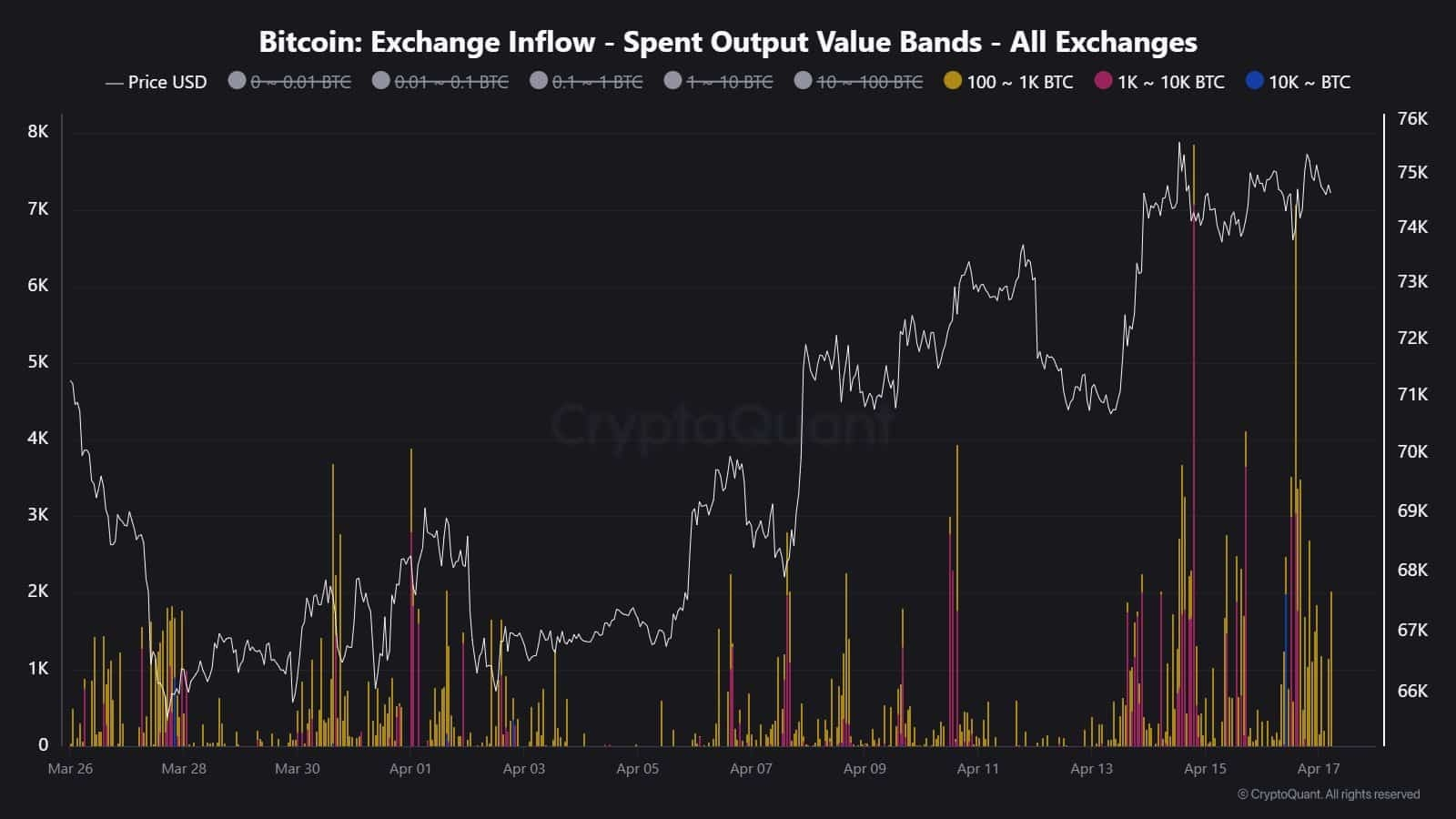
However, if the macro sentiment weakens again, combined with ongoing on-chain selling pressure, the market might re-enter a consolidation phase.
Summary: It’s not a single bearish factor, but rather a combination of multiple factors.
Overall, this Bitcoin transfer by the U.S. government doesn't necessarily imply a sell-off, but it does amplify uncertainty in a sensitive market environment.
With the added pressure of whale capital movements and macro volatility, market sentiment has become more cautious in the short term.
Going forward, Bitcoin’s trajectory will depend on three variables: the macro environment, capital flows, and whether the market can hold key price ranges.