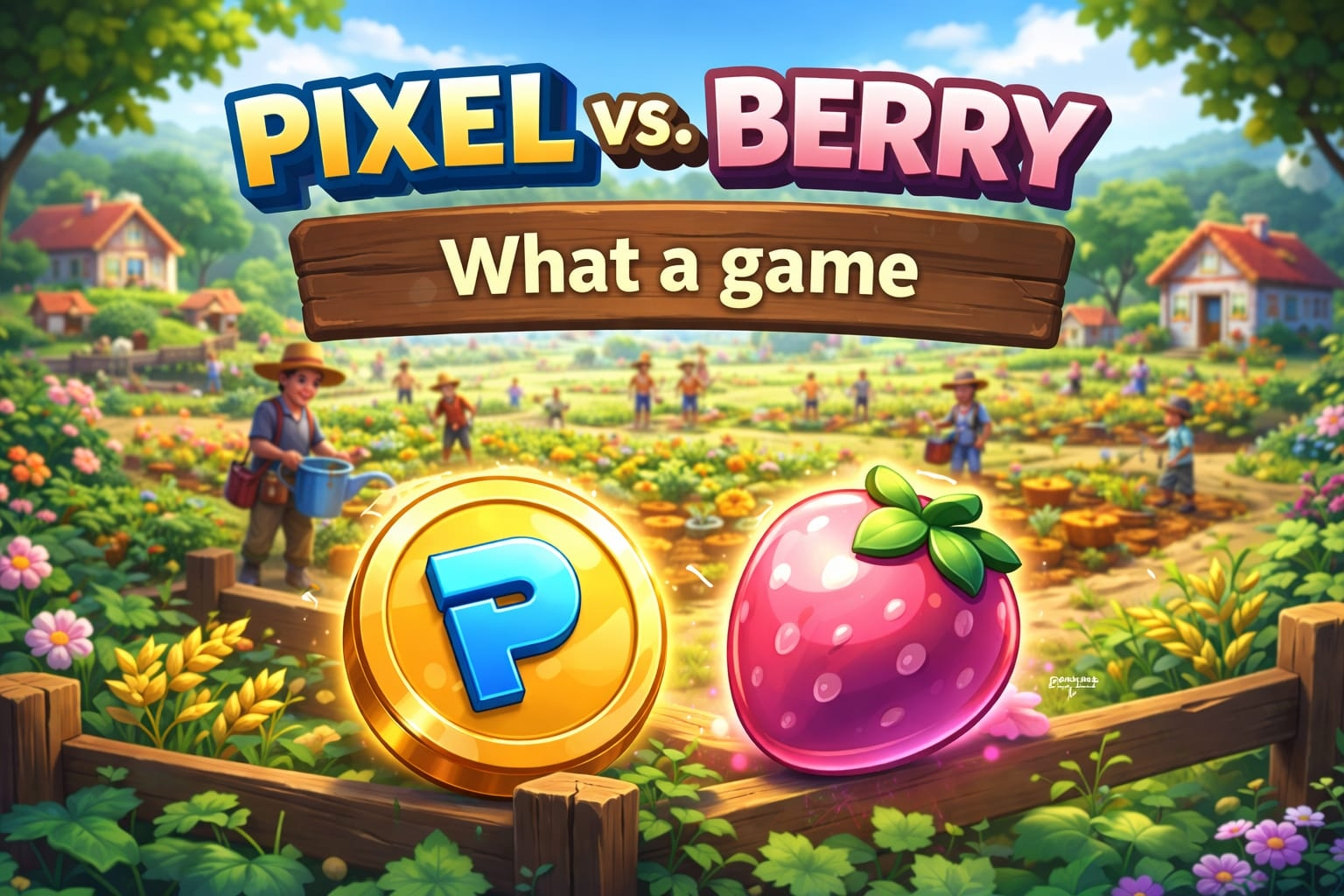
At first glance, the move from BERRY to PIXEL looks like a typical token update—the kind most Web3 games go through as they mature. But the more you sit with it, the more it feels like something quieter is happening underneath.
BERRY was simple. You played, you earned, you spent. It reflected your time in the game, but that’s about it. It didn’t try to be anything more than an in-game resource. And honestly, that simplicity is part of why it worked. Players didn’t have to think about it.
PIXEL feels different. It’s not just tracking what you do—it’s trying to give those actions a kind of weight. Not in a flashy way, but in a structured one. The idea seems to be that what you do in the game—farming, crafting, trading—can eventually be treated as something verifiable. Not your identity in the usual sense, but your behavior. Your history of participation.
That shift is easy to miss because it’s not being loudly advertised. Pixels isn’t asking players to rebuild their identity or start over with some new system. Instead, it’s layering something underneath what already exists. Almost like it’s trying to turn everyday gameplay into small pieces of proof—things that can be confirmed without exposing everything behind them.
In theory, that’s pretty powerful. It suggests a world where you don’t need to reveal everything about yourself to be trusted. You just need to prove specific things when it matters. If that idea holds up, it could extend beyond the game. What you do here might eventually matter somewhere else—not because of a username or reputation, but because there’s a record of it.
But this is where things get tricky.
Most players aren’t thinking about “verifiable credentials” when they log in. They’re thinking about progress, rewards, maybe a bit of fun. So the real challenge isn’t building this system—it’s making it feel natural. If it’s too hidden, it risks not being used. If it’s too visible, it starts to feel complicated.
There’s also the question of whether all of this structure is actually needed right now. BERRY worked because it stayed within the game. PIXEL is trying to reach beyond it. That’s a bigger ambition, but it also depends on a future that hasn’t fully arrived yet. If the broader ecosystem doesn’t develop the way this model expects, then a lot of this added depth might go unnoticed.
Still, there’s something thoughtful about the direction. Instead of trying to reinvent everything, Pixels is building on top of what players are already doing. It’s not forcing a new identity system—it’s quietly shaping a trust layer out of existing behavior.
Whether that works or not comes down to execution. Ideas like this don’t fail because they’re bad—they fail because they’re hard to translate into something people actually feel. A system based on trust and proof only works if users benefit from it without needing to think about how it works.
Right now, PIXEL feels like it’s in that middle phase. More intentional than BERRY, but not fully proven yet. It’s aiming for something deeper than a typical game token, but it hasn’t fully shown what that depth unlocks.
If it succeeds, this shift might end up meaning more than it seems today. It could be the point where the game stopped just recording activity and started giving it lasting meaning. If it doesn’t, then it risks being remembered as an idea that made sense on paper but never quite connected with the people actually playing.