
So when I first wandered into Pixels, I just figured farming would be, you know, whatever—some idle-clicker thing you ignore while running around or chatting with people. I mean, who actually gets hooked by farming in these games? That was the vibe. But after a couple weirdly late, kinda bleary-eyed nights—one of which, ugh, took me way past 2 a.m.—I started noticing something wasn’t adding up. Or maybe it was just... off. Certain crops—like, that one type—kept outshining everything else, and it didn’t feel like the usual “pick your playstyle” balance. There’s this sneaky little economy hiding under the surface of the cutesy farming sim.
That sent me down the rabbit hole. Because, let’s be real, a bunch of on-chain games love to hype up “player-driven economies,” but Pixels really goes for it. It’s way more than just watering your plants and cashing in. Suddenly it's all about squeezing the most out of every harvest, nailing your timing, watching the market swing when everyone piles onto the same crop. Weirdly familiar, honestly—like those wild west early DeFi days. Same hungry hustle, just... softer graphics, maybe less hair-pulling. Or maybe the stress just wears a cozy sweater now. And at the heart of all this? They’re chasing something most blockchain games totally botch: keeping the in-game economy from imploding. Usually, these games pump out rewards until inflation turns everything worthless, or people just take their tokens and bail. So, the real challenge is making people actually care and think about what they do—maybe even reinvest, instead of just grinding and dumping.
Wild twist: farming ends up smack dab in the center of that whole mess.
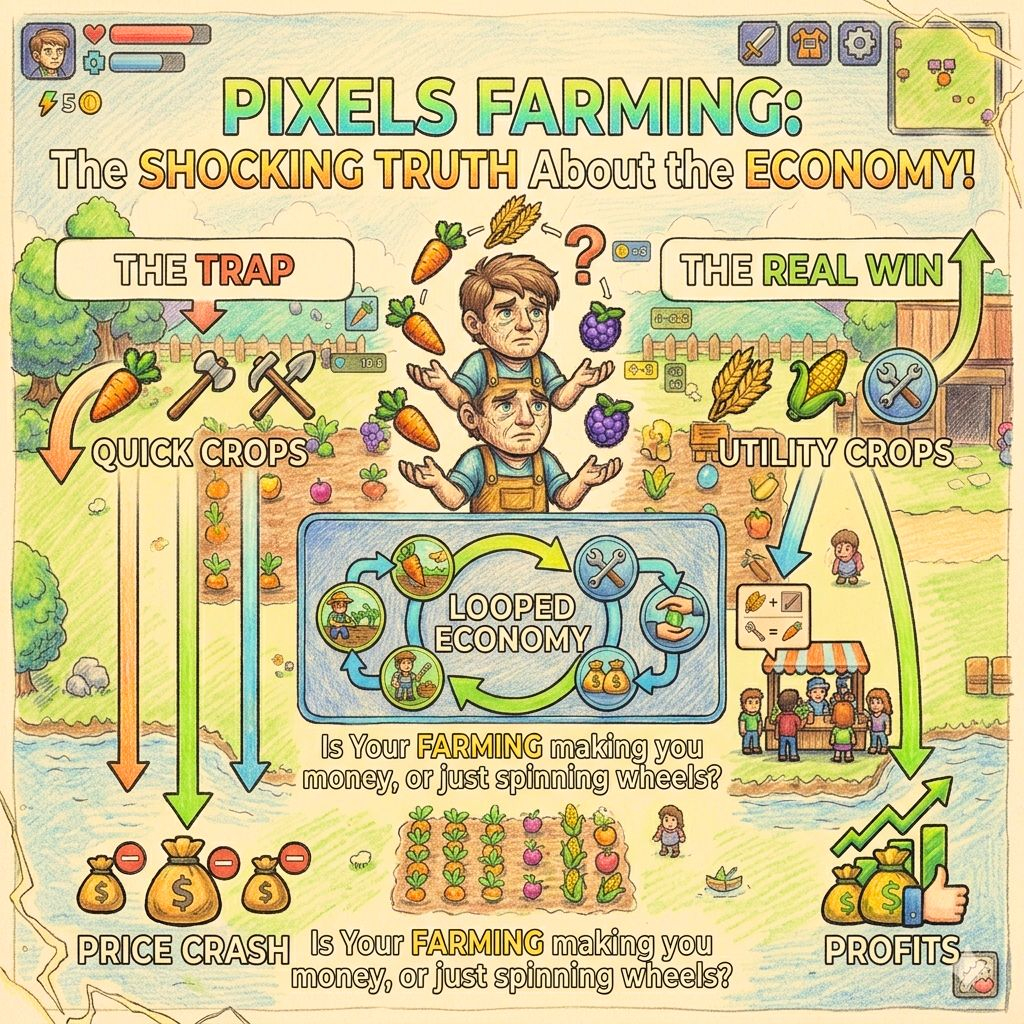
Not every crop is equal—shocker—but the fun is in why things shake out this way. The fast-growing stuff looks tempting at first: grow, harvest, repeat, easy money. But then you add in things like, what does it cost to actually grow? How much energy are you burning through? What happens when every other player is doing the same thing? Suddenly, those slower crops—yeah, the ones people usually ignore—turn out to be smarter. Higher utility later, less competition. It’s counterintuitive and, honestly, kinda cool. I dove into carrots at the start—everyone does, right? Cheap, quick, safe. Felt clever. Until, you know, everyone and their dog was selling carrots and prices tanked. Seen that movie before. So I pivoted, started planting stuff like wheat and corn, things you need for recipes and crafting. Less of that instant dopamine hit, but at least the market wanted them. Not glamorous, but stable.
And while you’re just clicking away, the game’s actually running a whole web behind the scenes. Crops aren’t just there for selling—some get eaten, sure, but others get pulled into crafting, quests, even random little trading networks. If you’re awake (unlike me at 2 a.m.), the crops that really pay off aren’t always the ones with the highest basic numbers. They’re the ones tangled up in stuff people need all the time. That’s where Pixels starts to pull away from the mess of other Web3 games, honestly. It’s not just a numbers-go-up thing. They’re really (ok, still kinda clumsily) aiming for a looped economy, where doing stuff feeds back into the system. Plant, harvest, sell, maybe help a friend, repeat. Or... well, that’s what it wants to be.
Of course, the whole thing can blow up. Balancing these fake digital markets is a nightmare. The minute everyone figures out “the best crop,” prices nosedive. If the devs mess around and tweak rewards too often, it spooks people. And look, we never totally know how much is real player choice and how much is Dev Magic behind the curtain.
Still, I’m sorta obsessed. The fact that something this small—like, literally deciding “do I plant corn or carrots tonight”—can tip an entire in-game economy one way or the other? That’s wild. Almost silly.
If this trend keeps picking up, maybe more games will treat stuff like farming as a legit economic backbone, not just a mindless minigame. A system where you actually have to read the room, think ahead, sometimes just trust your gut.

And honestly? All that, starting from a pixelated seed. Crazy.