

Once you've been in the Web3 scene for a while, you'll realize that 'dreams' are cheap, but 'calculations' are what's real.
Thinking back to the Axie era of Play to Earn, the streets were filled with slogans about changing your fate. Back then, the @Pixels felt like a chill pixel farm where everyone was farming, socializing, and snagging airdrops, lost in the romantic fantasy of 'decentralization'. But let's be real, who doesn't know the score? The vast majority jumped in, not for those few pixel seeds, but to flip those airdrops into real cash. This is essentially liquidity mining dressed up as a game.
But recently, when I flipped through Pixels' latest whitepaper, I was hit by that sense of disillusionment that comes with being a 'veteran.' This isn’t a game manual; it’s clearly a KPI assessment guide from a big player.
1. From 'giving away money to buy traffic' to 'smart accounting.'
Pixels has ditched the grand narrative of the metaverse and embraced a very pragmatic concept: RORS (Return on Resource Spent). In the past, token issuance depended on mood; now it’s all about the numbers. Every single $PIXEL output must be exchanged for equivalent or even superior profit. If the return ratio is below 1.0, you can't close the books.

2. Only 'happy beans,' no 'free lunch.'
To block out the vampires who just roll up their sleeves and leave, the introduction of vPIXEL has turned the game into a closed loop. Want to cash out? Pay a 'farmer’s tax'; want to spend internally? Smooth sailing. This design logic is brutally cold: the project team has had enough of speculators who only put in without taking out; they forcefully keep wealth within the system.
3. On-chain 'precise harvesting' and traffic filtering.
Right now, Pixels feels more like an 'on-chain ad broker alliance.' It's no longer chasing fake user growth but is building profiles through massive data. If you're just in it for the grind, you'll find the barriers have risen, and VIP status has become standard. You're no longer a 'contributor' to the project; you're now a 'cost' that the system needs to optimize.
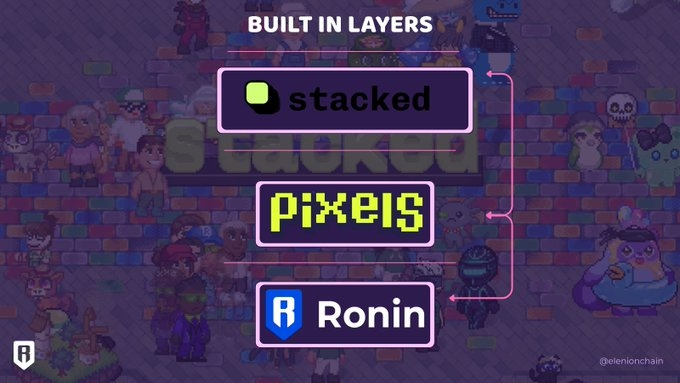
This transformation marks the entry of chain games into the second half: everyone finally acknowledges that relying on token issuance to sustain lifecycle is a pipe dream. The only way out is to revert to the old path of Web2—accounting, buying traffic, increasing retention, and inducing consumption.
Is this ironic? Absolutely. But in this circle full of pie-in-the-sky experts, Pixels' attitude of 'I just want to be an efficient intermediary' comes off as a rare honesty. It’s no longer about changing the world; it lays the ledger right in front of you: there are no dreams here, just numbers.
When you pick up the shovel again, remember: the machines in the background are rapidly calculating your remaining value. Welcome to the real Web3.
