
i spent time on the growth side of mobile gaming and honestly the number that never leaves you is how much studios spend to acquire a player who never stays 😂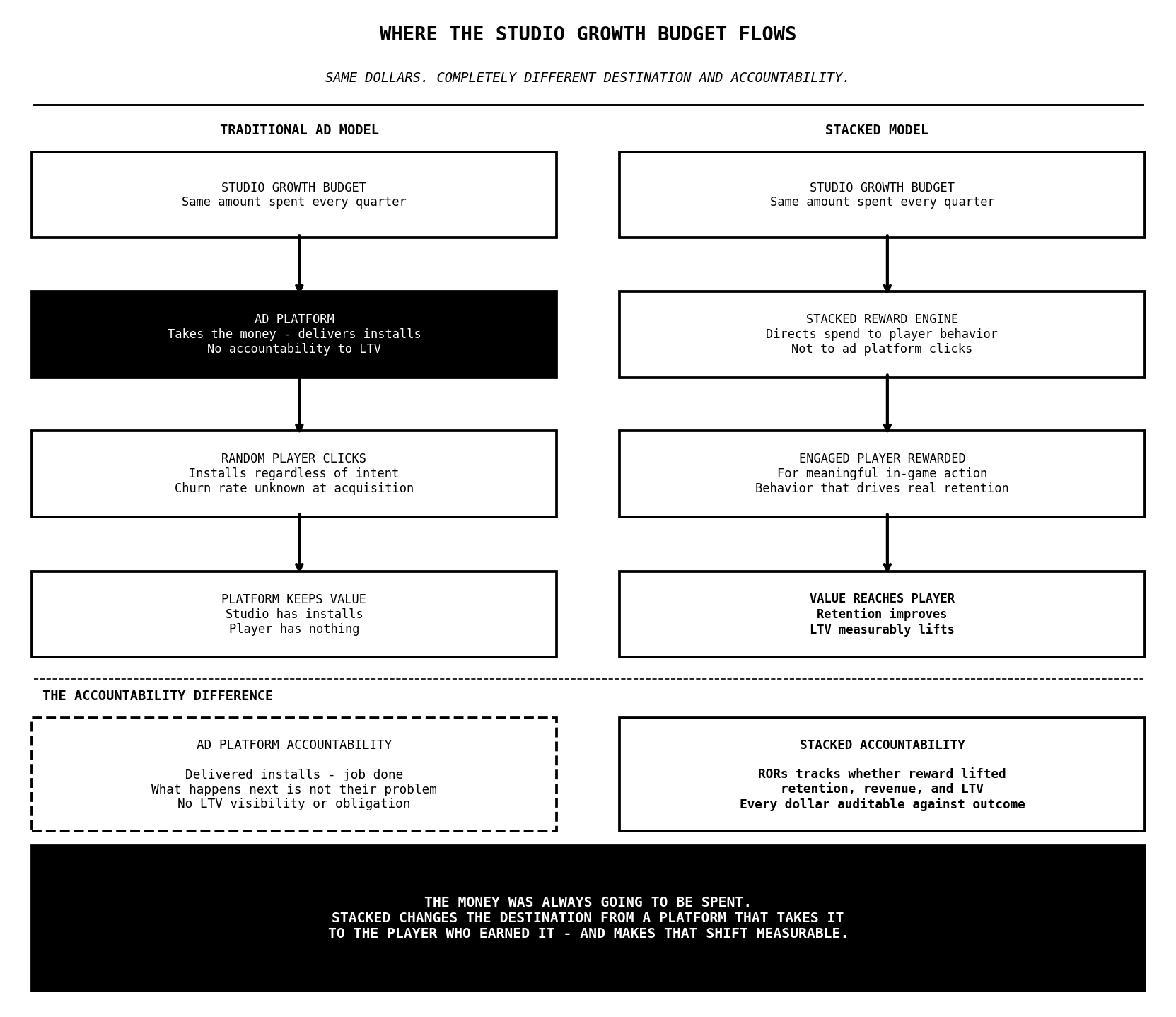
billions. every year. flowing from studio marketing budgets to ad platforms.the logic was always the same --you need users,ad platforms have reach,you pay for the reach and hope the users convert. the ad platform takes the money regardless.the player who clicked and churned in week one costs the same as the player who became your most loyal user
that model is not broken because it is immoral. it is broken because the value goes to the wrong place
the player who showed up,explored the game,built something,kept coming back - that player created real value for the studio. more engagement data.more word of mouth.more in-game spend. more content to build the community around. but the player captured almost none of the economic value their engagement produced. the ad platform that delivered the click captured it instead.
Stacked is built around a genuinely different thesis.
the marketing budgets studios already spend -not new money, the same money-get redirected. instead of flowing to an ad plattform for clicks,they flow directly to players for behavior. a player who completes a meaningful quest,builds social connections in the game, hits a retention milestone. that player gets the reward the ad platform used to get for delivering a click
And the shift is measurable.that is the part i keep coming back to
ad spend was always an act of faith. you paid,you got installs,you watched the curve and hoped. there was no clean way to know if the dollar you spent on acquisition was worth more or less than the dollar you spent last quarter.the ad platform had no accountabiility to your LTV curve
Stacked makes the redirection auditable.the RORS mechanic tracks whether rewarded behavior actually lifts retention,revenue,and LTV togeter. not just installs.not just session count. the combined lift across all three simultaneously.a studio can see -with real data- whether the value they redirected to players came back as ecosystem growth
the structural insight underneath all of this is simple but it took the whole industry a long time to see it clearly..
players who stay and engage are the growth engine....they always were.the acquisition model treated them as the output of the growth spend.Stacked treats them as the destination of it. the money was always going to go somewhere.this changes where.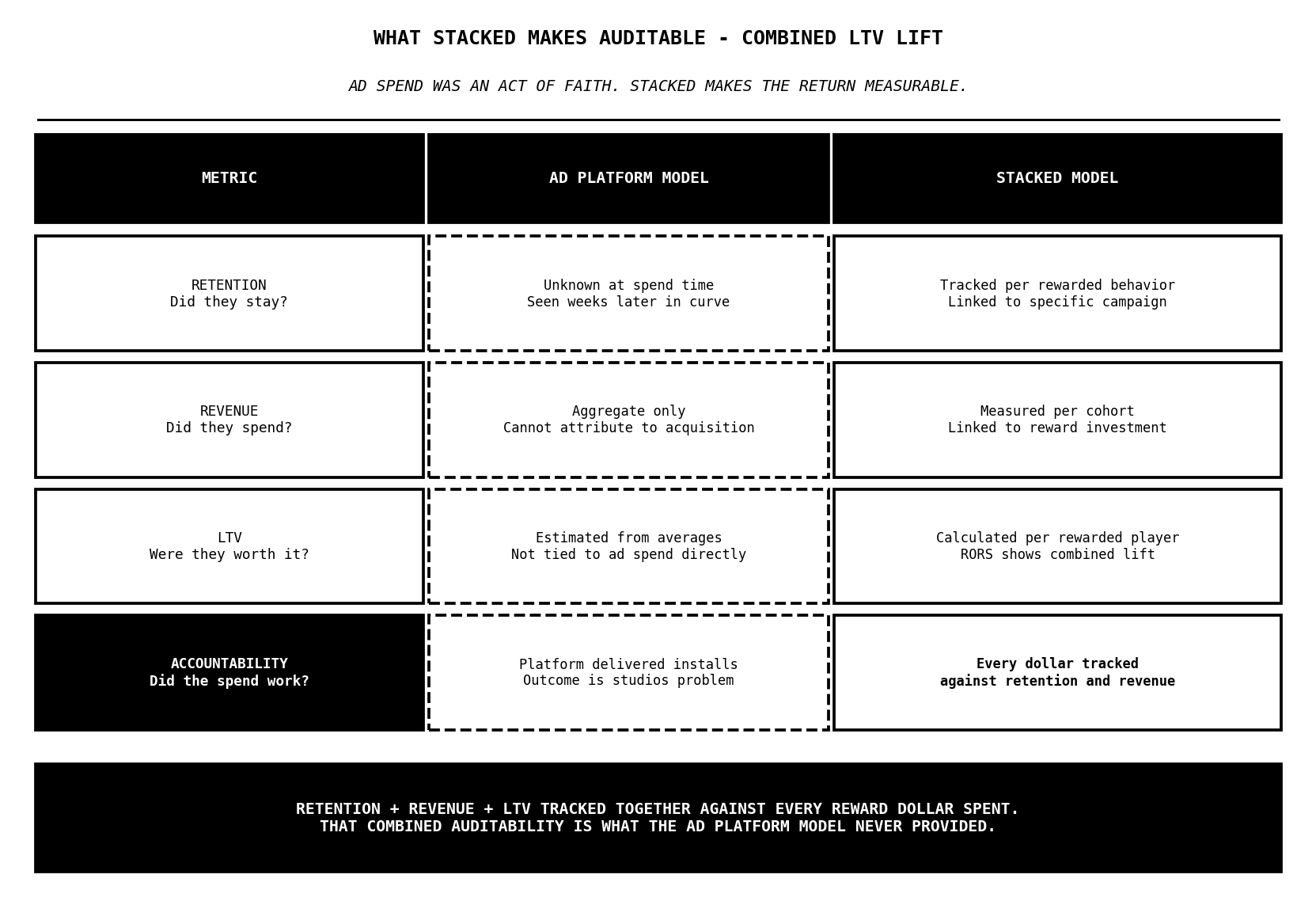
honestly dont know if redirecting studio growth budgets directly to players becomes the standard model for how live game economies are funded or stays an innovation that most studios are too comfortable with existing ad platform relationships to fully adopt?? 🤔
