
Ning Fan found this whole thing to be pure coincidence.
The night before last, Ning Fan was chilling in Pixels and saw a player in the discussion area drop a line: "Recently, it seems like PIXEL isn't really dipping, have you guys noticed?" Someone replied, "Duh, the devs are secretly burning coins, duh!"
At first, Ning Fan thought the player was just joking, but curiosity got the best of him and he checked the on-chain data—holy crap, it's actually true.
As of yesterday, @Pixels the official burn address had nearly 160,000 $PIXEL just sitting there. And that's just one publicly verifiable address; factoring in gas fees for burns and forgotten asset cleanups, it's safe to say the team has torched millions of PIXEL from circulation over the past two months.
This isn't some news the officials are promoting; it's something I dug up from the on-chain transaction records.
So what exactly is Pixels burning? And why are they burning?
I spent a few hours tracing the sources of the burns and found there are mainly three channels:
The first one is the minting fee for Avatar profiles. To mint a 3D identity avatar in the game, you need to consume a certain amount of PIXEL, and this portion doesn’t go to anyone; it goes straight to the 0xdead address.
The second one is the fuel cost for industrial land. After the Tier 5 update, NFT landholders need to consume Preservation Runes to maintain their high-level industrial buildings. The process of minting and renewing Runes leads to one conclusion: some tokens get permanently locked or burned.
The third one is community activity consumption. Events like guild ranking competitions and alliance bounty contests have entrance fees and bonus resource synthesis that inherently include the PIXEL buyback mechanism. When players pursue leaderboard ranks, they inadvertently contribute to token deflation.
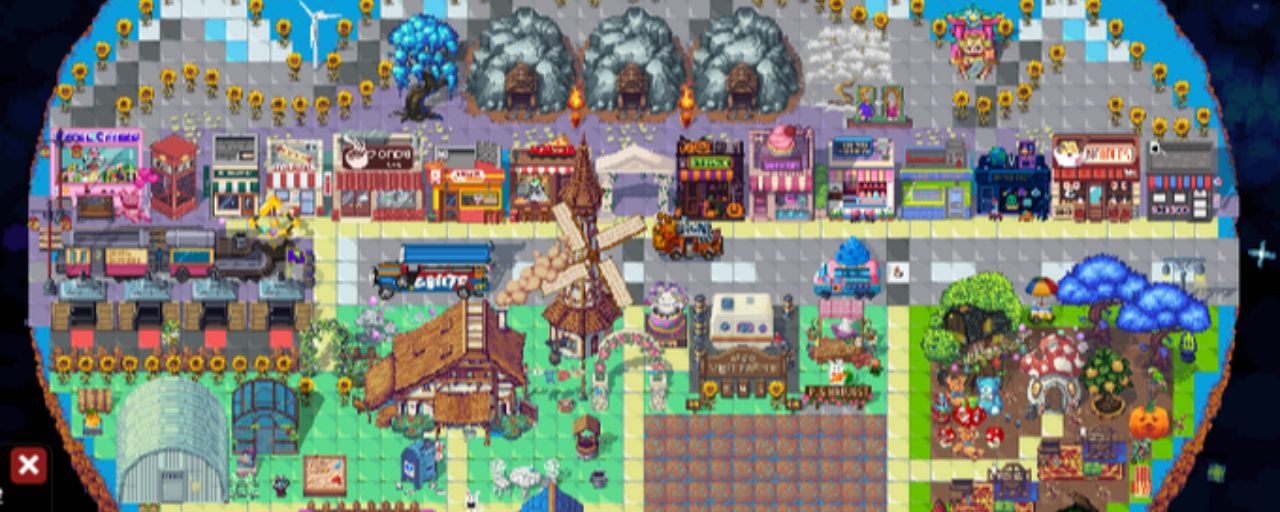
Here’s the layman’s version for you guys: the official team acts like a game arcade owner; they don’t directly take money from your pocket, but through claw machines, exchanging prizes, and buying tokens, you’ve already paid a 'service fee' to the entire ecosystem— and a significant portion of that service fee gets locked or burned, no longer in circulation.
$PIXEL How rigid is the deflation logic?
I know some of you might ask: with hundreds of millions in burns compared to billions in circulating supply, is that even enough to notice?
Good question.
The burn mechanism in Pixels isn’t a one-off 'burn show'; it’s embedded in the entire gaming experience through frequent, small-scale actions. Players minting Avatars burn a bit, renewing Runes burns a bit, participating in guild competitions burns a bit. Each instance isn’t huge, but everyone is burning, every day. Once these consumption scenarios fill up, the cumulative effect could be significant.
And you know, I've noticed that the Pixels team has a pretty cool handle on inflation and deflation. They didn't rush into some 'burn 10% of the supply' one-off gimmick; instead, they’ve woven token buybacks into user behavior. To put it in gaming terms: this isn’t an 'event', it’s a 'mechanism'.
This approach is called a 'coin buyback system' in traditional gaming, and hardly anyone has taken it seriously in blockchain gaming.
I've played over fifty blockchain games, and the ones that can pull this logic off are few and far between. Most projects either flood the market with tokens without any buyback or have such rigid buyback mechanisms that no one wants to engage.
Pixels’ approach is to firmly bind token buybacks with voluntary user actions. Want to upgrade your industrial capacity? Burn some tokens. Want to boost your staking rewards? Lock them up. Looking to climb the guild rankings? Spend some tokens. Each of these paths is a choice made by the players; they're not being coerced by the system. This kind of 'willingness to pay for experience' economic loop is the healthiest.
Moreover, the Pixels buyback system and its multi-pool staking create an interesting 'buy and lock' hedge— short-term active players are consuming PIXEL, while long-term believers are staking PIXEL. These two forces balance each other out, maintaining network liquidity without letting sell pressure spiral out of control.
Just my two cents.
Honestly, I’m not trying to call any shots, nor do I believe PIXEL will bounce back to its previous highs tomorrow. Token prices are too influenced by market sentiment, unlocking schedules, and liquidity fluctuations; in the short term, no one can make guarantees.
But as a seasoned player in the blockchain gaming space for several years, I’ve seen too many projects only focus on 'printing money' without any thought for 'buybacks'. Pixels is one of the few games seriously considering 'how to retain the money earned'.
For this reason, I'm willing to spend some extra time observing the upcoming on-chain data changes. I also suggest you guys take some time to check out the burn records yourselves; there might be some new insights I’ve missed.
Do you guys think this kind of 'high-frequency, low-volume deflation' route can help $PIXEL really break free from the selling curse of blockchain game tokens? Let's chat in the comments! #pixel