
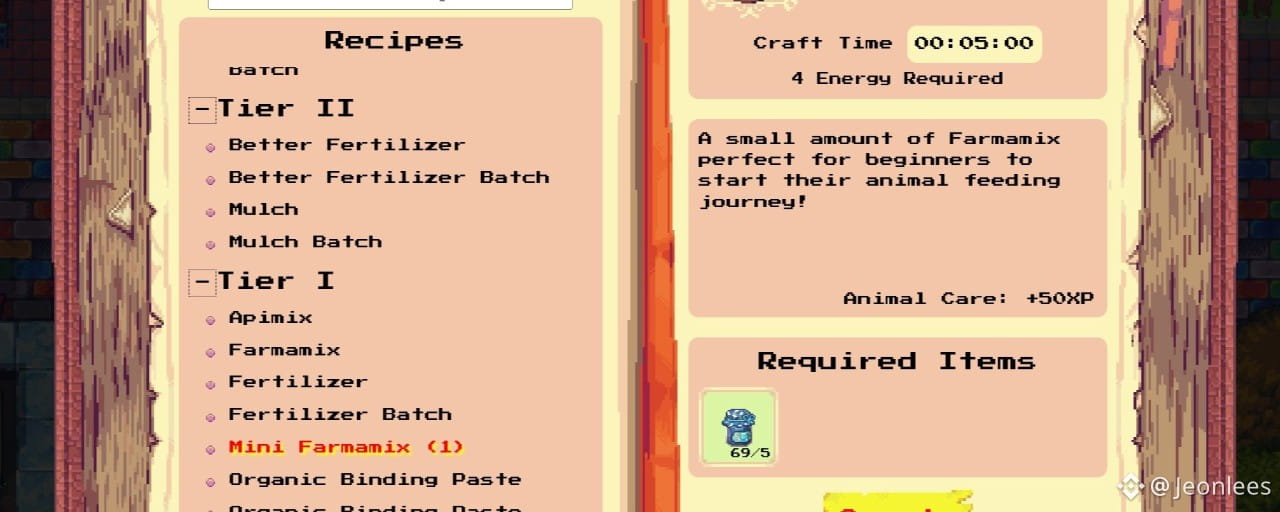


I’ll admit something: my mindset when playing PIXELS used to be quite 'simple'—logging in every day, treating the task board like a work checklist, methodically chopping wood, mining, farming, doing a round for outputs, and then dumping the materials on the market, while using the remaining time for casual socializing. Back then, my understanding of LiveOps was just holiday events, limited-time tasks, drop bonuses, and cosmetic skins—those things designed to lure you into playing more.
Later I realized that the PIXELS LiveOps system is much more than just 'events.' It's like a central hub that ties together rewards, tasks, economic tuning, anti-cheat measures, and player segmentation. Especially how they turned the task board (later called Infinifunnel) into a 'traffic gateway' that gets continuously reconfigured and weighted—what you see daily isn’t fixed content, but a behavior guide fed to you by the operational machine based on rules. The official updates even stated that the task board would lean towards higher levels and more advanced tasks, and 'will provide more consistent daily PIXEL earnings.' This is crucial: consistency means control, implying that this is their stable 'supply valve' for scheduling.
This week, I've deliberately tried to analyze from a player's perspective: if LiveOps is merely about buzz, its economic impact wouldn't be this hard; if it was just about benefits, there wouldn't need to be such complex tiers and restrictions. PIXELS' LiveOps seems to be answering three questions: who should get rewards, how much, and how to turn rewards into retention rather than inflation. And these three questions happen to be where all GameFi can easily stumble.
I'll start by mentioning the three changes that resemble the most 'operational foundation'. They are hidden in the update details but genuinely impact player experience.
First, the task board isn't about 'giving more tasks', but rather 'controlling the task supply structure'. In their updates, they've mentioned limitations like 'segmentation by skill type', 'only a certain number of tasks per skill each day', 'a maximum of 40 tasks per skill', and 'only 4 similar skill tasks can be active at the same time'. What looks like experience restrictions is actually the operations controlling the supply gates: on one hand, preventing you from grinding endlessly on an optimal path; on the other, dispersing the outputs of different skills so that market prices aren't broken by a single path.
Second, they've made the 'reputation' system smarter, and clearly mentioned it will combine on-chain and in-game behaviors to enhance anti-bot measures and combat inflation. Reading this gives me chills: it means you're not just playing with the task board; you're playing with a system that scores you and judges whether you're a 'valuable user'. It tells you how to earn points: such as owning NFT land, purchasing VIP, raising pets, completing tasks, participating in LiveOps events, and binding social aspects... You’ll notice these behaviors almost cover the four dimensions of 'spending, asset accumulation, social binding, and stable online presence'. In other words, LiveOps isn't just about content updates; it's also tagging and profiling players, then deciding whether you can access better reward pools.
Third, they will implement 'anchoring' and 'friction design' in the economic aspects. For example, they mentioned in the update about anchoring the PIXEL to Coins exchange price to USDC (similar to the VIP pricing model), while also imposing restrictions on trading/selling certain energy items. Anchoring will bring stronger predictability, and trading restrictions will increase the cost of 'arbitrage'. When you piece this together, it looks a lot like what a mature game is doing: using price anchors and trading friction to suppress the profits of 'bots' and 'short-term speculators', while retaining those genuinely willing to play long-term.
Only now am I willing to summarize PIXELS' LiveOps with one sentence: it's not about 'hosting events', but rather using events and task systems for 'economic and crowd scheduling'.
But if that's all there is, it's still just the traditional game model. What truly makes me feel PIXELS is like a next-gen operational system is their push towards making LiveOps a 'reward engine platform', which has recently been repeatedly mentioned as Stacked: the official description on X is 'a rewards app for players, and also a rewarded LiveOps engine for games'. Translated into player-friendly terms: the rewards you see in the future won't necessarily only serve PIXELS; they might serve a string of games; and the behavioral data you generate in PIXELS will be treated as 'validated operational experience' to be provided to other games.
Why is this important? Because it changes the objective function of LiveOps. Previously, LiveOps aimed for 'buzz', 'DAU', and 'playtime', but in Web3, it adds 'issuing tokens, distributing rewards, and driving transactions'. The result, as we've all seen: the more rewards are distributed, the happier the bots get; real players are driven away by price volatility and inflation, leaving only the farmers. The narrative from PIXELS this time (at least based on their external promotion) is shifting LiveOps from 'spreading sugar' to 'investment': using data to identify the group that will stick around, with rewards accountable for retention, revenue, and LTV increases.
I saw some public statements mentioning: the Pixels ecosystem has already 'processed over 200M+ rewards and driven over 25M+ in revenue'. I don't want to treat these numbers as pump material (they might come from third-party statements), but from a player's perspective, they at least indicate two points: first, this reward system isn't just freshly written in the white paper; it has indeed been frequently utilized; second, the operations team dares to present it externally, indicating they believe 'the reward system itself' can become a product, and not just a module within the game.
As a player, what I really care about isn't 'grand platform narratives', but rather: how will this affect my choices in those 30 minutes I log in each day?
I'll break it down with a very specific experience. In the past, when I opened the task board, it resembled more of a 'labor checklist': what materials are needed, how much to submit, how much the reward is, and those who work faster earn a bit more. Now, I increasingly feel it's like a 'behavior router': it not only tells me what to do but is forcing me to do certain things through task structures—like pushing me to level up a certain skill, compelling me to participate in a specific LiveOps event, or pressuring me to invest resources into a more challenging output chain. As the task board leans towards higher levels (they mentioned in updates that higher-level tasks will appear more often), lower-level players feel increasingly pushed along: either you enhance your efficiency and asset allocation, or you get marginalized.
Here, 'marginalization' isn't necessarily a brutal ban, but something more subtle: you'll find that with the same online time, the effective tasks you can do are reduced; the high-reward tasks you can access become more reliant on certain thresholds (VIP, land, pets, reputation points). This is the 'soft control' of LiveOps: it doesn't directly say 'you're not worthy'; it just makes your paths increasingly difficult, until you choose to leave or to enter the track it hopes you will.
If you're one of those players who enjoy studying mechanics, you'll start doing one thing: calculating 'unit time rewards'. This week, I've been calculating whether a certain task chain offers higher rewards or 'guides me into deeper investments'. For instance, to complete an order that seems to offer a decent reward, I might first need to spend time leveling up a niche skill; to level up that skill, I need to gather tools and recipes for a certain industry chain; gathering those recipes means buying materials in the market, or going back to inefficient gathering... In the end, you realize: the task board isn't giving you money; it's providing you with an 'upgrade reason', keeping your investments within the system.
At this point, the essence of LiveOps becomes crystal clear: it's like using rewards as bait to push players into a higher sunk cost loop. In traditional games, we call this 'long-term development', but in Web3, it gets more intricate: because the sunk costs aren't just time, but also the assets and trading paths you might have locked in the ecosystem. The more you invest, the more you rely on the task board; the more you rely, the more you're affected emotionally by its rule changes.
So my evaluation of PIXELS' LiveOps has always been 'two-sided'. The positives are true positives: it is indeed working hard to tackle Web3 gaming's most fatal 'farming' issue, especially with its straightforward writing on reputation, task restrictions, and anti-cheating objectives. This signifies that it's not pretending to be asleep; it knows who it's battling against.
But the hidden dangers are real: when LiveOps turns into a 'layered machine', player experiences will become increasingly fragmented. High-value users will find it smooth: tasks are better matched, rewards are more stable, and events have a better rhythm; free/light players will feel increasingly driven away: same login time, but fewer effective things to do, and returns become more uncertain. Thus, community discussions will become sharp: on one side, 'finally drove the leechers away', and on the other, 'this game is becoming unwelcoming to newcomers'. This kind of rupture will emerge in any game with strong layered operations; it's just that Web3 amplifies it because rewards and assets are explicit.
So I end up back at 'what can players do'. I'm not talking about prices, just gameplay strategies, focusing on what an average player like me can actually practice.
First, treat LiveOps as a 'seasonal system', not as an 'everlasting machine'. When you notice the task board starting to lean towards higher-level tasks and limit the number of similar daily tasks, you should realize: they're controlling the supply, and grinding hard will only wear you out more. The most comfortable approach is to pick the two skill paths you're best at and have the most resources for, maximizing efficiency, rather than letting the task board lead you to patch up all your weaknesses. Because the process of patching weaknesses is often the stage with the lowest returns and the highest sunk costs.
Second, understand the reputation system as a 'ticket logic', not as 'face logic'. The points listed in the update are very realistic: land, VIP, pets, tasks, LiveOps, social binding. This indicates that what the operations really want isn't 'grind kings', but 'stable, recognizable, and retainable' players. You either accept this direction and do a few things that can steadily improve your recognition; or stop torturing yourself with the mindset of 'why am I earning less and less'—because it's not about your operation being poor, it's that the system's goals have changed.
Third, learn to reverse-engineer 'task rewards' to deduce 'market demand'. The official has clearly stated: leaning the task board towards higher tiers will 'increase the demand for these items'. This essentially tells players: the task board is a demand engine. If you're just completing tasks, you're a passive player; if you can anticipate which categories the task board might support (certain high-tier materials, certain chain items), you'll be more composed in the market—not for speculation, but to lower your task costs and increase efficiency.
Writing this, I actually prefer to conclude with a phrase that's 'not pleasant but true': PIXELS' current LiveOps is no longer about 'distributing sugar to everyone', but rather about 'precisely placing sugar into the mouths of those who can stay'. If this logic operates well, it might indeed help Web3 games break free from farming; if it operates poorly, it could turn the game into an increasingly cold 'high-value user club'.
I'll keep playing, but my mindset will resemble that of managing an operational system: focusing on task structures, tier thresholds, and economic frictions, rather than just tracking 'how many rewards were distributed today'. Because in PIXELS, LiveOps is the real steering wheel of the game.