
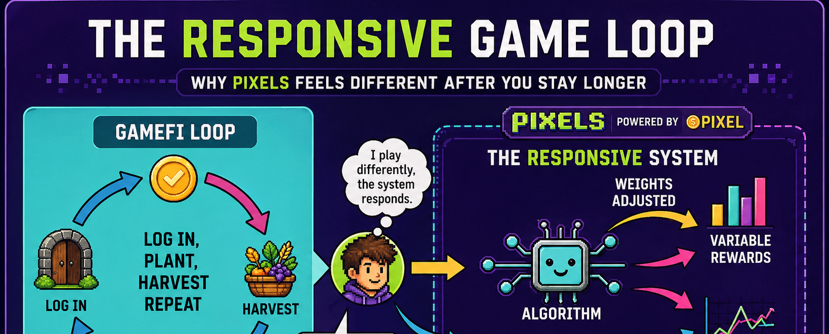

At first, Pixels looks very simple.
You enter the game, do your daily actions, move around, farm, craft, complete small tasks, and repeat the same routine again. From the outside, it feels like a normal Web3 game where more activity should naturally bring more rewards.
But after spending more time inside the system, I started feeling something different.
Pixels does not feel like a game that only counts how much you do. It feels like a world that slowly notices how you behave. The same action does not always feel equal every time. Some days your routine feels smooth. Some days the same effort feels slower. That is where the game becomes more interesting than a simple earning loop.
Most players enter Web3 games with one mindset.
Do more, earn more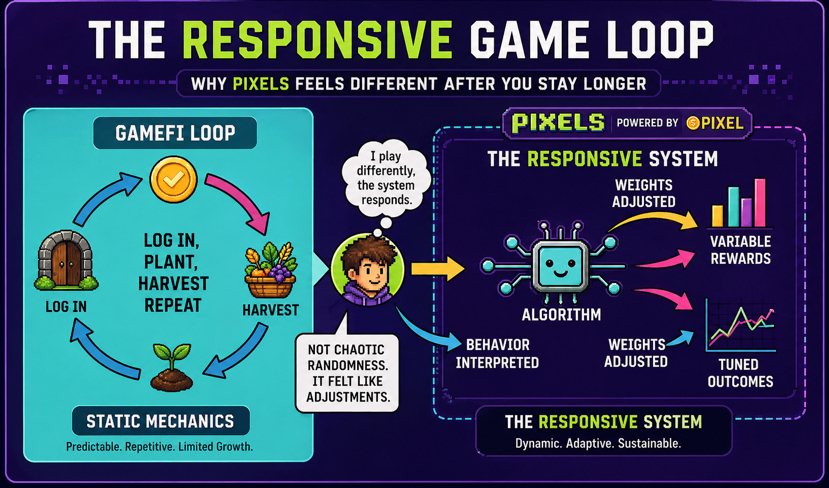
But Pixels slowly breaks that simple idea. It makes you think about timing, habits, land use, crafting, participation, and how your actions fit into the wider economy. It is not always about pushing harder. Sometimes it feels more about understanding what kind of activity actually matters.
That is an important difference.
If every action gave the same predictable result, players would only focus on extraction. They would repeat the most profitable move again and again until the system became weak. Pixels feels more careful than that. It creates friction. It slows things down. It makes progression feel connected to balance, not only effort.
This is where $PIXEL becomes more than just a reward token.
Inside the game, value does not move in a straight line. It passes through activity, crafting, upgrades, player choices, and ecosystem demand. Some value returns to players. Some value gets absorbed by the system. Some value stays inside the loop until the conditions feel right. That makes the economy feel alive instead of mechanical.
I think this is why Pixels can hold attention longer than many GameFi projects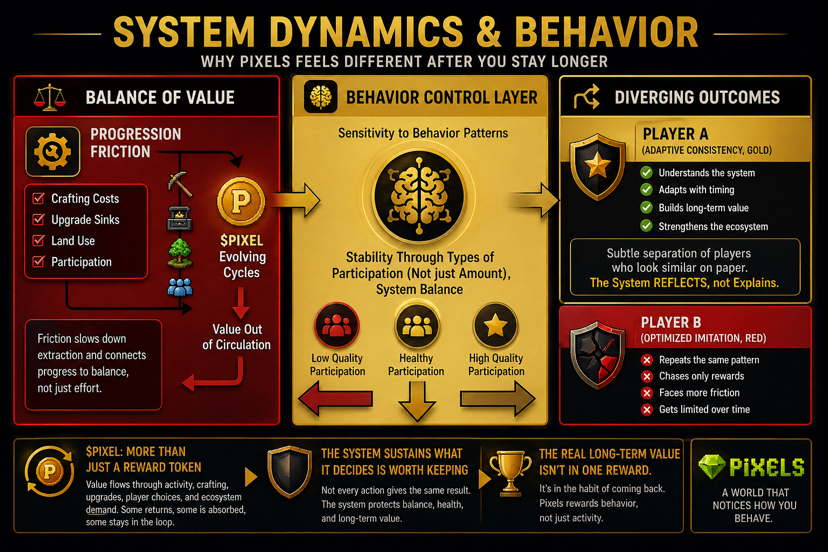
People may arrive for rewards, but they only stay if the world gives them a reason to return. Daily rhythm matters. Familiarity matters. Small progress matters. The feeling of being part of a living system matters even more.
Pixels is not perfect, and the system is still evolving. There will always be players who try to optimize every pattern once they understand it. That creates pressure. But maybe that is also part of the design. A strong game economy has to keep adjusting because players adjust too.
For me, the most interesting part is not whether every session gives the best reward.
The real question is whether Pixels can keep making players return without making the experience feel like work.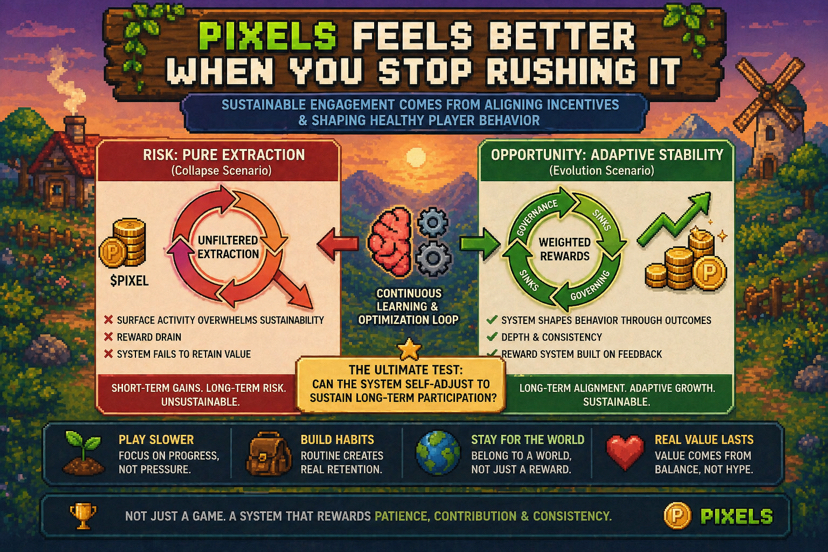
That is where long-term value begins.
Not in one harvest.
Not in one task.
Not in one reward.
But in the habit of coming back.
Pixels feels different because it slowly changes the question from “How much can I earn today?” to “What kind of player does this world actually reward over time?”
And that question is what makes the system worth watching.
What do you think about Pixels?
Do you feel the game is only about rewards, or is it slowly becoming more about behavior and retention?