
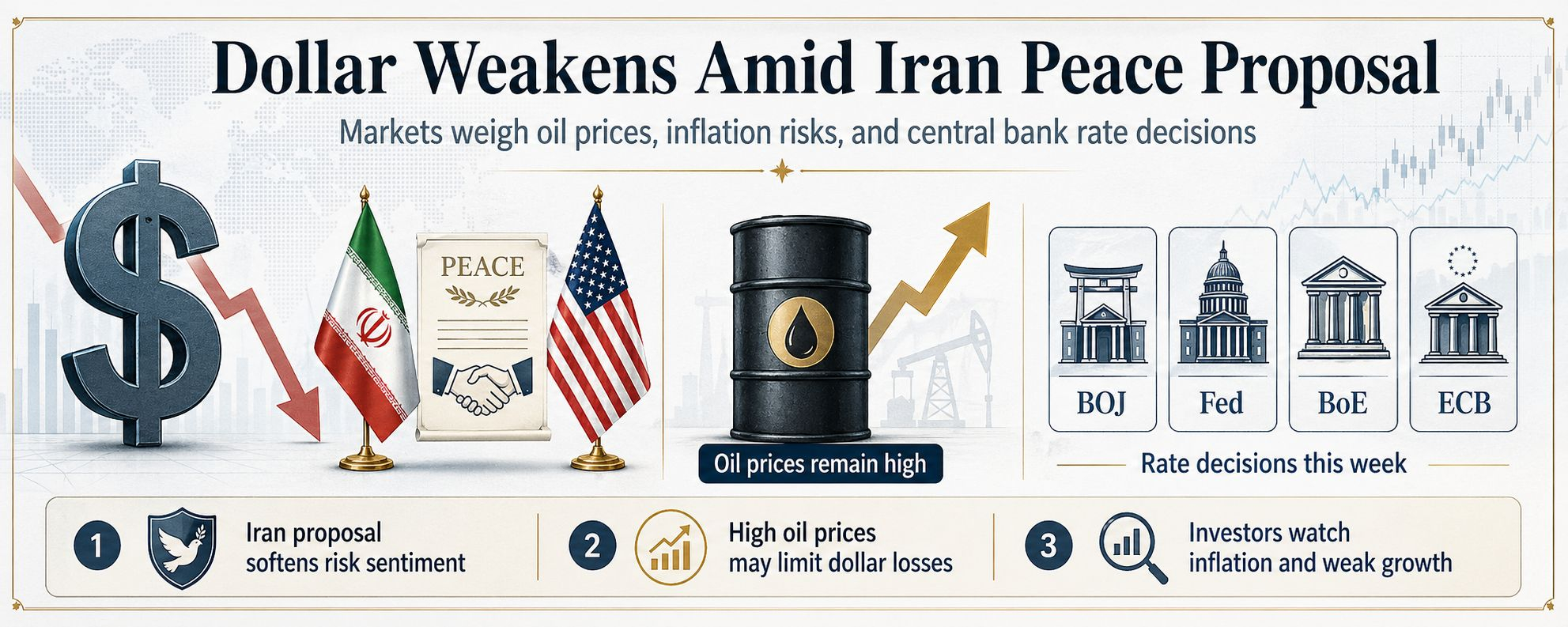

The dollar seems to be weakening, as media reports suggest that Iran has put forward a new proposal to end the ongoing conflict with the United States. According to a report by Jin10, ING analyst Chris Turner mentioned that while there's definitely pressure on the dollar, its decline may not be too deep.
One major factor is oil prices. When oil prices are high in the global market, it can ramp up inflationary pressures. Investors are now watching how central banks will tackle this situation, especially with inflation risk on one side and concerns about weak growth on the other.
This week could be quite significant for the market, as the Bank of Japan, Federal Reserve, Bank of England, and European Central Bank are set to announce their interest rate decisions. These decisions may provide a clear signal on whether major economies will prioritize controlling inflation or attempt to support weak growth.
The short-term reason for the dollar's weakness could be geopolitical news, but the market's reaction won't solely depend on war-related reports. If oil prices remain high, investors will closely watch safe assets, inflation expectations, and rate policy. Therefore, the dollar's decline might be limited, as during times of uncertainty, investors sometimes view the dollar as a safe-haven asset.
In simple terms, Iran's proposal has softened market sentiment a bit, which has led to a weaker dollar. However, oil prices, inflation pressure, and central bank decisions are still the main factors driving market direction. Upcoming interest rate announcements could impact the dollar, bonds, commodities, and the crypto market.
#MarketRebound $AXS $RAVE #MarketRecovery
