
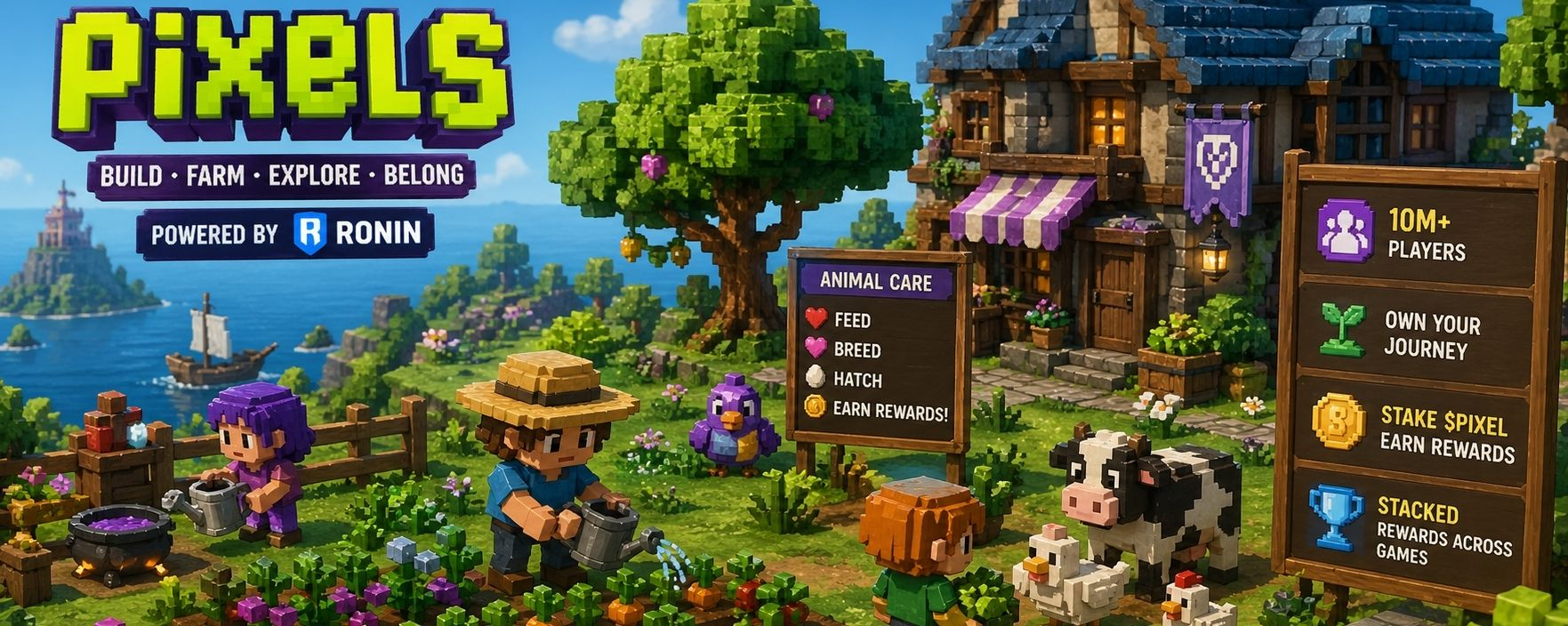
At first glance, Pixels looks like a light Web3 farming game. You plant crops, explore, gather resources, build things, and interact with other players in a colorful world on Ronin. That simple first impression is probably why so many people tried it. But after watching how the project has evolved, I think Pixels is chasing something deeper than casual gameplay. It is trying to become part of a player’s daily rhythm.
That may sound small, but it is actually one of the hardest things any game can achieve. Plenty of projects can attract curiosity for a week. Very few can create routines that feel natural rather than forced. Pixels seems to understand that difference.
One of the smartest recent moves was the Animal Care update. Instead of only focusing on crops and production, the game introduced feeding animals, breeding offspring, hatching babies, and reward systems connected to those activities. On paper, it sounds like just another feature. In practice, it changes how players relate to the world.
Harvesting crops feels transactional. Caring for animals feels personal.
That emotional difference matters more than many people realize. When players feel attached to something inside a game, they return for reasons that are not purely financial. They come back because they left something unfinished, something growing, something depending on them. That creates stronger retention than tokens alone ever could.
Another sign of maturity came through quieter updates that most people ignored. Pixels added creator codes, smoother onboarding, item hotkeys, in-game announcements, and reputation adjustments tied to both gameplay and on-chain activity. None of these changes create dramatic headlines, but they are exactly the kind of improvements serious builders focus on.
Hotkeys save time. Better onboarding keeps new users from quitting early. Reputation systems discourage abuse. Creator codes give communities a reason to promote the game organically.
These are not flashy upgrades. They are structural upgrades. They show a team thinking less about hype and more about durability.
The staking model also reveals a lot about Pixels’ direction. The project separates in-game staking from external staking. Active players who engage inside the world can stake differently than passive holders outside the game. I actually like this approach because it rewards presence, not just wallets.
Too many Web3 ecosystems treat every token holder the same. Pixels seems to be saying that showing up should matter. Time, participation, and consistency deserve value too. That is a healthier message for any gaming economy.
Then there is Stacked, a rewards platform from the Pixels team designed to track rewards across multiple games. To me, this may be the clearest sign of where everything is heading. Pixels no longer looks like a standalone farming title. It looks like a project trying to build systems that extend beyond one game.
That is a meaningful transition. Many games want players. Very few try to build the layer that keeps players connected across ecosystems. If Stacked works, Pixels could benefit not only from its own gameplay, but from becoming useful infrastructure inside Ronin’s wider network.
My honest view is that Pixels has become more interesting now than when it first exploded in popularity. Earlier attention was driven by novelty and rewards. What matters today is whether the team can turn those early crowds into long-term communities.
So far, the signs are encouraging.
Animal Care adds emotional attachment. Reputation systems add balance. Staking rewards commitment. Creator tools support word of mouth. Stacked expands the vision beyond one world.
Pixels still looks simple on the surface, and that may be its greatest strength. Underneath the relaxed farming aesthetic, it is slowly building something many Web3 projects never manage to create: a reason to come back tomorrow.
