
I used to think most Web3 games treated participation as something purely active—you log in, you act, and that’s when value is created.
When you log out, everything pauses from your perspective, and your impact on the system effectively stops. It creates a clear boundary between being “in the game” and being “outside of it.”
So when I first looked at @Pixels , I assumed it would follow that same pattern, where your presence determines your influence, and your absence removes you from the flow entirely.
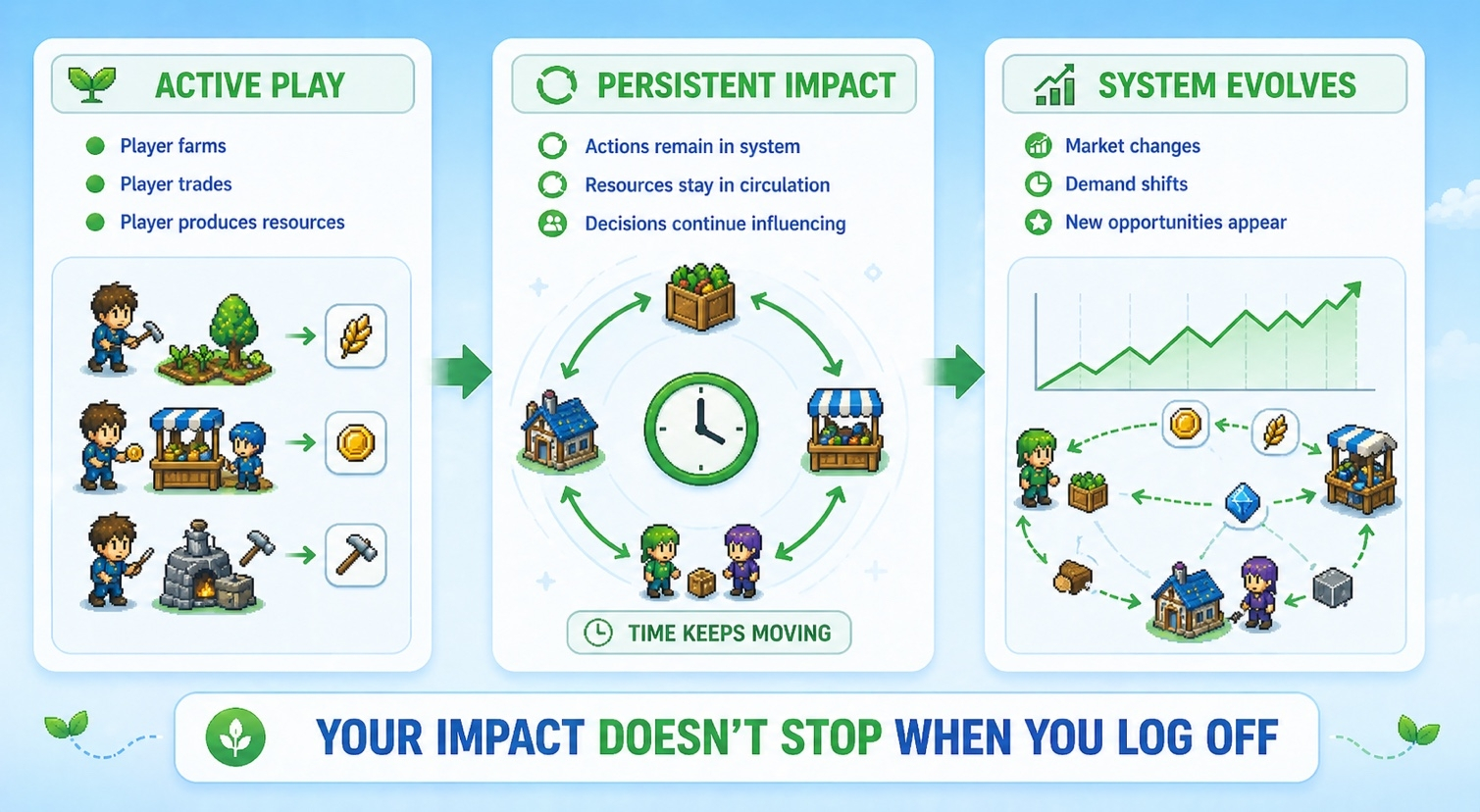
But the more I paid attention, the more I started to notice something different—participation that extends beyond active play. Even when you’re not directly interacting with the system, your previous actions continue to exist within it.
Resources you produced remain in circulation, trades you made continue to influence market conditions, and decisions you took earlier keep shaping what happens next. The system doesn’t reset around your absence; it continues to evolve, carrying forward the effects of what you’ve already done.
That creates a different relationship between players and the system. Instead of participation being tied only to the present moment, it becomes something that stretches over time.
Your impact doesn’t end when you stop playing—it lingers. And because of that, every decision starts to feel more meaningful, not just for its immediate outcome, but for how it will continue to interact with the system after you’ve moved on to something else.
In most systems, value creation is tied to immediate action. You do something, you get a result, and that result is largely contained within that moment. But in a system where participation persists, value becomes something that unfolds over time.
A resource you produce today might not become important until later. A trade you make now might influence future demand in ways you didn’t anticipate. Your actions become part of a longer chain rather than isolated events.
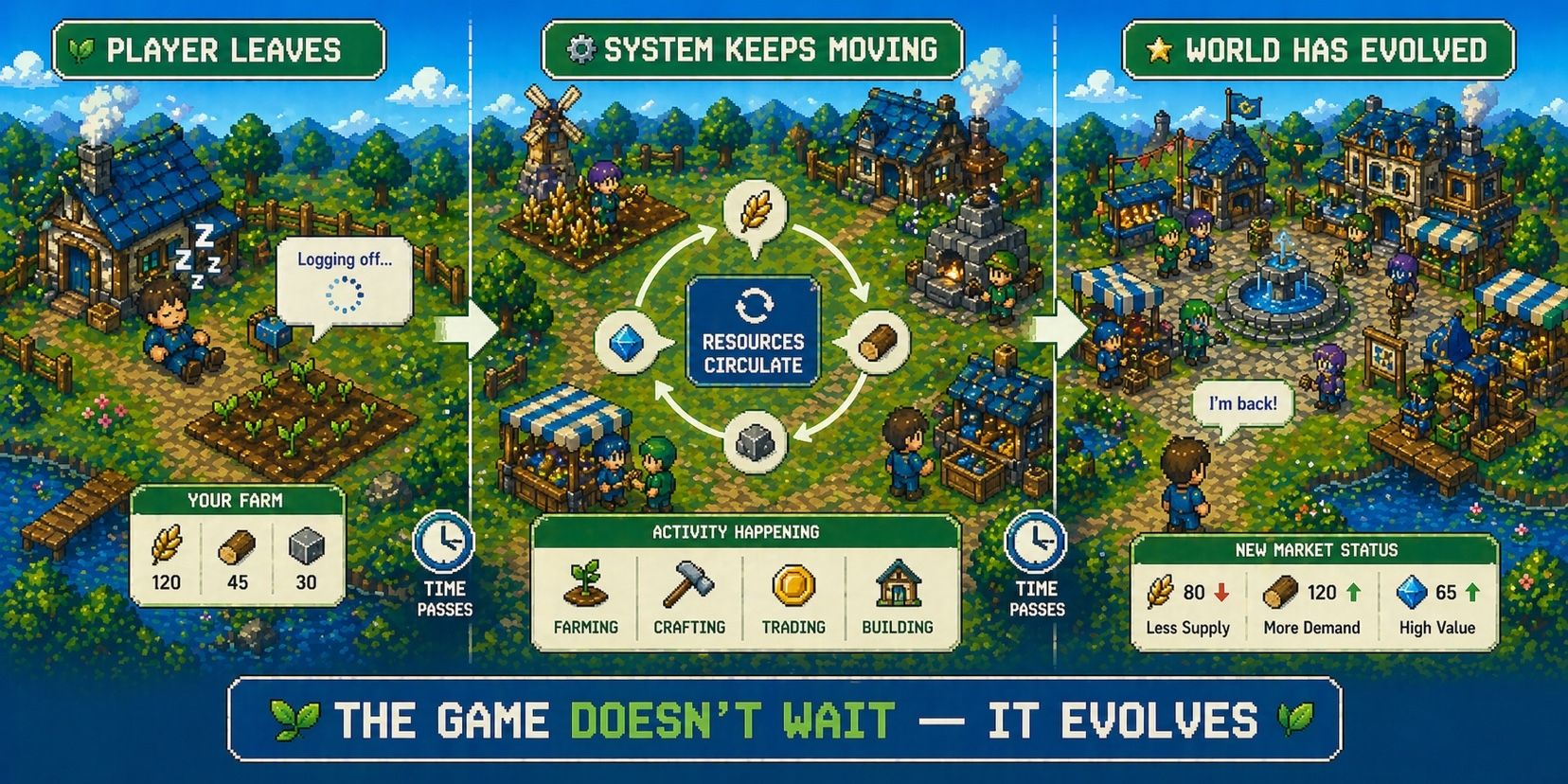
This changes how players think about strategy. Instead of focusing only on what is optimal right now, there’s a growing awareness of how decisions might play out over time. Players begin to consider not just the immediate benefit of an action, but its longer-term impact within a system that continues moving even when they are not actively engaged.
That introduces a layer of foresight into gameplay, where anticipation becomes as important as execution.
It also creates a sense of continuity that many systems lack. When you return to the game, you’re not stepping back into the same environment you left. The system has changed. Other players have acted, resources have moved, and new conditions have emerged.
Your previous actions are still part of that environment, but they now exist within a different context. That makes re-entry feel dynamic rather than repetitive, because there is always something new to understand.
Of course, this kind of design also introduces complexity. A system that continues evolving regardless of individual participation can feel harder to control. Players might feel like they are missing out when they are not active, or that they need to constantly stay engaged to keep up.
Balancing persistence with accessibility becomes important, because the system needs to remain engaging without becoming overwhelming. Too much movement can create pressure, while too little reduces the benefit of persistence.
But when that balance is right, it creates something compelling. Instead of a system that revolves around individual sessions, you get one that feels continuous.
Instead of participation being limited to moments of activity, it becomes something that extends across time. And instead of value being tied only to what you do now, it becomes connected to what you’ve done before and what might happen next.
Looking at it now, I don’t see Pixels as a system where presence defines impact. It feels more like a system where impact persists, where actions continue to matter even after they’ve been made.
That changes how engagement works, because it blurs the line between active and passive participation. You’re not just influencing the system while you’re playing—you’re influencing it over time.
And that raises an interesting question. If a system continues to evolve with or without you, does that make it more immersive because it feels alive, or more demanding because it never really pauses?
