
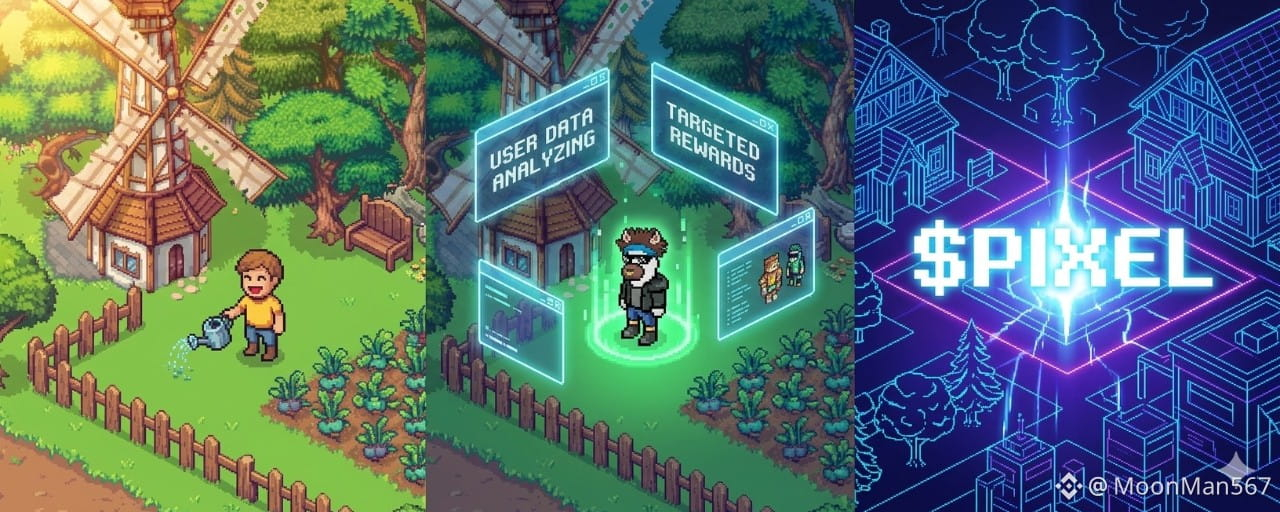
This morning I logged into @Pixels again, marking the fifteenth day in a row. I did the usual stuff: checked Infinifunnel, glanced at the Taskboard, and looked for new tasks in Stacked:
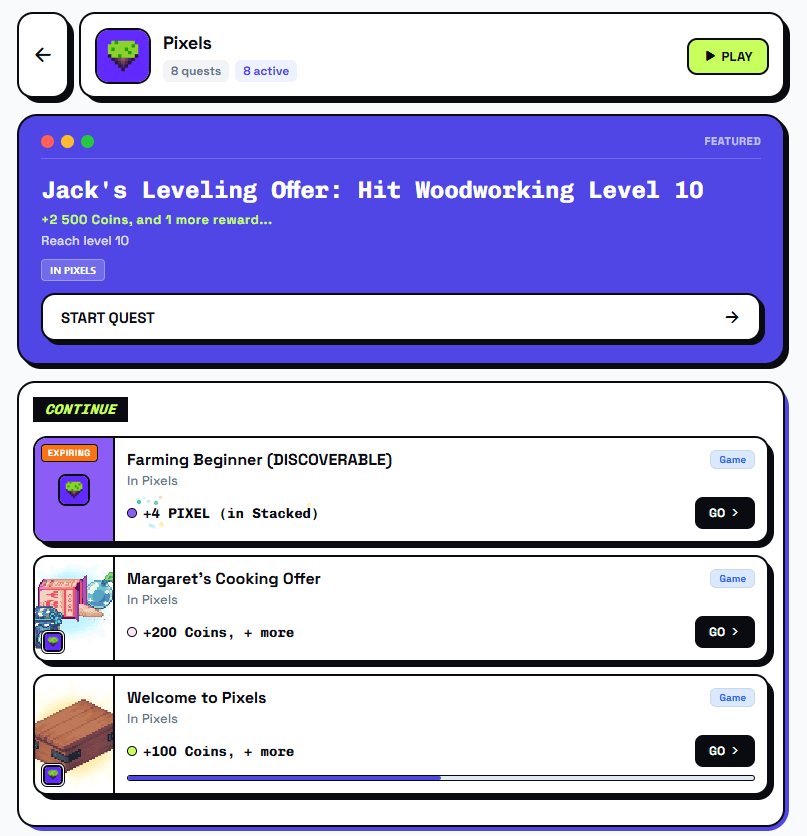
And I caught myself doing this automatically now. No thinking - just doing. Somewhere between the second and fifth day, the game stopped being an observation object and became part of my morning routine, between a cup of coffee and checking the news.
This is the moment that made me seriously question: where exactly is the line between a casual game and financial infrastructure?
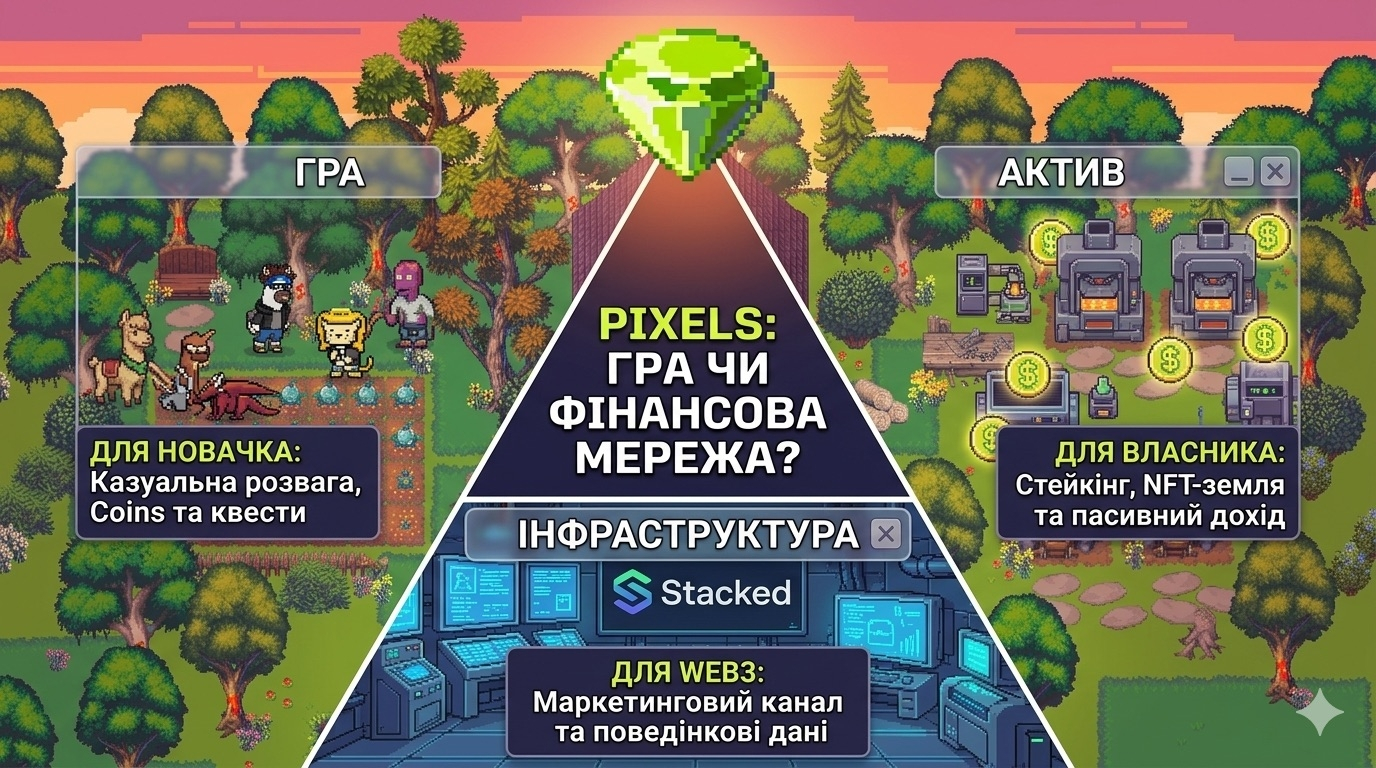
Let's start with the obvious from a game perspective. @Pixels It looks and feels like a casual game. Pixel graphics, laid-back atmosphere, simple (at the beginning) tasks. You plant crops, gather resources, chat with NPCs. You can play for months without touching $PIXEL at all - just on the level of Coins and basic gameplay. For most players, Pixels is just a game.
But then you look deeper and see something else. A reputation system that determines market access. Farmer Fee, which redistributes capital from bots to stakers. Staking $PIXEL , which is essentially voting on which game will receive funding. Bountyfall with a prize pool of up to 50,000 PIXEL tokens per season. Stacked - a B2B infrastructure on top of the game, sold to other studios via SDK. A Publishing Flywheel that accumulates behavioral data from millions of players for targeting.
This is no longer just a game. It's a financial system with a gaming interface.
CEO Luke Barwinski stated the strategic goal openly: to turn Pixels from just a game into a player acquisition platform for the entire Web3 gaming ecosystem. Stacked is the tool through which this platform is monetized. Every player inside Pixels generates behavioral data. This data becomes an asset sold to external studios via Stacked. Studios pay - a portion of the payments goes to PIXEL stakers. Stakers are interested in the ecosystem's growth. The ecosystem attracts more players. The cycle closes.
I'll be honest - it took me over a week to fully grasp this logic. On the surface, it's a farming game. Inside, it's an ad network with a gaming frontend. And I'm not sure if most players understand what they are building with their activity.
So where does the line lie? I think it's different for different people. For a newbie who just signed up - Pixels is a game, period. For NFT landowners with multiple plots and staking - it's a portfolio asset. For a studio connected to Stacked - it's a marketing channel. The same product, three different realities.
And this is what makes $PIXEL an unusual token. It simultaneously serves as gaming currency for some, a revenue-generating asset for others, and infrastructural fuel for third parties. Three functions in one token - and so far they don't contradict each other. But will it remain so when the ecosystem grows tenfold - I really don't know.
In 15 days, I went from "why is this even needed?" to "I wonder what’s next?". This doesn't mean I'm convinced of its success. It just means I have more questions now, not fewer.
Where do you draw the line - game or financial instrument?
