
I did not start watching Pixels because I expected to find something revolutionary. I started watching because it felt slightly different from other games in this space. Not dramatically different. Just different enough that I wanted to understand why.
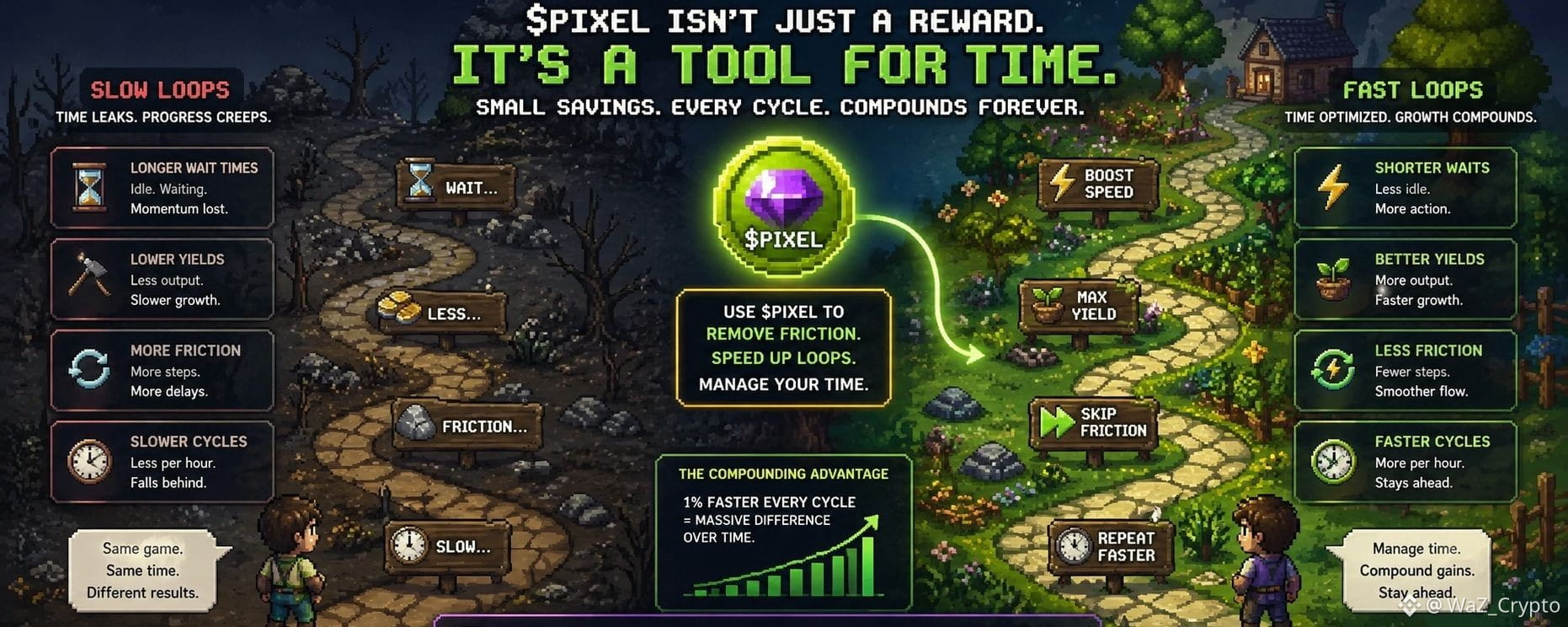
After spending time inside the system, watching how players move, how resources flow, how $PIXEL fits into each loop, I keep coming back to one observation. The token is not primarily a reward. It is a tool for managing time.
That sounds simple. But simple observations are usually the ones that matter most.
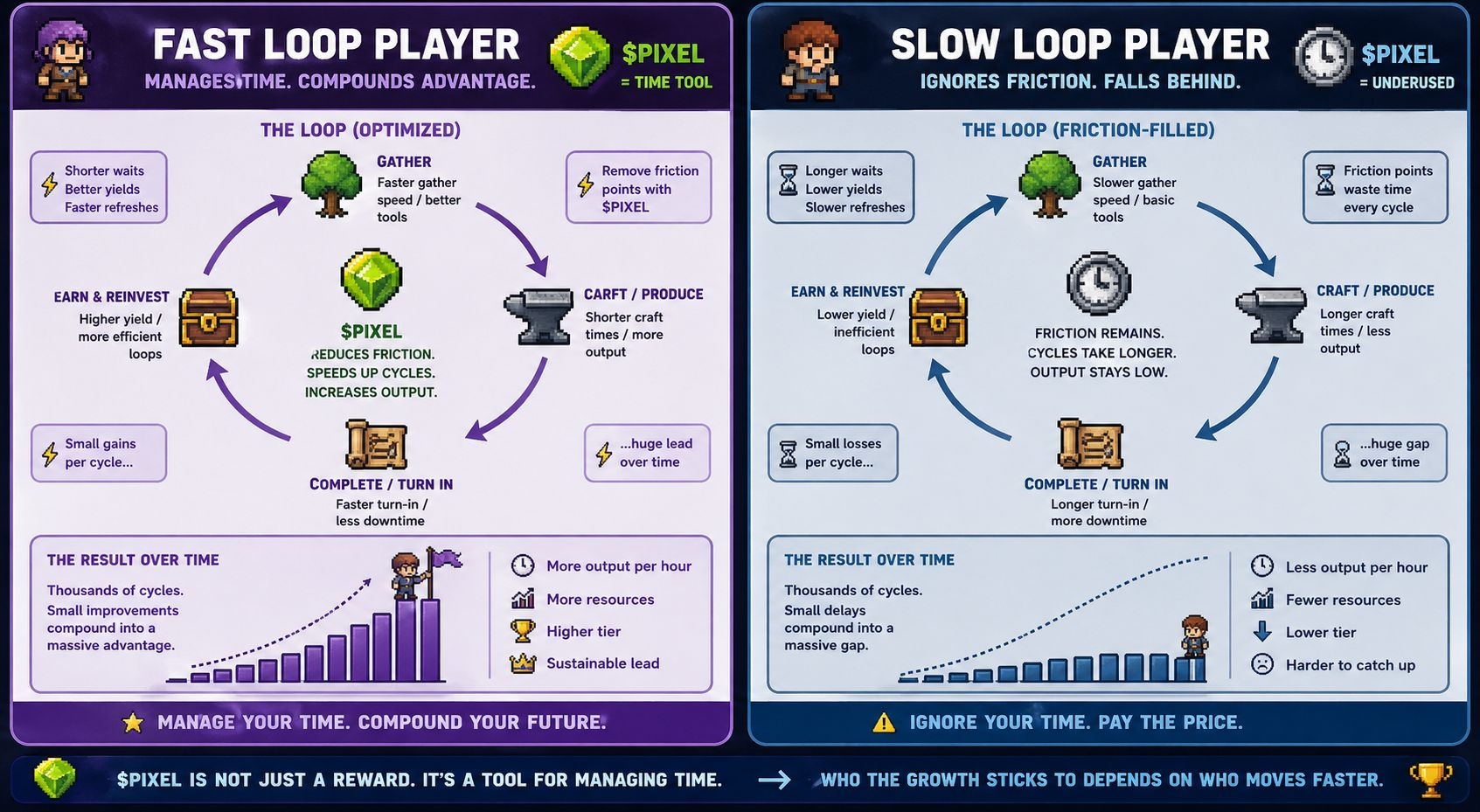
Most people look at $Pixel and see a utility token. You earn it, you spend it, you progress. That framing is not wrong. But it misses the layer underneath. The token does not just sit at the end of the loop waiting to be collected. It shows up inside the loop. It changes how fast each cycle completes. It removes friction points that would otherwise slow you down.
A shorter wait here. A better yield there. A faster refresh somewhere else. None of these changes feel dramatic on their own. But the game is not played in a single cycle. It is played in thousands of cycles. And a small improvement per cycle, repeated enough times, becomes a large gap in overall progress.
The players who understand this do not just play Pixels. They manage their cycle speed. They look for every point where time leaks out of their loops and they use $Pixel to seal those leaks. Not all at once. Gradually. One friction point at a time.
Over weeks and months, that approach compounds.
The players who do not understand this will still progress. They will still earn. They will still feel like they are moving forward. But they will be moving forward on a slower clock. And slow clocks, held steady, produce less output over the same period of time.
That is not a punishment. It is just math.
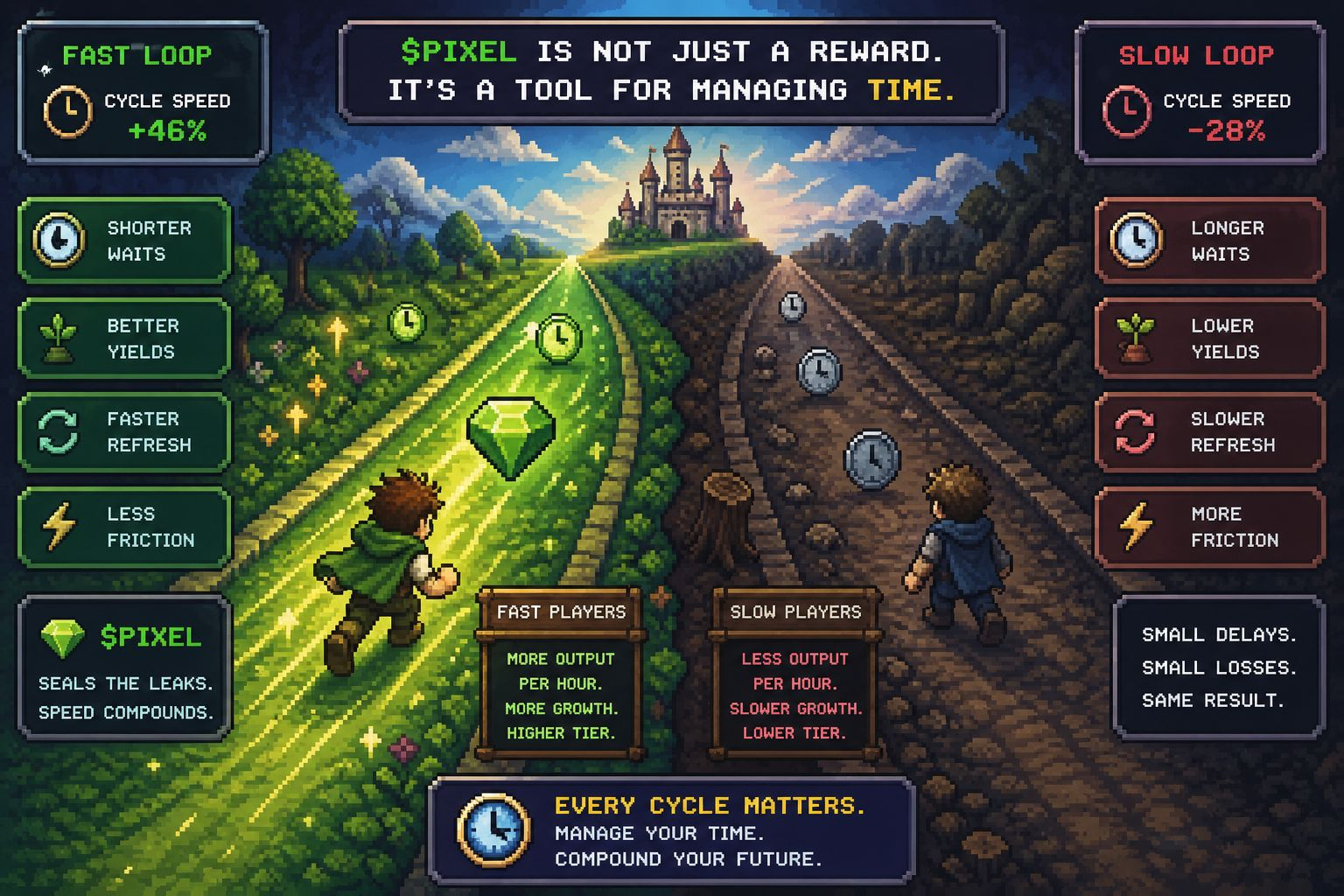
What stays with me is how invisible this entire process is. No one tells you that you are being sorted by speed. There is no clear divide between fast players and slow players. The differences are small enough that most people never notice them. But small differences that compound do not stay small forever.
At some point, the players who have been managing their cycle speed will be operating in a different tier entirely. Not because they started with more. Not because they played better. Because their time simply produced more per hour from day one.
That is the quietest advantage inside Pixels. And $PIXEL is the tool that unlocks it.
I do not know whether this was designed intentionally or emerged naturally from the mechanics. Either way, it is real. And once you see it, it is hard to look at the token the same way again.
The question is not whether Pixels will grow. It probably will. The question is who the growth will stick to. The players who move fast enough to compound their position. Or the players who stay in the slower loops until the distance feels too large to close....
I am still watching. But after all this time, I think I know which way the weight leans.....
