
The stock market finally has a voice: Is there a pit before a big bull stock takes off? Once it appears, it will rise continuously!
Is there a pit before a big bull stock takes off? Once it appears, it will rise continuously!
Digging pits to bury bulls.
Refers to the stock price slowly rising, with volume supporting ideally.
On a certain day, rapid decline with reduced volume breaks the trend line, and the candlestick pattern shows a 'golden pit.' Afterward, the main force reactivates the stock price, increasing trading volume and forming a price-increase, volume-rise momentum.
When the stock price approaches the critical point of the platform on the right side of the 'golden pit,' the stock price breaks through the platform with increased volume, marking the beginning of a short-term main rising wave.
Three elements of stock selection strategies.
Many stocks often have a 'digging pit' action before entering the main rising wave, which means the stock price inexplicably drops, showing a breaking trend.
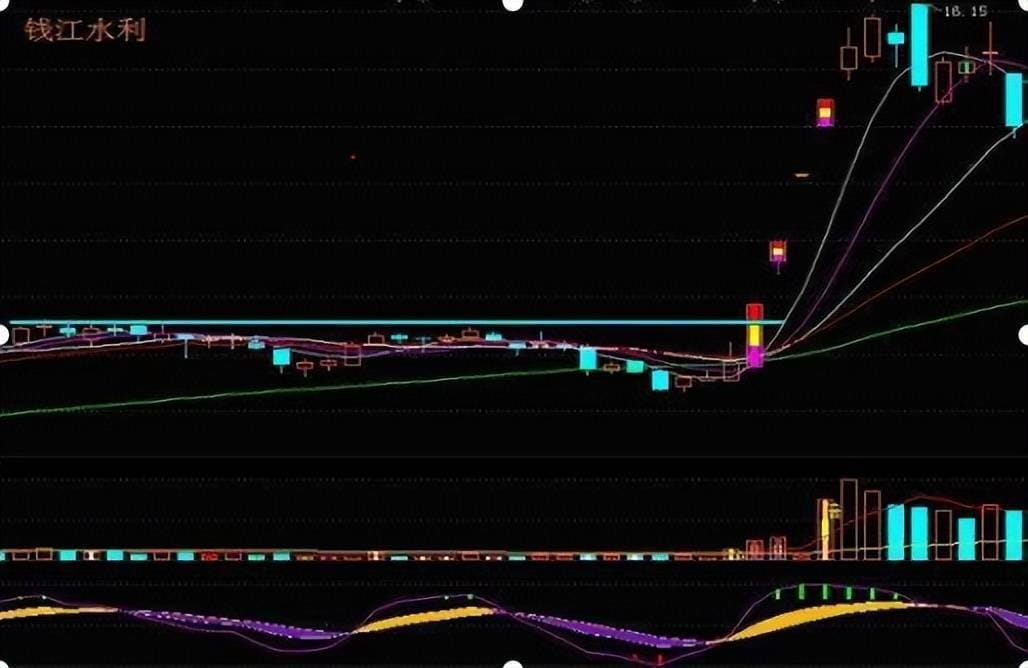
If you find a stock experiencing a significant drop under stable market conditions, without major negative news in the fundamentals, this is the main force's 'digging pit.'
This situation is a very good buying point for short-term trading, often resulting in unexpected returns!
Before stocks take off, moving averages will show such signs; once learned, you can catch strong stocks and leading stocks effortlessly!
Introduction to moving average indicators.
Moving averages reflect the average price of stocks over a period of time. Moving averages are divided into short-term, medium-term, and long-term. According to the parameters set for short, medium, and long, a moving average system is established.
(1) Moving averages are important technical indicators with a prompting effect.
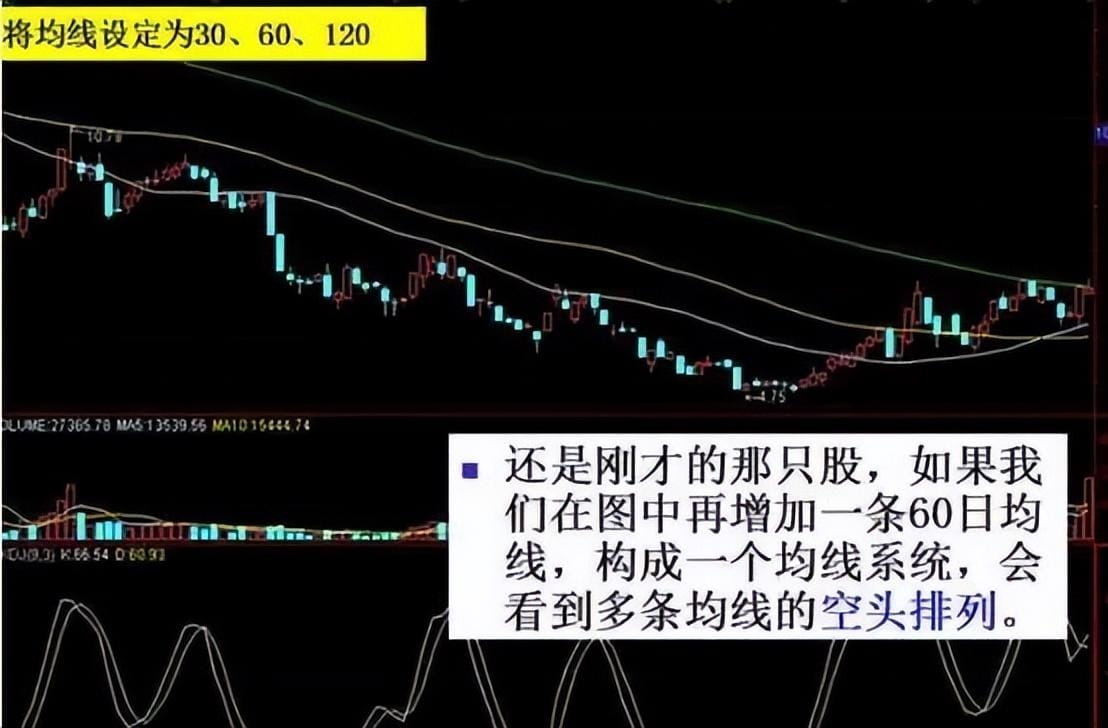
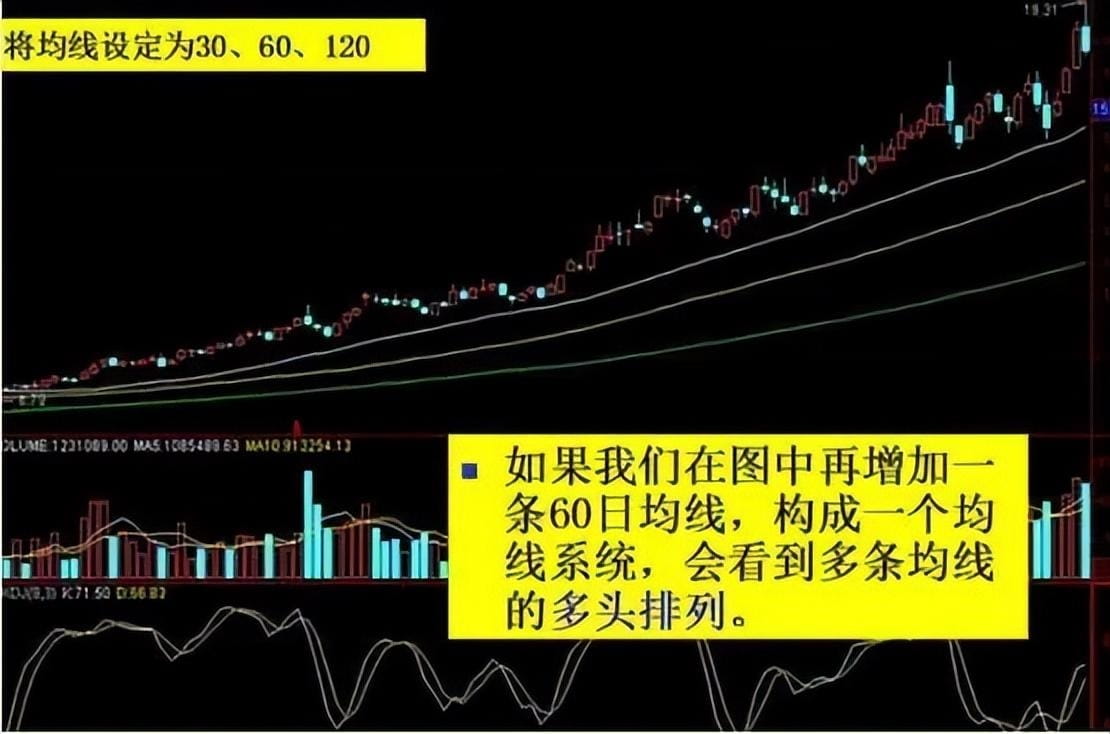
(2) Moving average systems (bullish arrangements, bearish arrangements) can help us determine market trends.
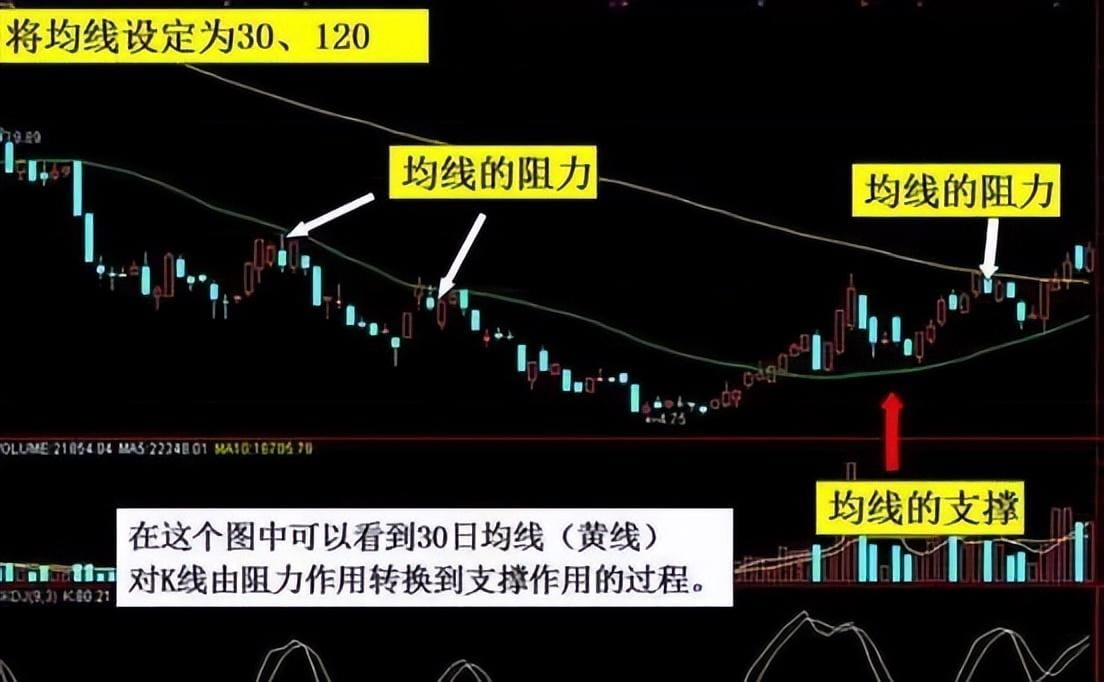
(3) Moving averages have support and resistance effects on stock prices.
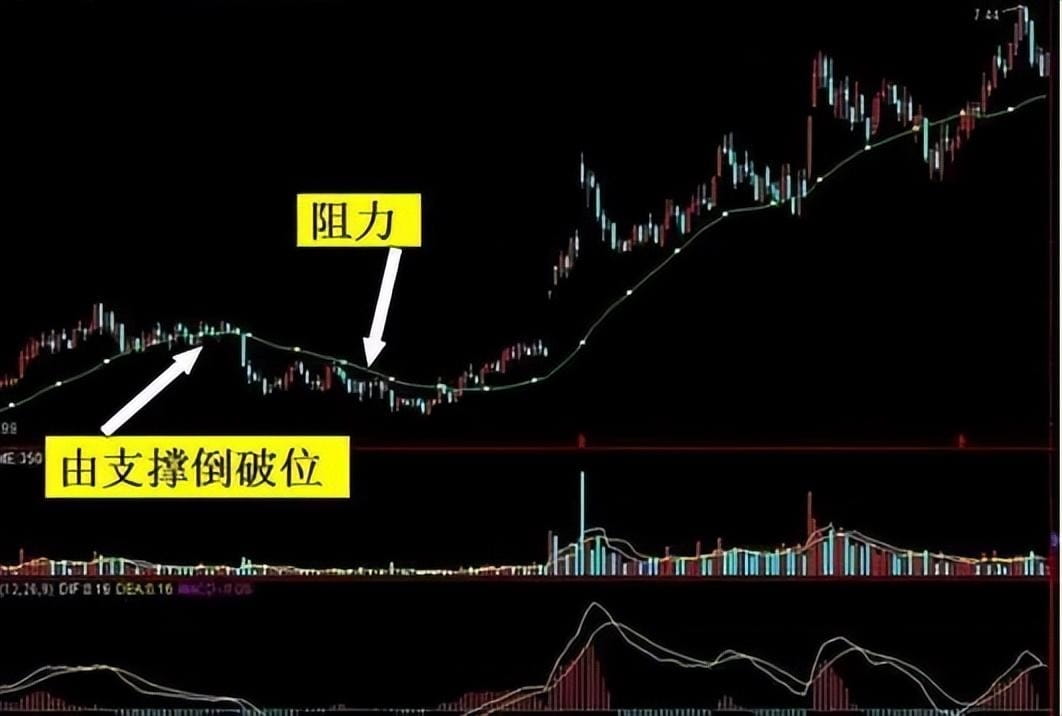
(4) The conversion of resistance and support is the focus of moving average analysis:
A resistance line is broken, and this resistance line will become a support line.
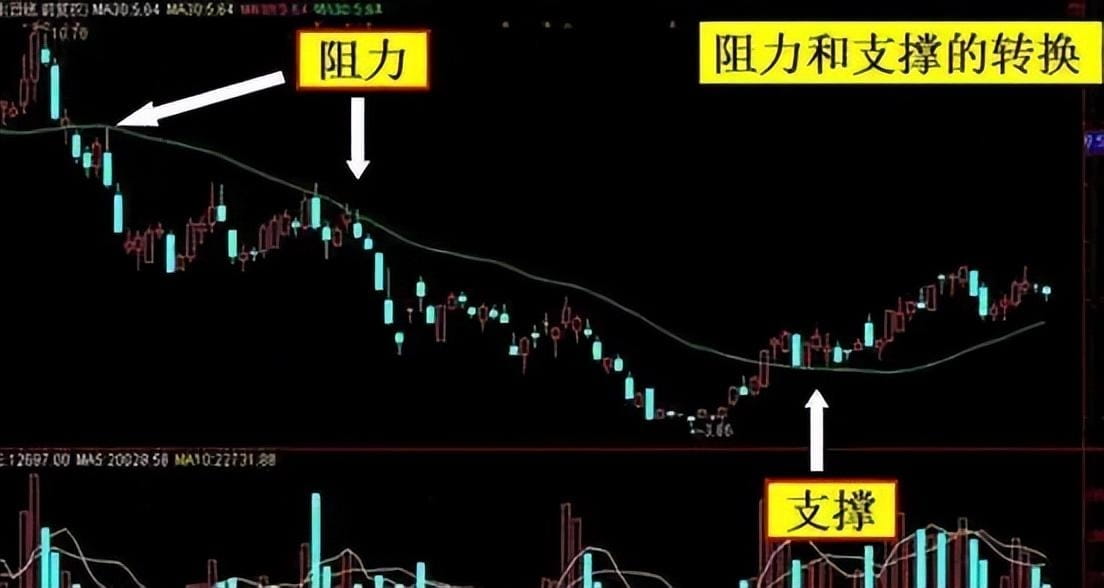
If a support line is broken, it will become a pressure line.
Usage of moving average indicators.
(1) Single moving average usage.
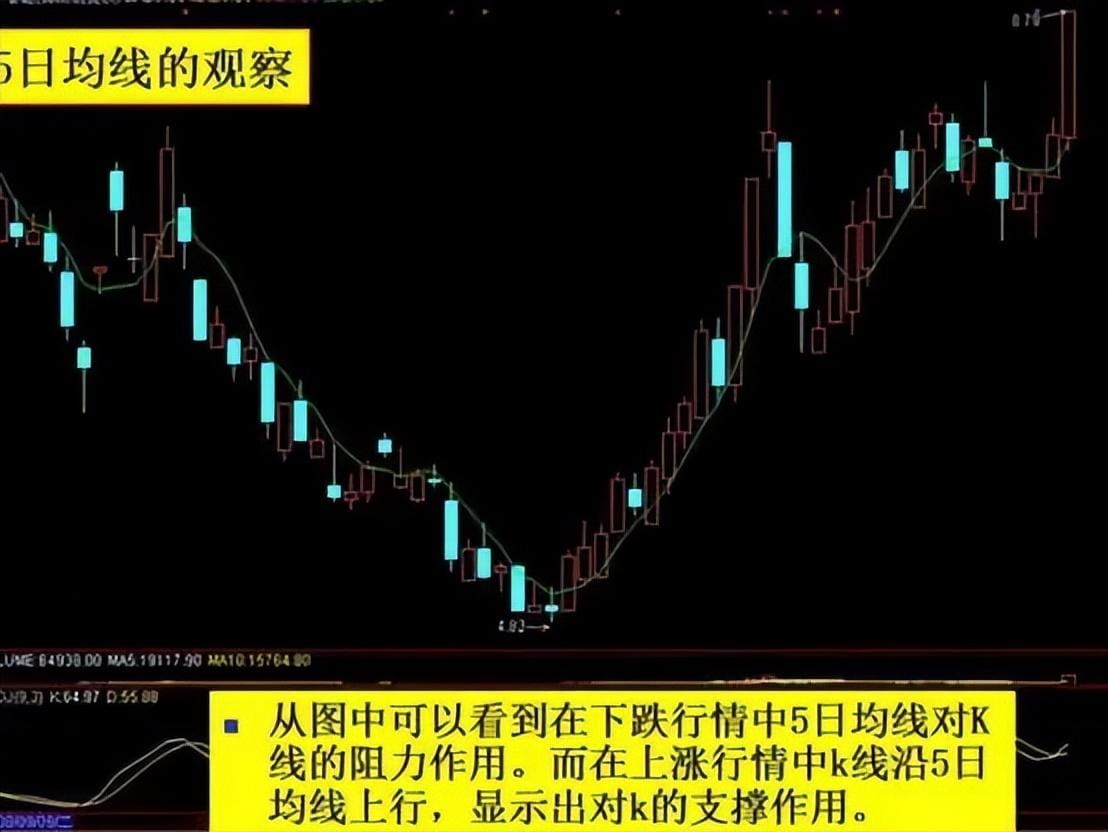
(1) Learning about moving averages should start from a single moving average, first looking at the short-term moving average, and deepening the influence before looking at the long-term moving average. In particular, the support and resistance effects of moving averages on candlesticks should be closely observed. For example, observe what impact the 5-day moving average has on the candlestick, and set all moving averages in the market software to 5, then use the left and right directional keys on the keyboard to move.
In a downtrend, the 5-day moving average has a resistance effect on candlesticks. In an uptrend, the candlestick moves upward along the 5-day moving average, showing a support effect on the candlestick:
Similarly, when observing the 30-day moving average of China Merchants Bank:
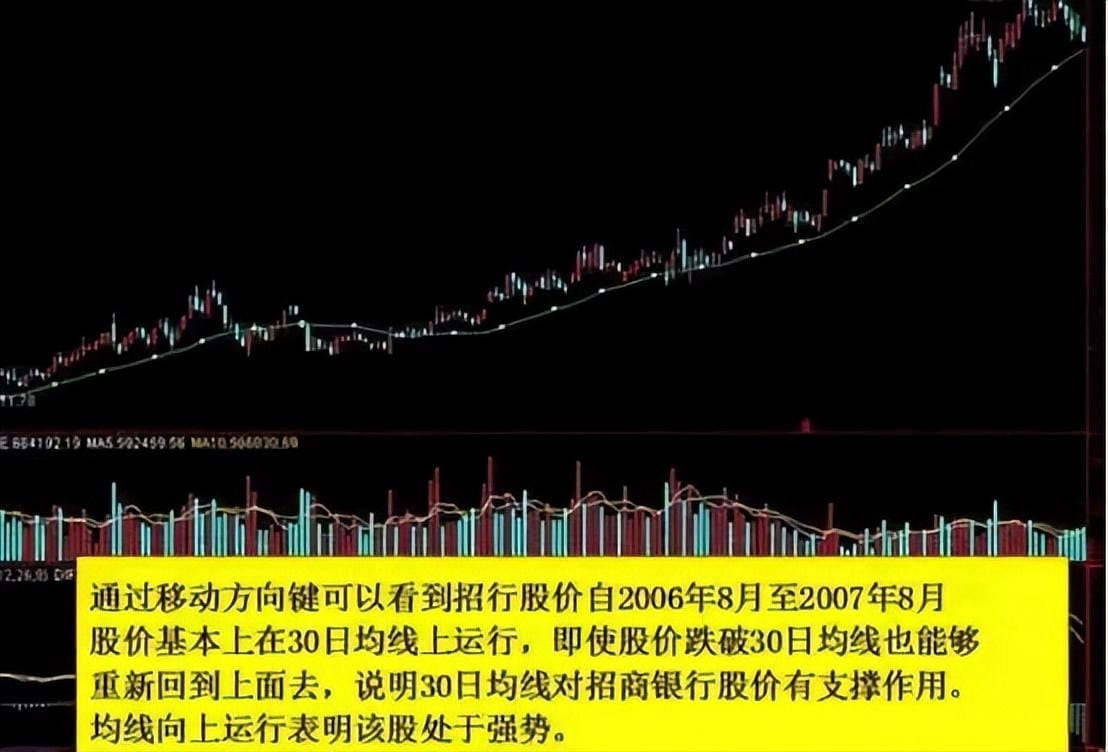
(2) After deepening the impression of a single moving average, you can try to add another moving average to continue observing the relationship between the candlestick and the moving average:
Bearish arrangement of moving averages:
Bullish arrangements of moving averages:
Practical cases.
(1) Bullish arrangement of moving averages.
(1) Moving average system settings: 5, 30, 60, 120.
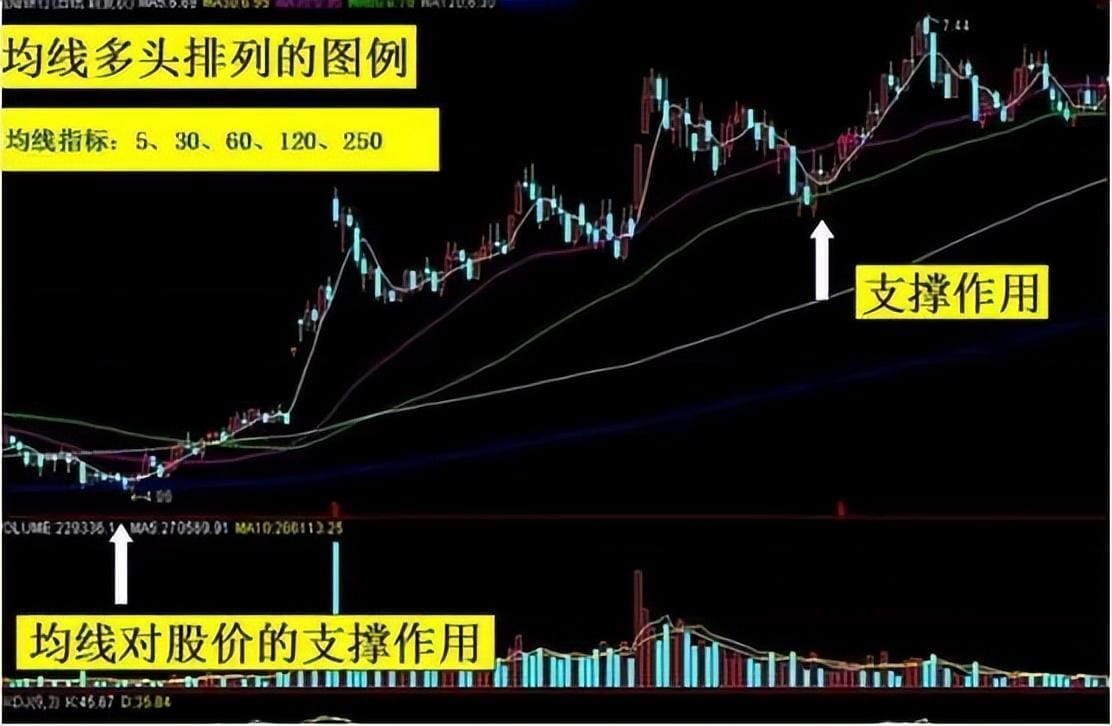
(2) The moving average trend is upward.
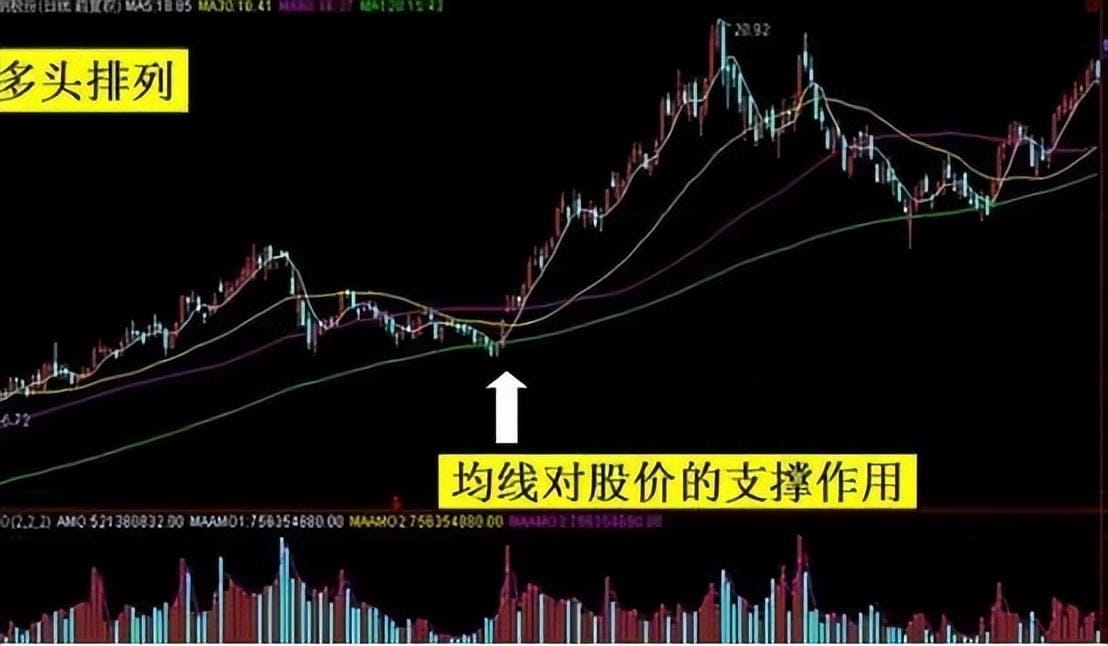
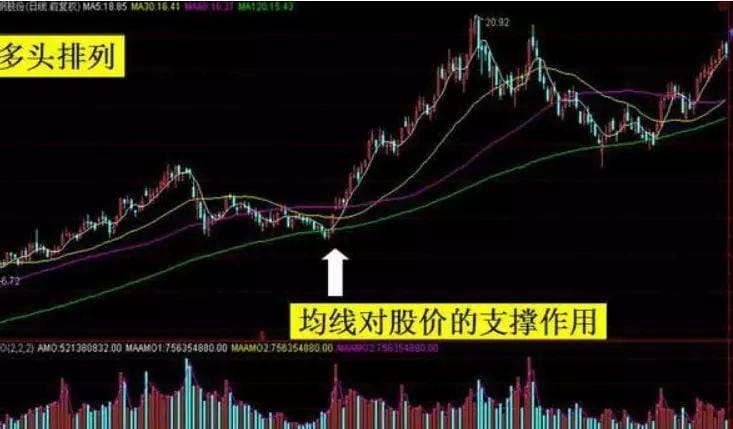
(3) The short-term indicators of moving averages are arranged at the top, and the long-term indicators are arranged at the bottom in order.
(4) Bullish arrangement appears in a strong and continuous rising market; when the stock price retraces, the moving average plays a significant support role for the candlestick.
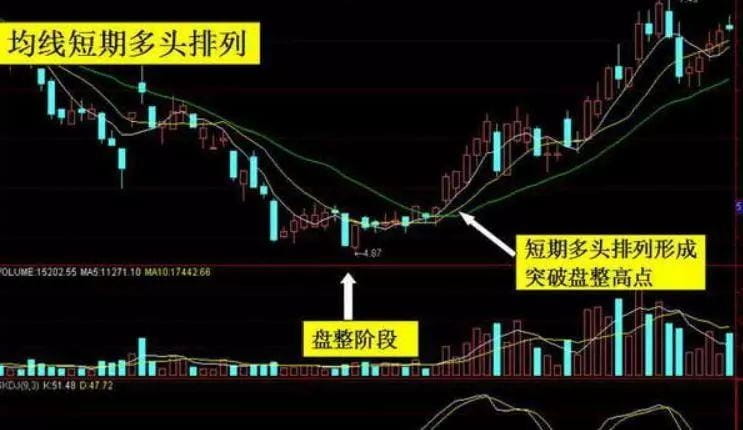
(2) Short-term moving averages in a bullish arrangement.
(1) Daily moving average parameter settings: 5, 10, 20.
(2) The stock price undergoes a phase of consolidation, and then the short-term moving averages show a crossover, followed by a bullish arrangement. If the stock price breaks through the high point of consolidation, a rebound will occur, providing an opportunity for short-term entry:
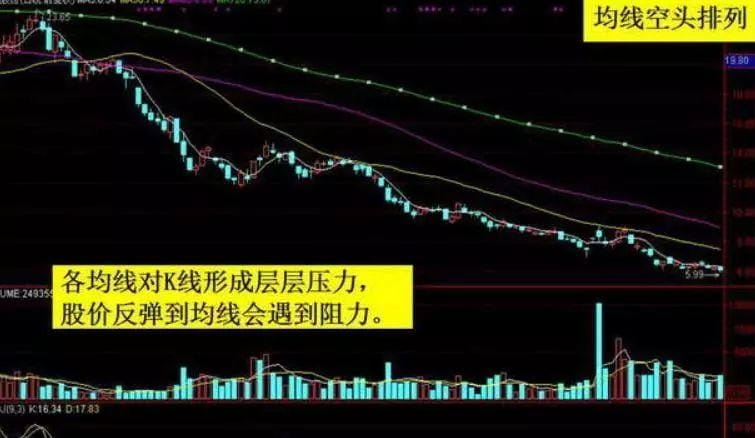
(3) The bearish arrangement of moving averages.
(1) Moving average system settings: 5, 30, 60, 120.
(2) Moving average trend downward.
(3) Bearish arrangement appears in a weak market. The short-term indicators of moving averages are at the bottom, while the long-term indicators are at the top, with each moving average forming layers of pressure on the candlestick.
(4)The prompt function of moving averages.
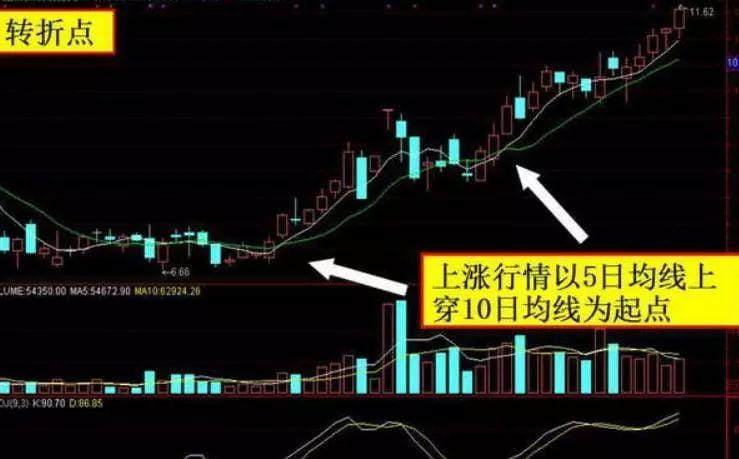
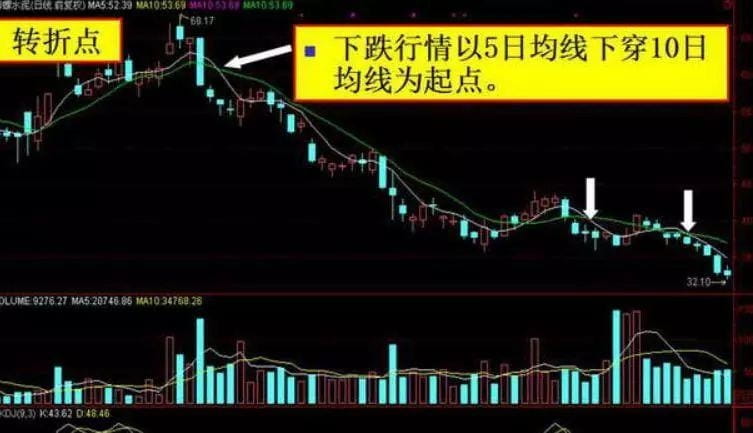
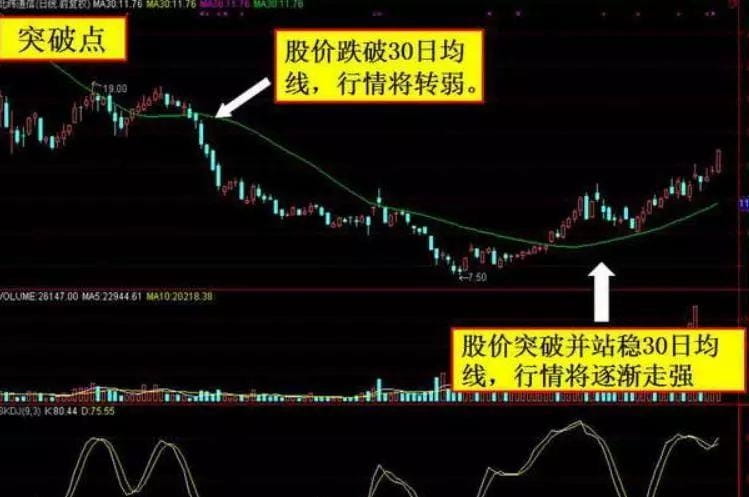
(1) Moving averages can help us determine market turning points and breakthrough points.
(2) Turning point: The uptrend begins when the 5-day moving average crosses above the 10-day moving average;
The downtrend begins when the 5-day moving average crosses below the 10-day moving average:
(3) Breakthrough point: When the stock price breaks through and stabilizes above the 30-day moving average, the market will gradually strengthen. If the stock price falls below the 30-day moving average, the market will weaken:
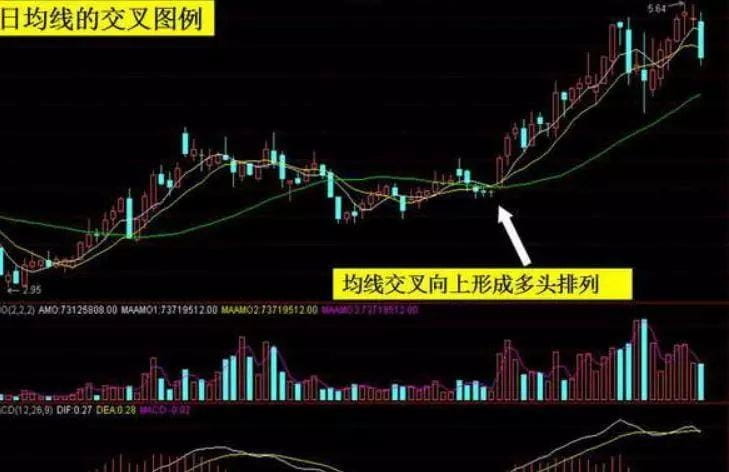
(5)Observing trend changes through moving averages: the crossing of daily moving averages.
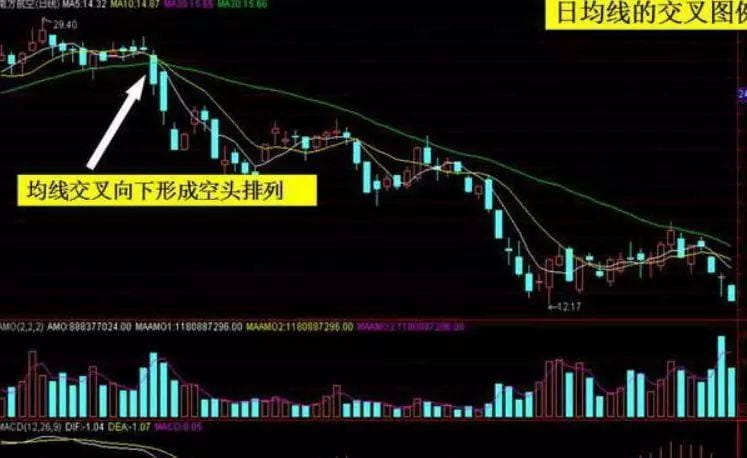
Before the moving averages form a bullish or bearish arrangement, there will be mutual crossings of moving averages, and such crossings often indicate an upward breakthrough in stock prices:
Or the starting point of breaking down:
Seizing buying points.
1. When the stock price falls and rebounds from the bottom, it is a buying point.
2. Standing firm at the 5-day moving average and running above it is a buying point.
3. The stock price breaking through the high point before the digging pit is a buying point.
Operational key points.
1. Buy when testing the bottom and rebounding.
When the stock price inexplicably drops or is suppressed by bad news, once the price rebounds from the bottom, it can be bought in the short term, preferably accompanied by trading volume.
2. Buy at the 5-day moving average.
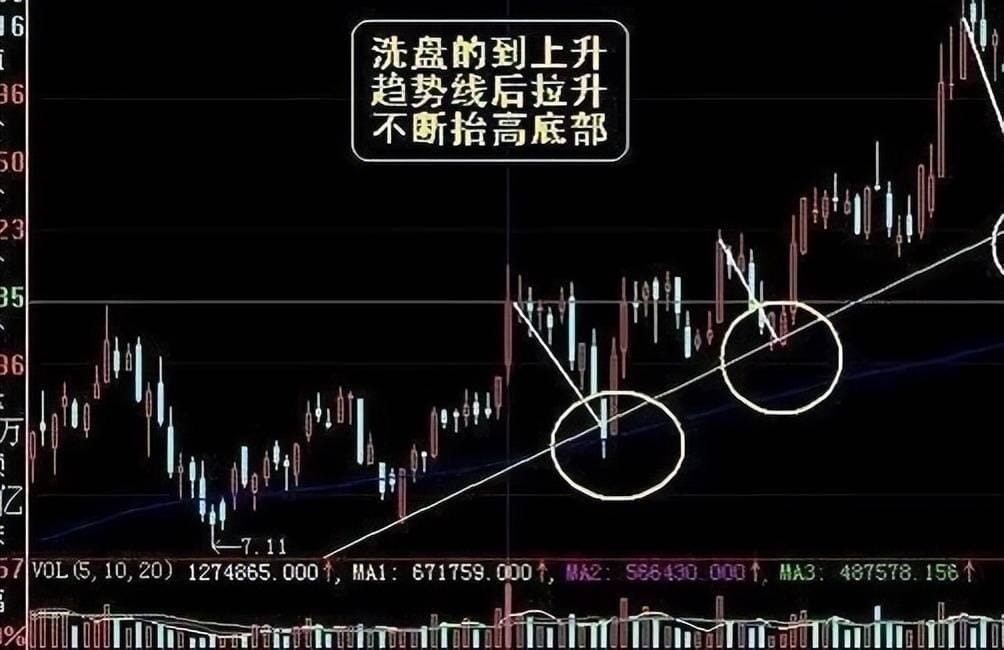
This is a relatively stable buying method. After the stock price tests the bottom and rebounds, if it can continue to rise along the 5-day moving average, it indicates that the upward momentum still exists. Short-term investors can choose to buy at the 5-day moving average.
3. Buy when breaking through the high point before the 'digging pit.'
Once the 'digging pit' action is established, the previous high point is definitely not the high point. Steady short-term investors can buy when the stock price breaks through the high point before the 'digging pit.'
Points to pay attention to when choosing to chase the rise:
1. When the overall market trend is in a rebound phase of adjustment, it is not suitable to chase the rise;
2. When the stock price rises to the trading volume intensive area of the previous high point, carefully observe whether this stock has the trading volume to break through the previous stock price resistance level before deciding whether to chase the rise;
3. When the frequency of market hot spots changes too quickly, and the continuity of hot speculation is weak, lacking cohesive and charismatic leading sectors, never chase the rise;
4. For stocks that have risen too much in the past and are currently experiencing high trading volume but no longer rising, it is not advisable to chase the rise, as the likelihood of the main force unloading is very high.
5. When chasing the rise, set a stop-loss point and determine your approximate profit target.
6. When chasing the rise, attention should be paid to reducing frequency; excessively frequent operations, once mistakes increase, will seriously damage the operational mindset.
7. When chasing the rise, maintain a calm mindset, and reduce luck; be more rational and less emotional.
The best strategy for chasing the limit-up board:
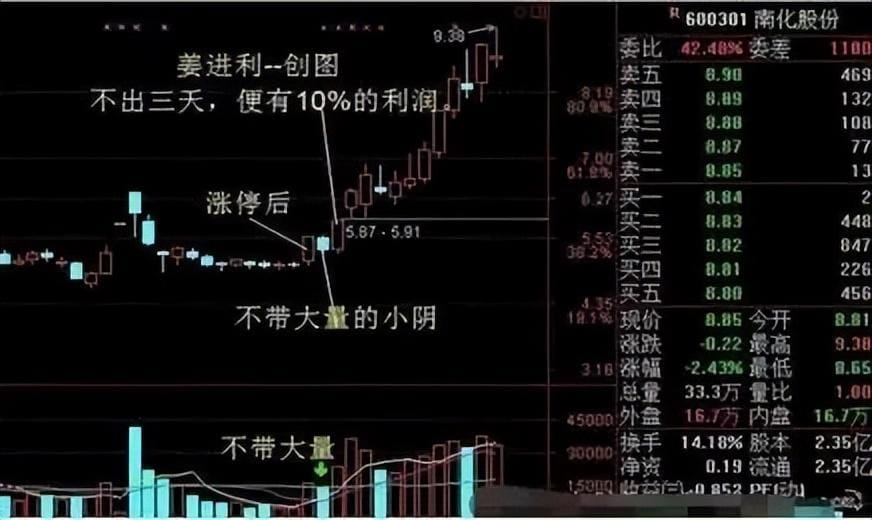
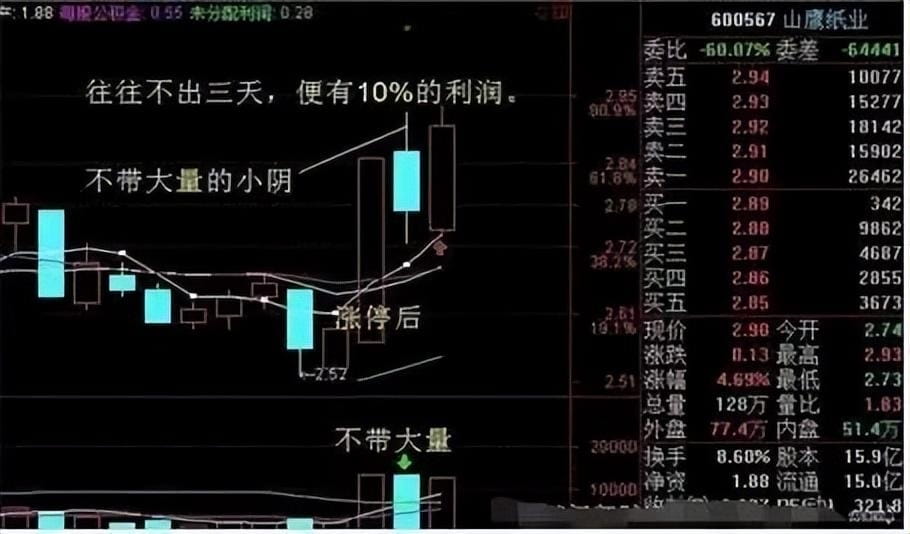
1. Limit-up chasing method: After hitting a limit-up, the main force will shake off the profit plate to clear it, with a duration of about five trading days. The extent of the shake is 90% near the 5-day average price. Even if it falls below the 5-day moving average, it will quickly pull up. After the shake, a new rising wave will begin. Therefore, for such stocks, if we can timely enter at the 5-day moving average position, generally within three days, there will be substantial profits.
The standard trend for such stocks is: on the day after a limit-up, the second and third days are both high open and low close, without large volumes of small bearish candlesticks. Often, there will be suppression actions in the last half hour before the second day's close, closing at the lowest price, and the third day's closing price is near the 5-day average price. Buying at this time often yields a 10% profit within three days.
Every day after the market closes, select stocks that hit the limit-up in both Shanghai and Shenzhen markets on that day (before 11 a.m.) based on the following conditions, and list them in your watchlist. In future trends, once a trend that meets the conditions appears, immediately follow up.
Two, the step-by-step high-rise stock selection conditions: During the stock price rising phase, form a combination of low open and high rise for three consecutive days, with a medium bullish candlestick (1.6% above), among which it is best to have one day as a limit-up. Before this, the stock price must have a clear stop-loss action or received clear support at the support level. The candlestick trend of step-by-step high-rise must also show a gradual increase in trading volume, and the stock price must steadily approach the pressure level.
Opening lower means there is significant selling pressure, while moving higher during the day indicates that the day's market is in a 'short to long' pattern. If this happens for three consecutive days, it indicates strong willingness from the main force to buy. The steady increase in trading volume further proves the strengthening of the main force's buying energy. Investors can use the trading volume intensive area of the third candlestick as a later buying price for stock price pullbacks, or they can chase the rise when the stock price further breaks through the pressure level with increased trading volume.
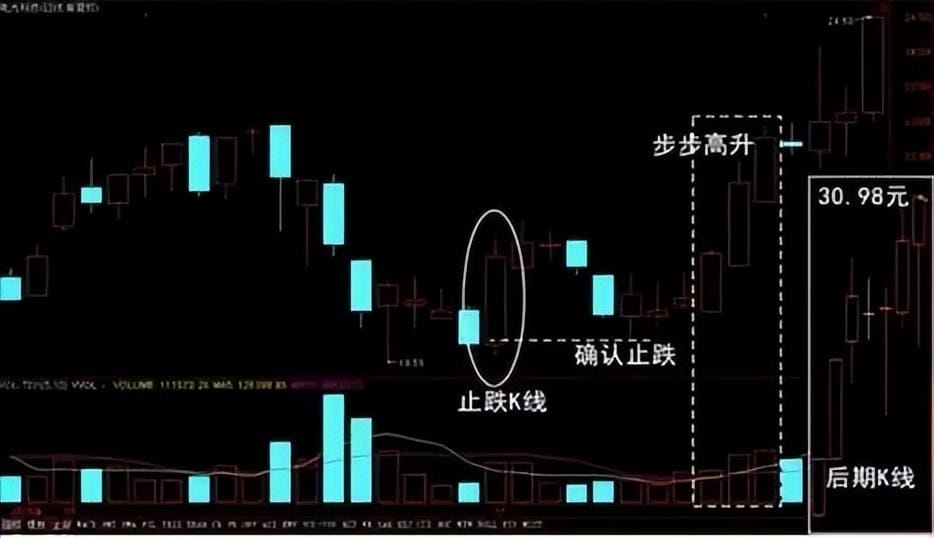
Case interpretation: The above chart is the daily candlestick chart of Diguang Technology from September 29, 2016, to November 21, 2016. This stock showed a large bullish candlestick confirming the stop loss on November 1, and the stock price retraced on November 8 to confirm this stop loss signal. Based on this premise, the stock showed a low open and high close candlestick combination for three consecutive trading days on November 11, 14, and 15. Furthermore, the trading volume of these three candlesticks steadily increased.
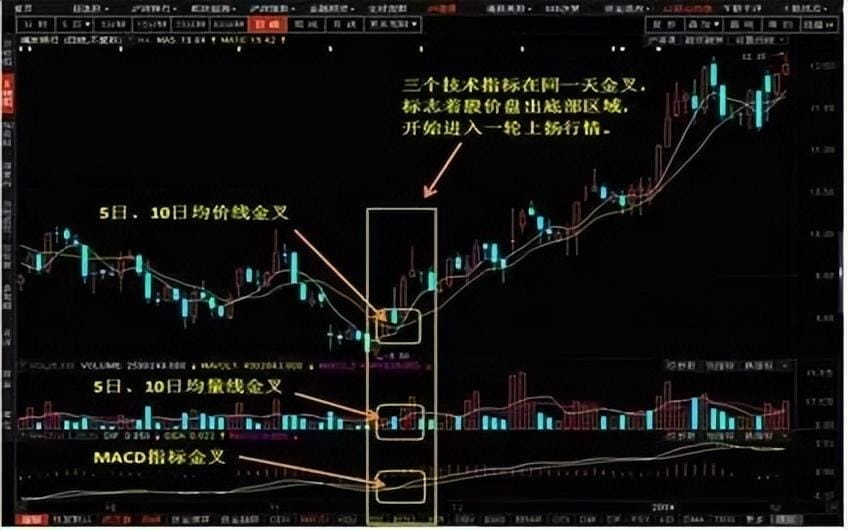
Three, the three golden cross bottom type refers to the stock price falling for a long time, leading to a loss of market sentiment. When the price cannot fall any further, it begins to enter a bottom oscillation. As the main force gradually builds positions, the stock price finally starts to rebound. After a wave of upward trading, the 5-day average line and the 10-day average line form a golden cross, and the 5-day average volume line and the 10-day average volume line also form a golden cross. The MACD indicator's DIF and DEA indicators also form a golden cross below the zero axis. These three golden crosses appear simultaneously or sequentially, which is a characteristic of stock price bottoming.
Technical key points:
1. The moving average must diverge upward simultaneously after the golden cross, showing a bullish arrangement.
2. The 5-day average volume line crosses above the 10-day average volume line from below, and the trading volume significantly increases.
3. MACD forms a golden cross near the zero axis, with the DIF crossing above the DEA.
Everyone desires financial freedom, so are there any methods to help us make money? Today, let's learn about the several laws of making money.
First law: Do you want to be a sheep or a wolf?
It is always 10% making money, while 90% lose money; this is the iron law of the market, whether in the stock market or in running a business, it will not change. It is impossible for everyone in the world to be rich, nor for everyone to be poor; the rich will always be a minority and the poor a majority. This is determined by God, and no one can change it. However, there are always ways to make money, which is to become one of the 10% and not to follow the majority. You need to change your mindset, transform your concept, and adopt a wealthy person's thinking. You must study the ways and ideas of the wealthy.
Second law: Have a strong interest in money!
Ask the vast earth, who controls wealth. Why can he make money, and you cannot? To trace back to the source of making money, first, you need to have an interest in money and a correct understanding of it; otherwise, money will not find you. Money is not evil; it is the embodiment of value, the manifestation of performance, and the return of wisdom. Like attracts like, and money is divided by people; you must have a strong interest in money and find it interesting and fun. If you like money, money will like you; this is not materialism but the internal law of money operation. Just look at those rich people who all love money and can play with it very well.
Third law: The simplest method is the most profitable.
There are countless ways to make money, but the simplest way is the most profitable. Although all roads lead to Rome, all methods return to one; the simplest is the best. Complex methods can only earn small money, while simple methods can earn big money, and the simpler the method, the more money you can make. For instance, Bill Gates became the richest man in the world just by doing software, and Warren Buffett quickly became a billionaire by focusing on stocks. Specifically, every industry has a way to make big money, and their methods are very simple. You need to study how to make money, summarize your own simple methods, and stick to them without easily changing them. Simple methods make big money, while complex methods can make big money; this is the third law of making money.
Fourth law: To make big money, you must have a goal.
Year after year, flowers are similar, but the methods of making money are different. However, there is one thing in common: you must have goals to make money. The road to success is paved with goals. Those without goals work to fulfill the goals of those with goals. People with big goals make big money, those with small goals make small money, and those without goals will always worry about food and clothing. To make money, you must have goals and ambition; this is the fourth law of making money.
Fifth law: You must use your brain to make money.
The world is bustling for fame, and the world is bustling for profit. In the era of wealth, you must use your brain to make money. Have you ever seen anyone making big money using their limbs? Some athletes earn a lot, but Michael Jordan said: I do not play with my limbs; I play with my brain. Using limbs can only earn small money; using the brain can earn big money. Making money starts with ideas; the wealthy's money is all thought out. All the rich in the world are the best at using their brains to make money. Even if you turn them into a pauper, they will soon become wealthy again because they know how to use their brains.
Sixth law: To make big money, you must dare to act.
There is no free lunch in this world, nor are there pies falling from the sky. Without action, you cannot make money; if you dare not act, you cannot make big money. You must dare to think and dare to act. Nowadays, people talk more about wealth, but many say much and do little. One must know: talking is the servant of doing, and doing is the master of talking! Many economists talk eloquently about wealth, but who among them has become rich? The German activist philosopher Fichte once said: Action, action, this is our ultimate goal. If you want to get rich, act quickly. Don't be afraid; take a small step first and then take a big step. Remember that profit and risk are proportional.
A single tree cannot make a forest, and a lonely sail cannot go far! In the cryptocurrency circle, if you do not have a good circle, and do not have first-hand news from the coin circle, then it is recommended that you pay attention to Huo Huo's crypto diary, which will help you get rich effortlessly. Welcome to join the team!!!

