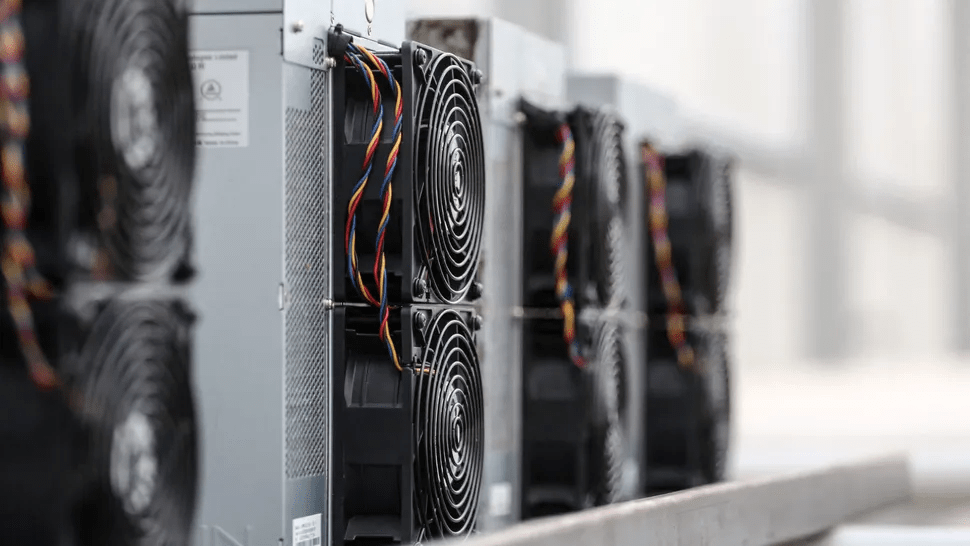
1. Bitfarms
A very large Bitcoin miner has announced that it will cease mining by 2026–2027 and instead fully transition to AI / HPC (high-performance computing).
The reason is the decline in mining margins, rising costs, and the opportunity to earn more from centralized resources for training AI models.
They have already signed a contract for approximately $128 million to retrofit one of the data centers for Nvidia GPU servers.
2. SharpLink Gaming (SBET)
A company listed on Nasdaq was previously a gaming company, but now holds about 280,706 ETH in its treasury, making it one of the largest corporate holders of Ether.
Moreover, they are actively staking this ETH, which brings additional income.
At the same time, SharpLink is buying back its own shares (worth $15 million) because it believes they are trading significantly below their 'net asset value' (NAV) linked to ETH.
That is, the strategy is not just to accumulate, but to make ETH a 'productive' asset (through staking).
3. Companies in the style of 'Digital Asset Treasury' (DAT)
The number of public companies that are rebranding or structuring themselves for holding cryptocurrencies on their balance sheets (like MicroStrategy did before) is increasing.
Some of them are focusing specifically on $ETH , others on $BTC .
WHY ARE THEY DOING THIS?
Income diversification: mining is becoming less profitable, especially after halvings, and AI infrastructure may be a more stable source of income.
Capitalization on the crypto hype: companies with a large cryptocurrency balance (treasury) can potentially attract more investors, especially institutional ones.
Income from staking: holding ETH is not just about betting on the coin's growth, but also generating income through staking.
Regulatory effect: some companies want to position themselves as legitimate institutional players in the crypto space, not just speculators.
RISKS
The transition from mining to AI is a significant capital-intensive transformation (CAPEX), and it is not guaranteed that all capacities will be filled by clients.
The level of debt and operating expenses can increase significantly.
During strong corrections in cryptocurrencies, these 'treasury' companies may suffer — if the value of BTC or ETH falls, their assets 'on paper' will decrease significantly.
What does this mean for the market?
The transition of public companies to ETH-treasuries (not just BTC) is a new trend for 2025: ETH can not only be stored but also staked/generated income, so companies see it as a 'productive reserve'.
Miners whose margins are falling are reallocating capital into AI/HPK or into crypto itself (depending on strategy). This changes the supply-demand dynamics for electricity, equipment, and — indirectly — for crypto-assets.
#MiningCrypto #ETH #BTC #Aipump #NVIDIA