
Recently, Jackson.io announced that it will not promote the listing of JACKSON on centralized exchanges (CEX) in the short term, sparking considerable discussion in the market. From the perspective of external observers, JACKSON's decision is not only conservative but also highly forward-looking and rational, serving as a valuable reference for projects within the entire Sui ecosystem.
1. Concentrating liquidity on DEXs is the optimal solution to reduce risk and enhance transparency.
The industry today is no longer in the era of 2021 where 'the more listings, the better' was the norm. Listing on centralized exchanges requires not only significant resource investment but also lacks transparency in its processes, leading to many external and hard-to-observe competitive spaces.
For a project still rapidly building its core business, investing a large amount of funds and manpower into going public can divert attention and even become an additional source of risk.
Concentrating liquidity on DEX not only saves resources but also ensures that the entire trading process is open, transparent, and verifiable, which is more conducive to building trust.
$JACKSON chooses not to go public, which means refusing to relinquish token sovereignty and reducing risks from the source.
Second, avoiding being 'played' by centralized exchanges is a more pragmatic choice
The industry does not lack such examples: some centralized exchanges utilize their depth and chips to engage in wash trading and even directly 'take away the project's chips' to make segments, leaving project parties as passive participants.
Jackson.io chooses not to hand over core chips to others, which is, to some extent, a self-protective behavior to reduce systemic risks, and makes the operational logic of the entire token market cleaner.
Third, Hyperliquid's hype coin has proven that the 'not going public' strategy is entirely feasible
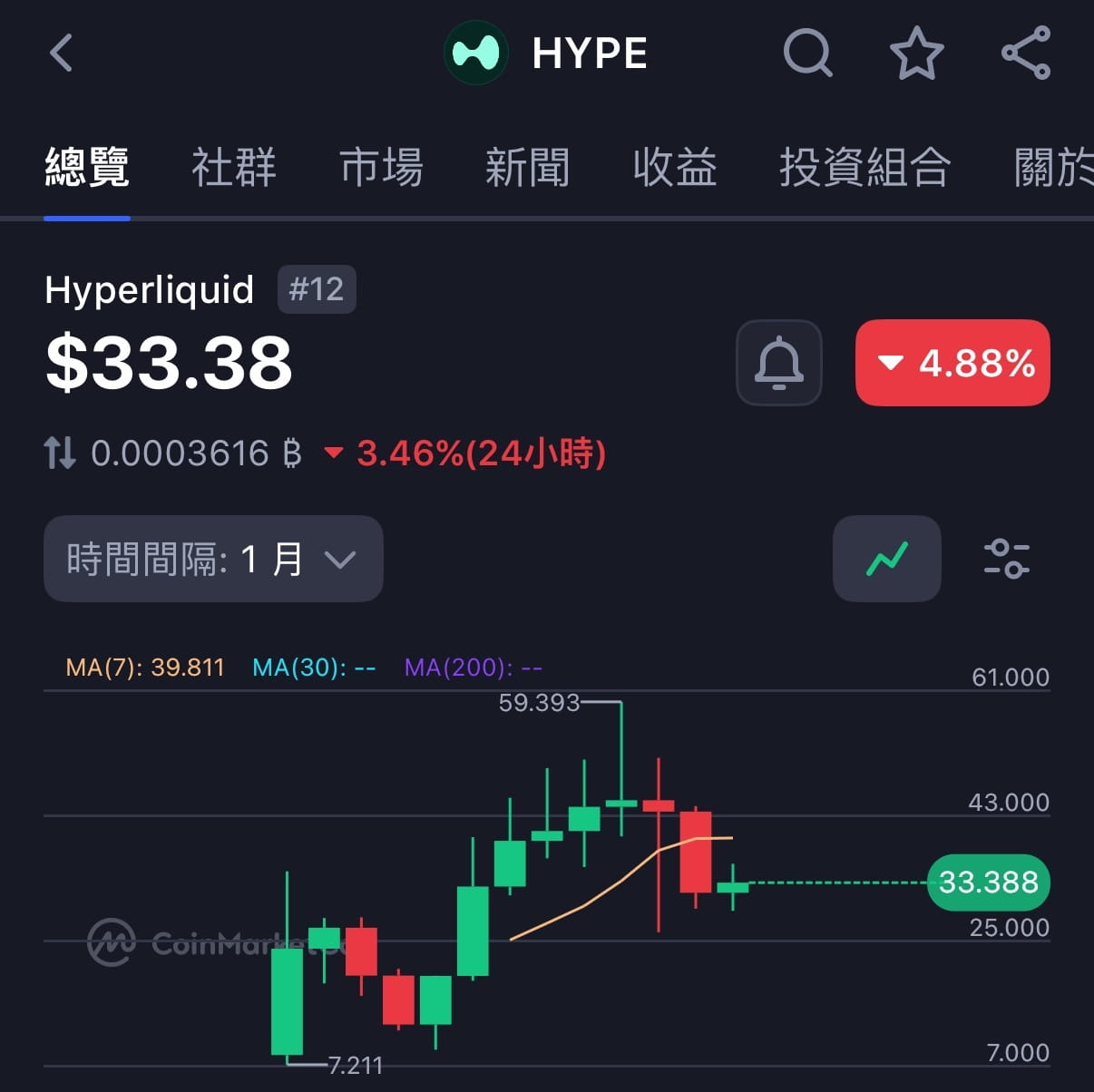
Hyperliquid is a typical case of its native token, hype coin:
· hype token does not go public
· No private placement
· Institutions can only buy directly in the market
· All transactions can only be completed on their platform
The results are very obvious:
Liquidity is clean, prices are authentic, the community is strong, and resources are highly concentrated.
The logic adopted by Jackson.io is fundamentally consistent:
Not going public ≠ Not developing
Not going public = Concentrating resources on business + users + community
Avoid external interference with the token market.
Fourth, $JACKSON does not go public on CEX, thereby reducing costs, improving efficiency, and giving back to the community. The costs associated with CEX are not low, including:
· Listing fees
· Market-making costs
· Coordination requirements
· External risks and uncertainties
These are significant resource expenditures.
Jackson.io saves these costs for community incentives, product refinement, and business advancement, making the entire Sui ecosystem healthier.
Fifth, from the perspective of the Sui ecosystem, $JACKSON is following a cleaner and more pragmatic growth path
Sui has always been known for high performance and efficiency, and Jackson.io chooses to implement a completely transparent operating model on this chain.
$JACKSON not going public is a core part of this model——
Keep the market clean, return value to products, and ensure resources genuinely flow to the community.
Instead of blindly pursuing exposure, clear logic and a healthy market environment are the longer-lasting competitive advantages.
In summary, $JACKSON not going public is a highly logical long-term strategy:
· Lower risks
· The market is more transparent
· Resources do not flow out
· Prices are more authentic
· The community benefits more
To some extent, this route is highly similar to Hyperliquid's successful path, and Jackson.io is introducing this logic into the Sui ecosystem, forming its own differentiated advantages.
\u003ct-140/\u003e\u003ct-141/\u003e\u003ct-142/\u003e