$ETH is trading around USD 3,100–3,160, and recently broke above the psychological $3,000 level, which many see as a key support zone.
Trading activity shows renewed interest: some analyses highlight strong institutional flows and accumulation — including futures, “whale” bets, and renewed optimism.
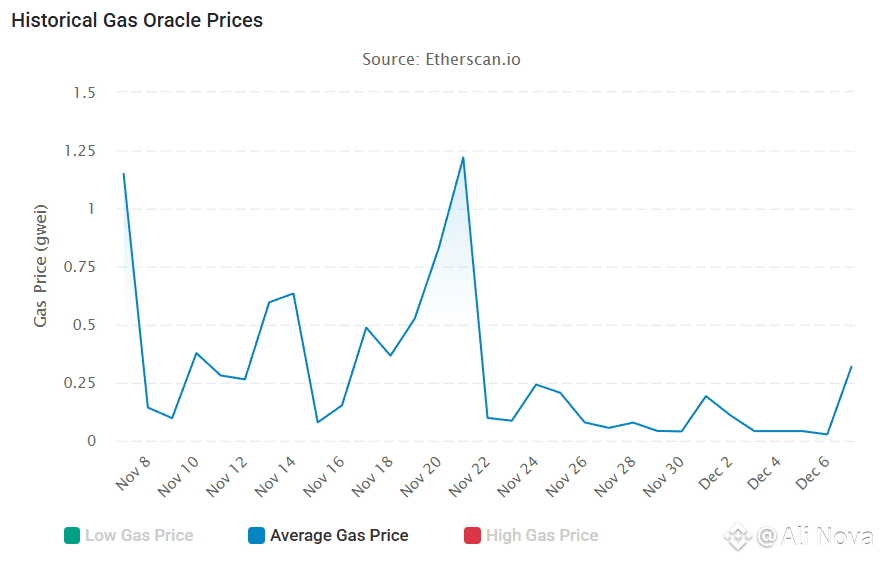
At the same time, network dynamics have shifted: fees on Ethereum have dropped to historically low levels (due to greater Layer-2 and rollup adoption), which may lower burn rate for ETH — this means reduced supply pressure, but also lower “fee-burn” deflation, which could moderate long-term scarcity.
🔭 What Could Drive ETH Up — and What Could Hold It Back
Potential Upsides
If ETH consolidates above $3,000 and breaks toward $3,400–$3,550, many analysts view that as the first leg of a new upward move.
Some more bullish forecasts suggest that — under favorable conditions (macro, adoption, institutional inflows) — ETH could aim for $4,300–$4,800 by year-end.
Growing interest in Layer-2 scaling solutions and increasing use of the Ethereum ecosystem (DeFi, smart-contracts, institutional trading) may support demand for ETH.
Risks / Headwinds
Lower fees and increased Layer-2 usage — while good for usability — reduce the on-chain burn of ETH, which might weaken deflationary pressure and reduce long-term scarcity.
If support around $3,000 fails to hold (or if broader crypto-market sentiment sours), ETH could retrace toward $2,800–$2,650.
As always with crypto, macroeconomic factors — interest rates, global sentiment, regulatory developments — remain big wildcards.
🧭 My “Probable Scenario” for Next Few Weeks
Given current momentum and the technical + institutional context:
ETH is likely to trade in a range between $3,000 and $3,400 in the near term.
If it clears resistance near $3,400, a rally toward the $3,800–$4,300 zone seems plausible — especially if macro conditions (crypto sentiment, global interest rates) turn supportive.#BTCVSGOLD #BinanceBlockchainWeek #CPIWatch #WriteToEarnUpgrade #BTC86kJPShock