In the early hours, the Federal Reserve announced as expected a 25 basis point rate cut, a move that completely aligns with the market's general expectations. As mentioned a few days ago, 'the shoe drops' often means that the release of good news has come to an end, followed by potential pressure. The recent continuous rise in the stock market has largely benefited from the positive impacts brought about by the rate cut. However, as this favorable factor is gradually digested, we may soon witness the end of this rebound driven by the rate cut. Looking ahead to the next few months, considering that the performance of U.S. economic data is still acceptable and inflation levels are close to the upper end of the target range, the likelihood of the Federal Reserve taking further easing measures is extremely low; conversely, the Bank of Japan may choose to tighten monetary policy due to strong economic growth, with a high probability of rate hikes reaching as much as ninety percent. Additionally, as the Christmas holiday approaches, the demand for funds in the market will become increasingly strong, exacerbating the liquidity shortage. In this context, and in the absence of other significant positive catalysts, I predict that the operating environment of the entire financial market may continue to face downward pressure for the next half month until early spring next year (around January to February).
Currently, compared to the peak period of the glorious super cycle of commodities in the past, the level of capital abundance today is no longer comparable. Once a sudden negative shock occurs, it is likely to trigger a panic among investors, leading to collective selling behavior that ultimately causes market prices to rapidly fall below important psychological levels—the 80,000 yuan integer threshold—and continue to seek support at lower levels.
In summary, I hold a relatively cautious and even slightly negative view on the trend of asset price changes over the next three quarters: the rebound high point originally envisioned between 95,000 and 97,000, and implementing a rolling replacement strategy within this range is likely difficult to achieve; therefore, below this value, I do not consider making any adjustments but tend to maintain the status quo and continue to hold long-term bearish positions in mainstream cryptocurrencies such as Bitcoin and Ethereum.
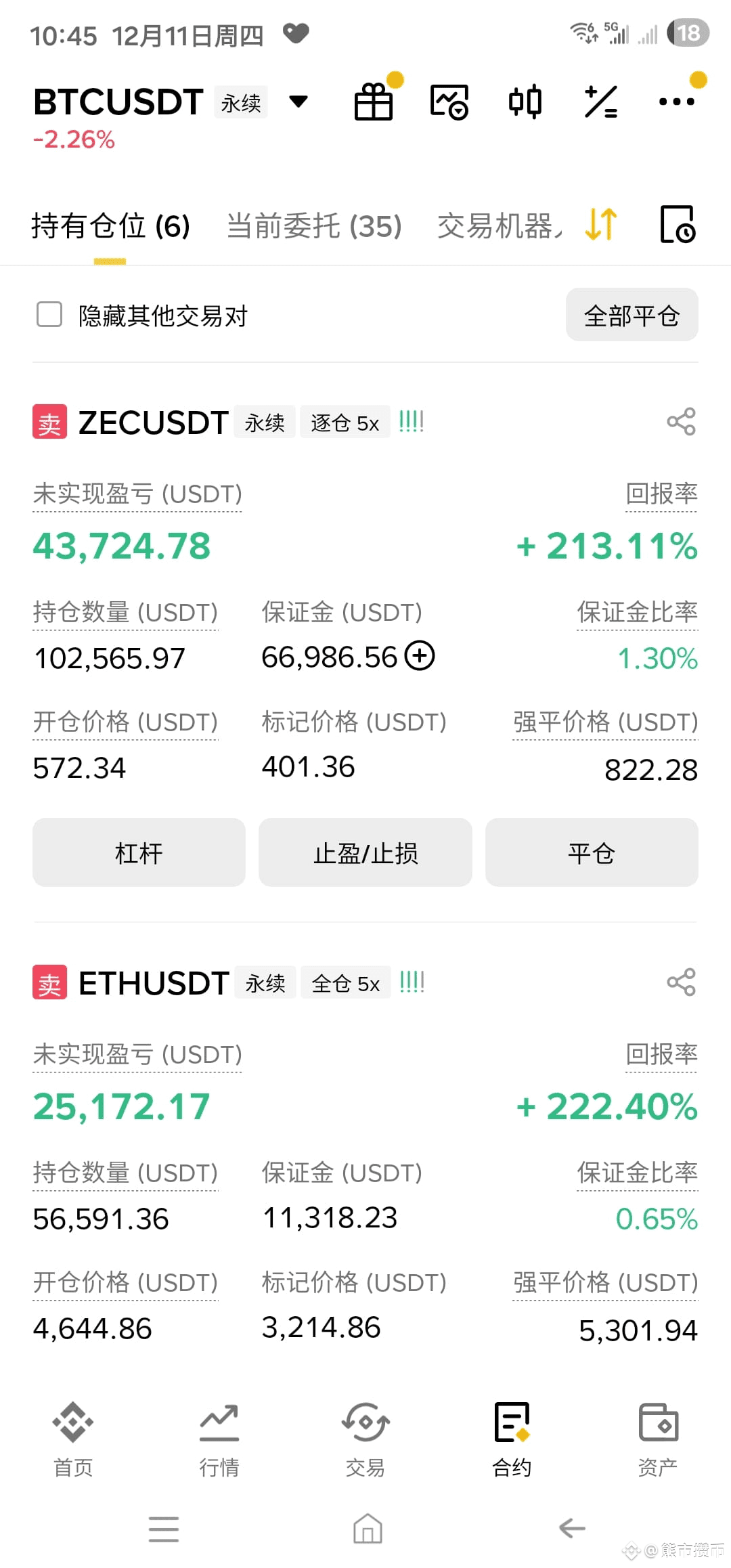
As for Monero, which immediately lost the key defense line of 420 after following the Federal Reserve's actions last night, the situation seems to be more severe. Given the basic judgment that other major index component stocks are likely to experience a round of deep correction in the near future, I believe that this privacy-protecting digital currency will find it increasingly difficult to return to an upward channel in the short term, and it can almost be declared that this round of slight recovery over about a week has officially come to an end. At this stage, most retail investors active in the spot trading or leveraged financing business have shifted their focus to other more attractive investment targets, such as the recently popular new project Pipin, so time is running out for Monero; unless it can quickly deliver convincing performance, it can only watch its market share continuously decline until it is completely marginalized. Correspondingly, due to thin trading and sluggish transaction volumes, along with the impact of a deteriorating external environment, it is expected that for quite a long time in the future, its price curve will primarily decline slowly with occasional minor fluctuations, but the overall direction will not change, meaning that a dramatic change such as a V-shaped reversal is unlikely to occur in the short term.
Finally, regarding specific operational suggestions: since yesterday we failed to capitalize on the opportunity to seize the high point, today we should not harbor any hopes of trying to touch the top, as the risks are too high and the returns may not be ideal; the correct approach should be to wait until a new round of downward trends is confirmed before attempting to enter the market for bargain hunting, which is a more prudent strategy. My preliminary idea is to set a stop-loss around the 300 level and patiently wait for the opportunity to mature, decisively aiming to complete the liquidation around 240. This way, we can avoid most systematic risks while also preserving the fruits of victory to a certain extent—why not?