
I truly began to doubt 'whether I was thinking wrong,' not because I lost money once, but because the same situation kept happening many times.
That feeling is very specific:
The day before, you were still reviewing the logic, thinking the direction was fine;
The next day, you wake up, and with one sentence from the Federal Reserve, the market directly changes the answer for you.
There was one time I remember particularly well.
The market has already priced in the expectation of interest rate cuts, and almost all discussions are centered around 'easing is coming soon.' I have also prepared according to this consensus, with a complete logic and sufficient reasons, and I even feel that this time I'm not gambling.
But soon, the Federal Reserve left a bit of ambiguity in its statement. Just that one sentence was repeatedly interpreted by the market, and the sentiment reversed instantly. Prices didn't give anyone time to react and broke through the range directly.
At that moment, I suddenly realized a problem:
I did not lose due to the correctness of my judgment, but rather because I was in the wrong position from the very beginning.
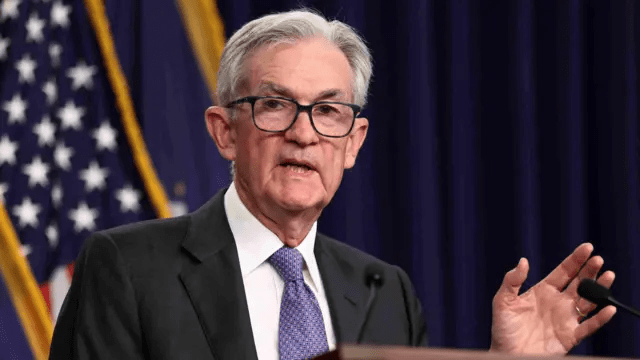
Counterexample one: treating macro as a 'signal' ended up amplifying emotions.
Later, I reviewed many similar situations and found a commonality:
The mistake that ordinary people are most likely to make is treating macro as a deterministic signal.
Seeing the Federal Reserve turn dovish, going all in on risk assets.
Seeing inflation rebound leads to extreme risk aversion.
Seeing the US dollar weaken, one chases high Beta.
The result is often:
Judging the direction may not be wrong, but the timing is definitely incorrect.
Heavy positions, amplified drawdowns, and emotions being repeatedly consumed.
Macro news is originally meant for institutions to make long-term allocations and risk hedging, but in the hands of ordinary people, it often becomes a reason to chase highs and cut losses.
Counterexample two: thinking 'high returns' means a safety cushion.
There’s another more insidious misconception, which is using returns to cover risks in a high-volatility environment.
Some friends, during periods of market fluctuations, frequently participate in high-yield strategies, believing 'as long as the APY is high enough, it can cover the drawdown.' But when macro expectations suddenly reverse and liquidity tightens, the real problem is not the decline in returns, but the disappearance of exit paths.
You will find that
Returns are just superficial.
Stability is the underlying capability.
Cognitive turning point: what ordinary people should pursue is actually 'controllability'.
What truly changed my mindset was a very simple question:
If I don’t keep an eye on the market, don’t gamble, and don’t predict, can the Federal Reserve's next sentence still affect me?
If the answer is negative, then your asset structure itself has a problem.
For ordinary people, the most important thing is not to outperform the market every round, but rather:
Not being forced to exit during periods of high uncertainty.
Still able to retain options during extreme emotions.
When the direction is unclear, having a temporarily stable anchor point.
This is also why I later re-understood 'stability'.
Why stable assets are being re-evaluated at this stage.
Against the backdrop of the Federal Reserve's repeated policies and frequent changes in global liquidity rhythms, the meaning of stable assets has begun to change. They are no longer just 'transitional tools', but rather part of structural allocation.
In the crypto ecosystem, stablecoins play exactly this role:
Settlement units, risk buffers, and the basic liquidity of DeFi.
When the market starts to distinguish the quality of 'stability' itself, decentralization, over-collateralization, and on-chain transparency become important criteria.
@USDD - Decentralized USD USDD's design logic revolves around these core principles. It does not promise returns but emphasizes the stability and verifiability of the mechanism itself, making 'stability' not just a slogan but a system that can be scrutinized.
Back to the personal level: stability is not about giving up opportunities, but rather preserving the future.
Looking back at the years that I was repeatedly 'educated' by the Federal Reserve, my greatest gain was not learning to predict policies, but rather learning to accept uncertainty.
When you no longer try to change your fate with a single judgment, but instead reduce risk through structure, you will discover:
Stability is not conservatism, but rather the most realistic moat for ordinary people.
It keeps you from being swept away in the storm.
It allows you to still have chips when opportunities arise.
It also helps you remain clear-headed when the market is frantic.
Seeing stability as trust, it’s not about choosing to lay flat, but rather choosing to stand at the table for the long term.
#USDD以稳见信