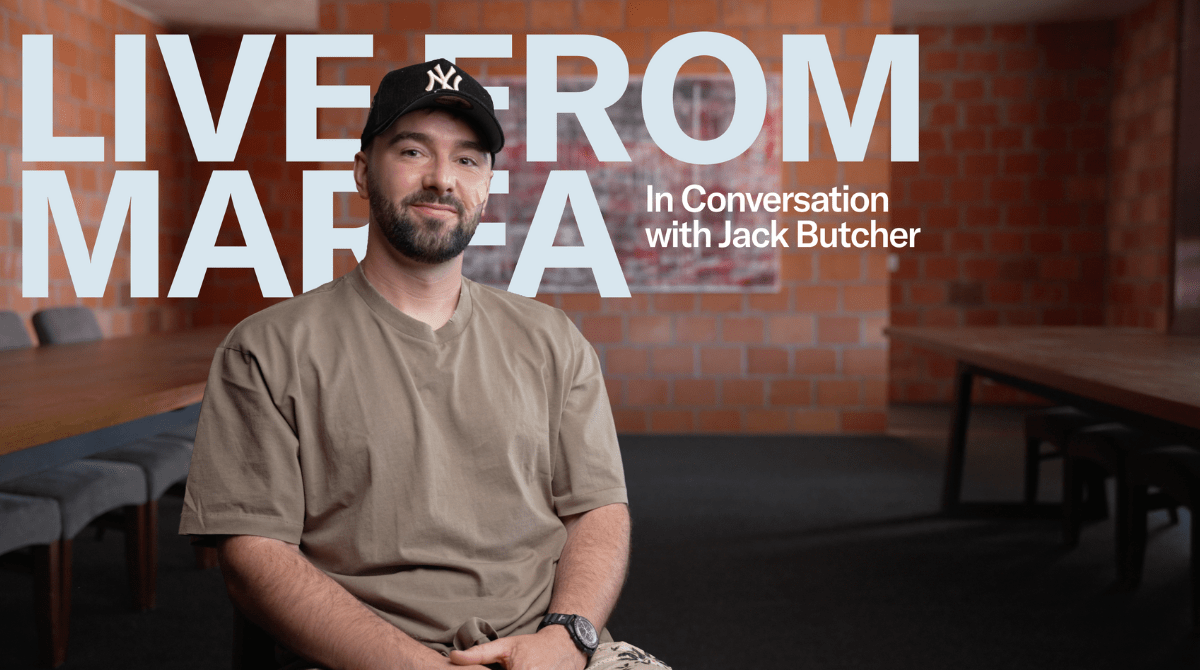
Jack Butcher's creative practice revolves around making the invisible visible. He examines the value system, ownership structure, and human behavior in the digital age through his minimalist yet conceptually rich works.
His work integrates design, market, and psychology, transforming ideas about how people create and assign meaning into art that is both analytical and deeply humanistic.
This interview took place in the lobby of the Saint George hotel during the Marfa Art Blocks weekend, where Jack Butcher shared his views on how digital permanence, collaboration, and ownership continue to shape creativity and connections.
Note: For brevity and clarity, the content of this interview has been edited.
OpenSea:
You have been dedicated to revealing those invisible systems, from brand building to market psychology. How has your experience in this industry changed your perspective on what people truly value?
Jack Butcher:
I believe the infrastructure itself is rich with psychological connotations. The market acts like a psychological barometer. In my previous work, feedback loops took much longer and were more sluggish, while in this environment, the internet, Ethereum, and various forms of tokens act like a complex living organism, providing feedback that is more, faster, and richer, making it a more interesting canvas and medium.
OpenSea:
Have you found that, although these processes differ, they all tap into the same human emotions?
Jack Butcher:
Of course, the market is full of emotions, and the concept of ownership itself is also full of emotions. Many criticisms or paradoxes in this world stem from the fact that people can own, trade, and sell items, which is often seen as a strong critique, but it is also the fundamental mechanism behind such strong emotions. As an artist, designer, and practitioner in the field, this creates a fantastic opportunity for people to continuously pay attention to your creations and next moves.
These items can evolve and interact because people own them, rather than being seen once and never again. People own the items and connect themselves with the creators. This fundamental mechanism of ownership creates a vast creative space and opportunities for us to create interesting works.
OpenSea:
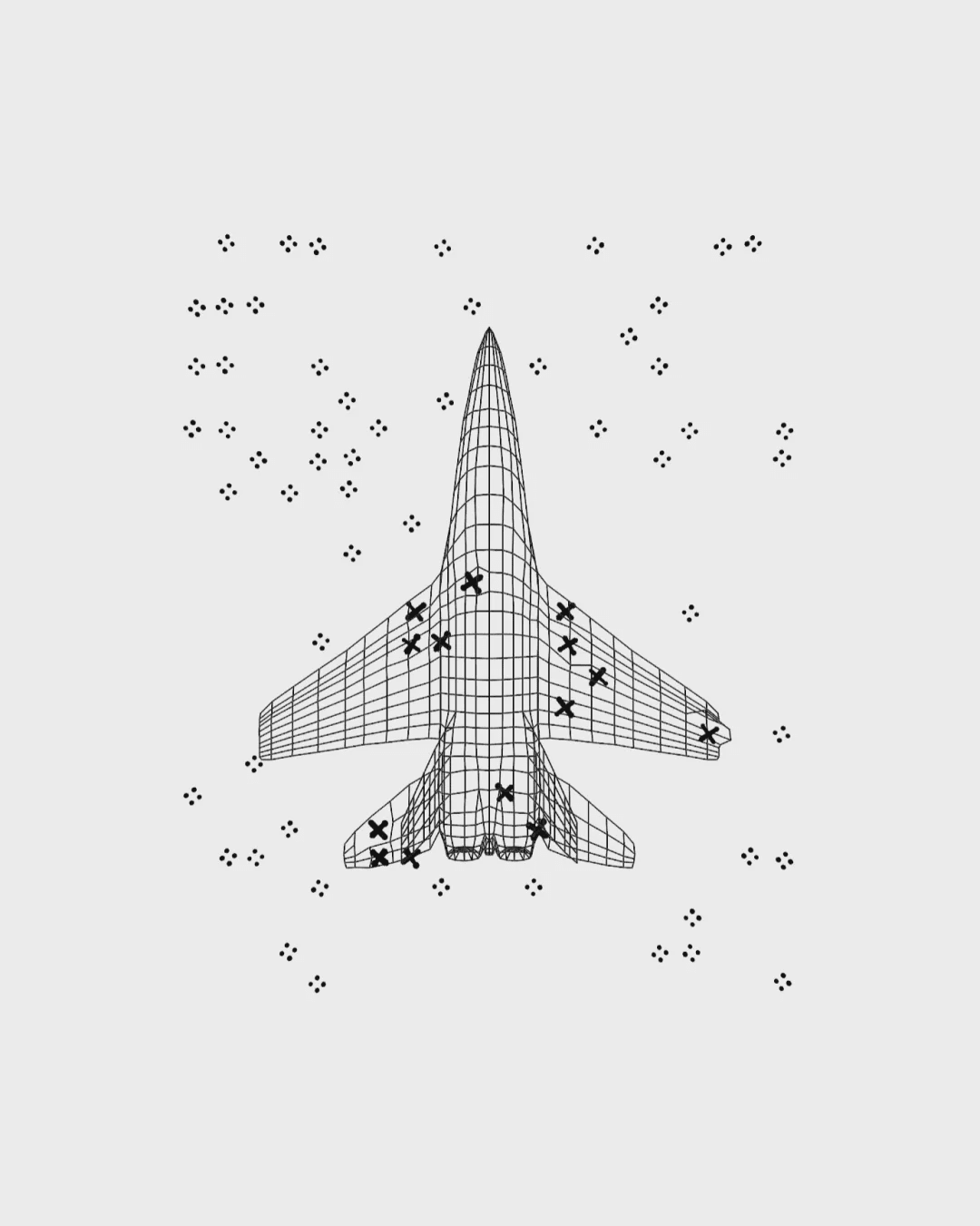
The concept of ownership is inextricably linked to the concept of permanence. The blockchain has permanence in many ways, but with the rapid technological developments we face today, how do you view the permanence in the current digital art space? Is it important to you?
Jack Butcher:
I do think so. From my perspective, the argument about permanence is a bit like a self-fulfilling prophecy, especially in this context. If these objects become valuable enough that people will run systems to maintain them permanently, then ownership becomes a way of decentralized intention, incentives, and the capability of maintaining the infrastructure itself. Someone can run nodes or ensure these collectibles or objects are understood in some way and provide contextual information for those who discover them years later.
From a purely definitional standpoint, this medium is more likely to achieve permanence than many other art media. Additionally, there is an idea that those interested in an object can run its copy forever and maintain a system to protect it. Historically, that has not been the case for other items that people wanted to maintain. For physical items, it is almost impossible to contribute to their security.
OpenSea:
Do you think achieving permanence or longevity requires a physical component?
Jack Butcher:
Maybe I would think the same way. Like many skeptics, you would associate eternity with tangible and feelable objects. But ironically, these things themselves possess a certain timelessness that does not decay. In my practice, we have done some projects that include physical components, but the only reason for doing those projects is to collaborate with those who possess great skills in the physical space, or conceptually, it makes sense to compare the physical and digital.
You can build a system around the relationships between them instead of simply saying, 'Here’s a link to the image you own, and here’s a print of the same image.' It is based on this reverse relationship that physical items can become truly enriching. Theoretically, you could send the image of a digital artwork to every museum in the world for them to print, and all source information could accumulate onto that certificate, which physical items cannot achieve.
By definition, you cannot leave such a mark in the real world unless you create counterfeit copies, personally go to such places, and witness the works. That in itself is very interesting and significant, as it helps people connect with the works and their creators. But this is only a secondary effect brought about by the powerful forces of the digital network; it is the digital network that has birthed these amazing communities.
OpenSea:
Your works and projects are known for their dynamism. What is the relationship between that and the sense of eternity? Do you want people to be able to constantly change and evolve the works they get from you?
Jack Butcher:
That's right, almost every collection condenses the efforts of its owners or participants, ultimately forming the shape it has now. Some collections may never have a final form. The most basic idea of the internet is to connect two people who would otherwise never meet, connecting not just people but also items.
You can build connections between items, and the richer those connections are, the more interesting it becomes. If people can truly influence the collection itself and not just buy and sell, that would be something novel. As a collector, your influence over the collection or artwork is unique.
OpenSea:
Your visual style is known for its minimalism, but it contains many profound ideas behind it. How do you decide which elements to discard, and how do you convey these grand concepts in a concise yet profound way?
Jack Butcher:
There is a saying that 'good design is as simple as possible.' This idea has many synonyms: remove all unnecessary elements and keep only those that effectively communicate the idea. That's the ultimate goal. My workflow is to evaluate this idea in all the different contexts I have experienced. I look at it from the least friendly angle: 'If someone deliberately opposes your point, what would they say?' This is part of the process, especially when practicing on the internet.
You gradually learn how something will be interpreted and adjust accordingly. If you can provide sufficient reasoning for all your decisions, you can handle any objections that may arise. There are some shadows of advertising and marketing in this. When you pitch an idea to a room full of people, you need to be prepared to address any potential objections.
OpenSea:
Sounds like your experience in brand promotion.
Jack Butcher:
Of course, it feels like being ready to defend my conceptual ideas, but it also gives me a deeper perspective as an artist because I think not only from my own artistic angle but also from an external perspective. Many artists need to go through long careers to reach this level.
For me, this may also stem from a sense of insecurity. You want to hold on to the creative process and the concepts behind the work with 'ironclad' determination, and I derive great pleasure from that. I enjoy delving into every subtle concept detail and then piecing them together like a puzzle; it is a very satisfying process.
OpenSea:
You have had some very significant collaborations in your work. How is that different from working alone?
Jack Butcher:
This is great, especially under the right conditions. The EP is a perfect example; it showcases the best collaborative conditions. At this stage, it is almost beyond my control, truly becoming a work and concept shared by the community. This medium itself perfectly aligns with the idea of collaboration because you don’t need to be in the same space as others.
The existence of network effects means that one artist may have connections in one corner of the collectibles world, while another artist may be in another corner of the internet. It's a bit like the music industry: you find various interesting combinations that can reach a larger audience than any one person could reach alone. Some people will naturally join a network like that. I have been very fortunate in collaborations and hope for more opportunities in the future.
OpenSea:
You have distilled factors like success, failure, and bias into data and integrated them into your design system. Next, do you want to explore new areas or incorporate some human behavioral systems?
Jack Butcher:
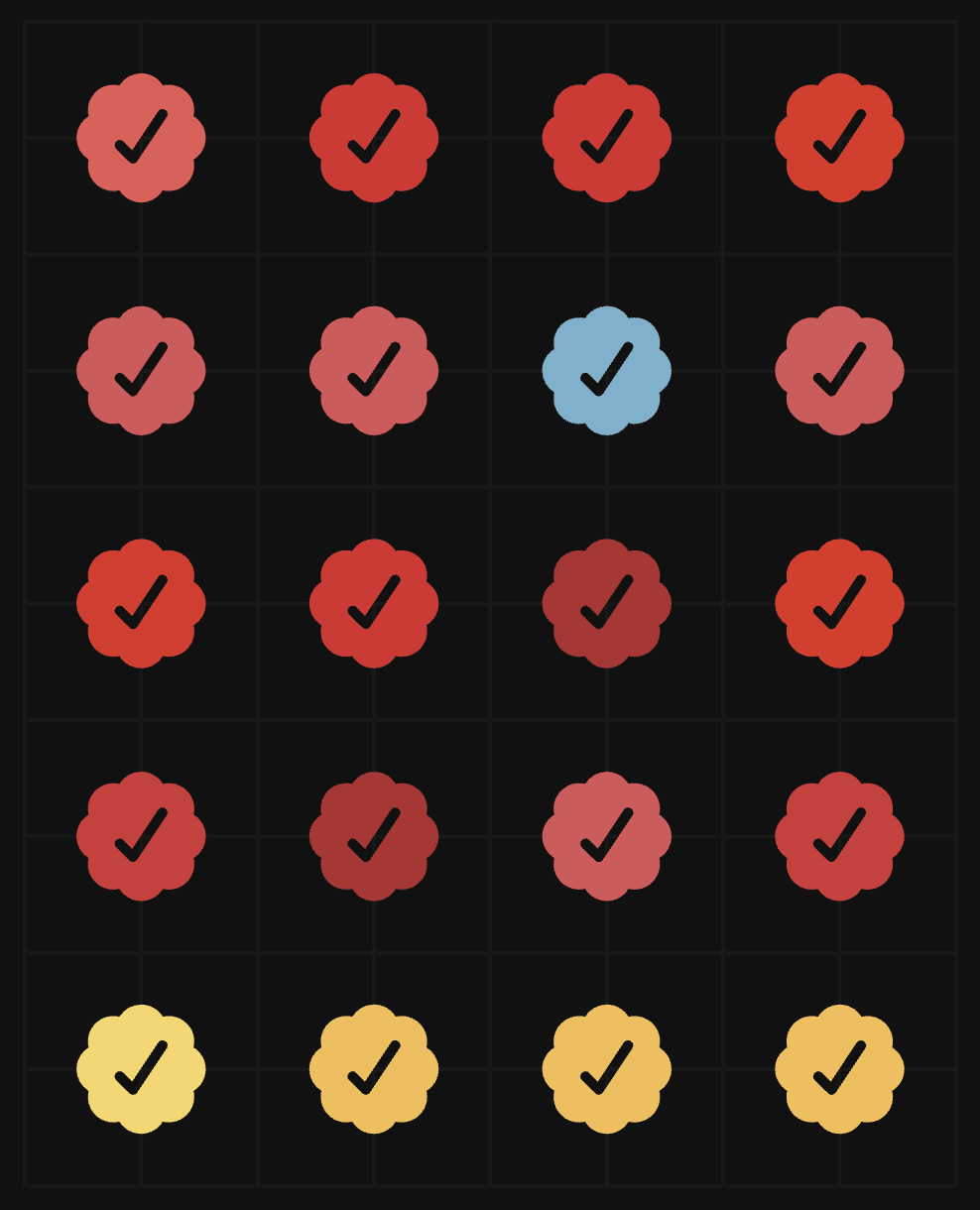
I have recently been particularly focused on these emergent feedback loops brought about by ownership, which encompass various aspects of psychology, as well as the concept of value—value being at the core of my studio's name. In the Web 2.0 era, you create an object, and people share or save it. In this new environment, anything you publish to the world has a real-time market, which is an extremely complex and captivating field. I’m not sure if I can summarize it more succinctly, but its core lies in market and value.
Verification has been an important theme over the past few years. What can these bottom-up systems truly bring? How much of it is us reshaping old systems based on human behavior, and how much is due to the capabilities of the technology itself? Ideally, we could collaborate equally, but once the market is introduced, it immediately enters a very instinctive and natural cycle. It all stems from humans because it is people who determine the value of things and whether they want to retain or create those things. This is a very exciting and interesting creative platform.
OpenSea:
We have gained these new technologies and systems, but after all, people are still people.
Jack Butcher:
That's right, after all, humans are still humans. Our behaviors are such. We all like to think we have evolved beyond the realm of humanity, but that is not the case. Regardless of how things evolve, we will always be caught up in the cycle of humanity.
I have always appreciated one aspect of your work, which is your clear understanding of how people perceive your art, and the tension between that and the minimalist structural elements in your work. These two aspects are always intertwined, and that's where the charm of the work lies.
OpenSea:
For you, what does being in Marfa with these people in such an environment mean this weekend?
Jack Butcher:
This is so interesting. Among all digital art and cryptocurrency conferences, this is definitely the most fascinating place. It's hard to get to, and many people have gone to great lengths to be here. I admire them, and I love it here. I've had a great time.
Disclaimer: This content is for reference only and should not be considered as financial or trading advice. Mentioning specific projects, products, services, or tokens does not constitute OpenSea's endorsement, sponsorship, or recommendation. OpenSea does not guarantee the accuracy or completeness of the information provided. Readers should verify any statements in this article before taking any action, and readers are responsible for conducting due diligence before making any decisions.
#Marfa #ArtBlocks #NFT #OpenSea
The content on OpenSea that you care about
Browse | Create | Buy | Sell | Auction

Follow OpenSea Binance channel
Stay updated