
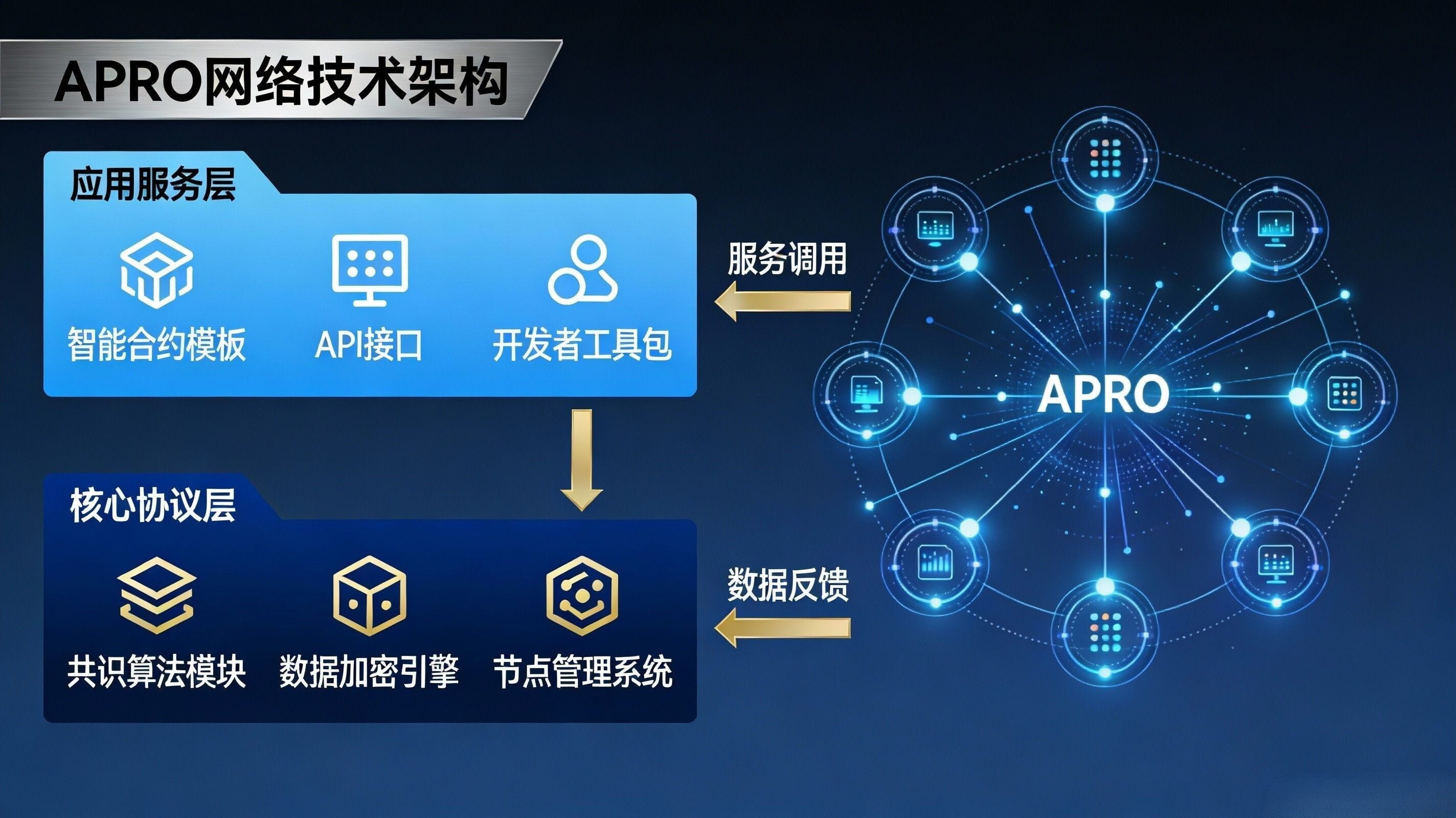
Azu believes that many people often make the mistake of treating oracle projects as "data-selling APIs" and then use "is there a listing, is there an airdrop, is there popularity" to judge their value. But what does an oracle really resemble? It is more like a "data-based consensus network" of a PoS chain: you need to first lay out the security budget (staking and penalties), then establish the governance framework (who sets the parameters and scope), and finally wait for the actual demand to ignite it (calls, fees, customer stickiness). Binance Research describes the relationship regarding APRO very clearly: AT is used for node participation and rewards (staking), and also carries governance voting, while the APRO network itself is a multi-layer structure that organizes data validation and on-chain delivery into a runnable system.
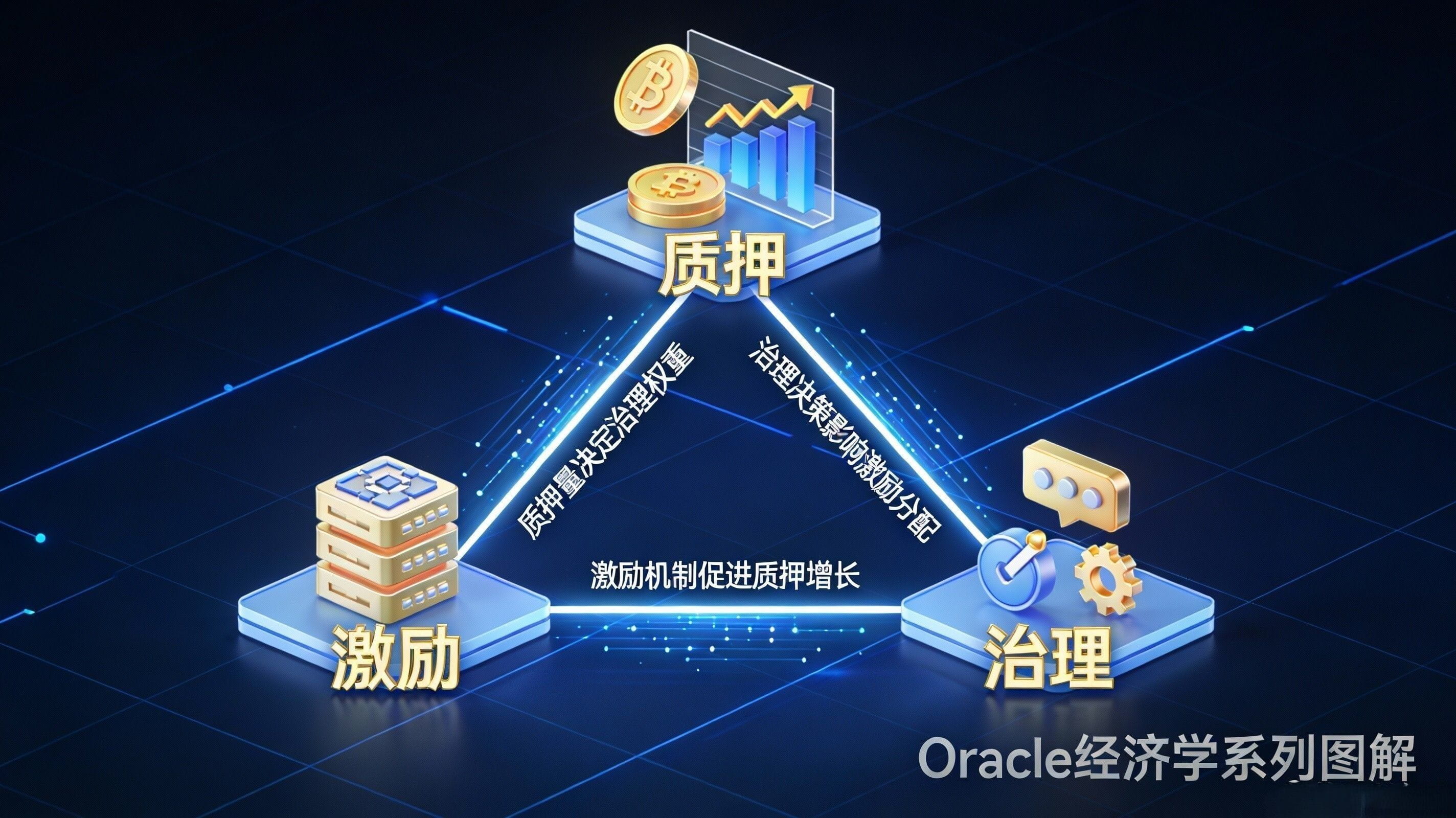
First, clarify the triangular relationship of 'staking - incentives - governance'. The significance of staking is not about 'locking assets to appear strong', but about providing a base that can be valued for data quality: nodes must stake AT to participate in pricing/submitting data, raising the cost of malicious behavior in order to qualify for rewards. Incentives are not merely about 'distributing tokens'; they are more like fuel for the network: when someone pays for data queries, when the protocol genuinely consumes your data services on the mainnet, the network generates sustainable economic momentum; some interpretations from Binance Square also explicitly mention that AT will be used to pay for data queries and suppress spam requests/malicious behavior, which essentially writes the 'demand side' directly into the token's usage loop. As for governance, it determines the boundaries: which assets to feed, which data sources to connect, update frequency, deviation thresholds, penalty rules, and even how network parameters are adjusted; these are not decisions made whimsically by the technical team, but should gradually evolve into a 'system' decided by AT holders.

So today, I want to emphasize 'rule changes' more aggressively: understanding oracles should not be like looking at a DeFi protocol's APR panel, but rather like assessing the security and finance of a PoS chain. The rule change is that oracle security is transitioning from 'engineering indicators' to 'economic systems', ultimately competing on who can make honest behavior more profitable in the long term, make malicious behavior more costly in the long term, and sediment this logic into an auditable, iterative parameter system.
This will directly change 'user impact'. For regular token holders, you are no longer just a bystander: by holding AT, you are actually participating in the network's security budget and governance direction; your choices (running your own node, delegating to whom, voting for which parameters) will affect the network's trust boundaries; for protocol parties, choosing whether to select APRO is no longer just about 'how fast price updates are', but whether SLA, auditability, dispute handling, and security backing can support high-value scenarios, as the APRO documentation also clearly states the role of its two-layer network structure and stronger backing layer in dispute/fraud verification.
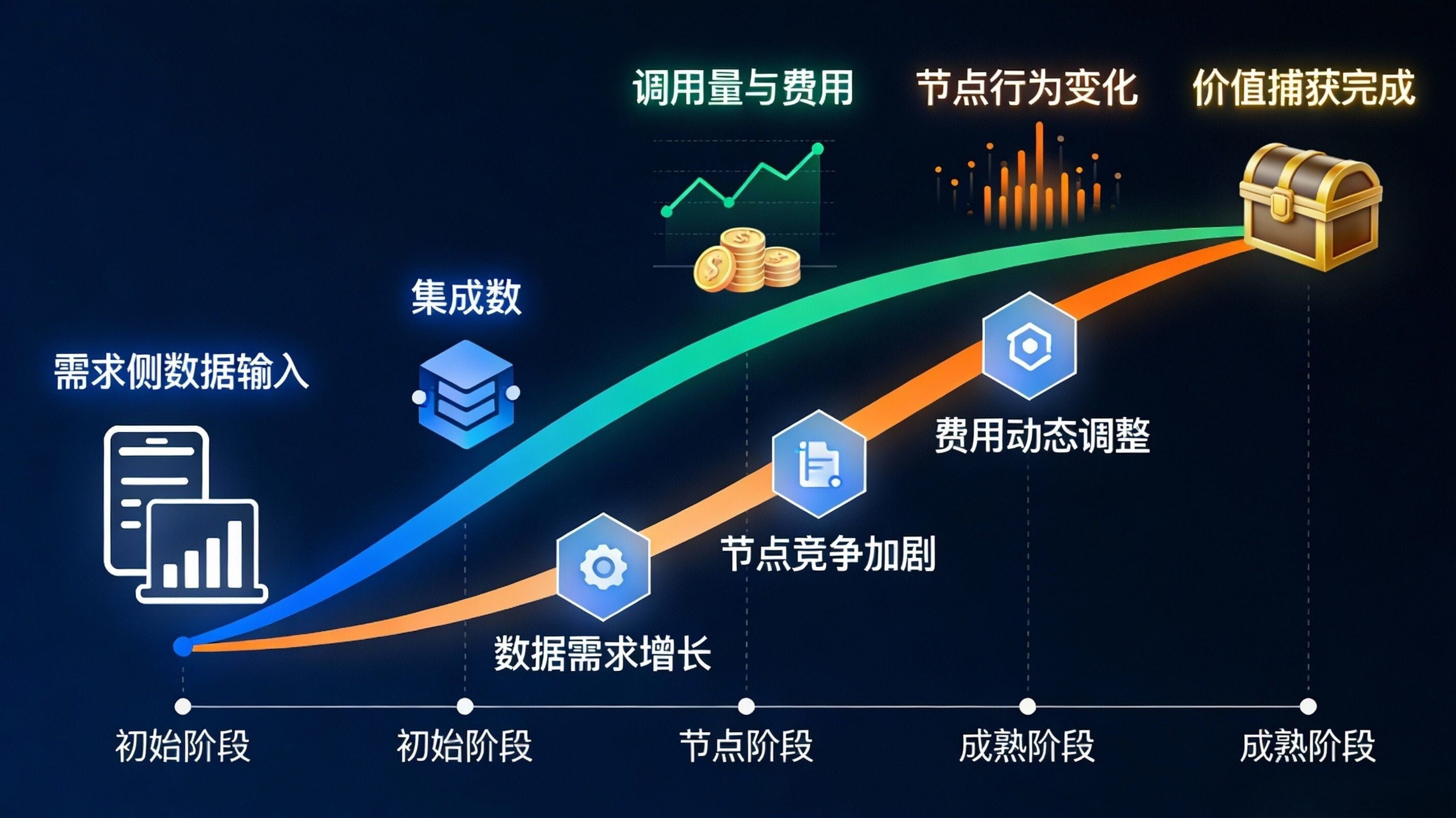
Finally, let's discuss the crucial point of 'how to reverse-engineer value capture'. Azou suggests shifting your perspective from 'supply-side narrative' to 'demand-side data'. If you want to judge whether the value of AT is being realized, do not first ask 'Is the community loud?', but rather ask 'How much is actually being used on-chain?'. The most practical approach is to monitor three lines together: check whether the number of integrations has been continuously increasing, especially for businesses sensitive to liquidation and compliance (lending, LSDfi, RWA, prediction markets) that have adopted it as the default data layer; then observe whether the call volume and fees have increased, as AT is used for data queries and network operation, the more real the demand side is, the more the economic loop resembles a functioning system rather than being propped up by subsidies; finally, examine changes in node-side behavior, such as staking participation, whether nodes are more willing to invest in long-term operation and credibility (this often reflects on network stability and service capability), and compare it with governance-side proposals/parameter adjustments to determine whether this network is 'driven by shouting' or 'driven by demand'.
If you are willing to do a small exercise, today pick a chain you frequently use and a dApp you often use, and write its 'data dependencies' in one sentence: what kind of price distortion does it fear the most, what kind of verifiable data does it need the most, and what kind of disputed settlement can it least afford. Then return to the public materials of APRO to find its contract entry/data feeding service/data service description, and see if it can cover the demand you wrote down with a verifiable method. You will find that the threshold of oracle economics does not lie in the terminology, but in whether you are willing to study its security budget, governance system, and real demands like you would study a PoS chain.
@APRO Oracle $AT #APRO

