Minima has reached a milestone the blockchain industry has discussed for more than a decade, but never truly delivered: a fully functioning Layer-1 blockchain node running directly on embedded hardware, without reliance on cloud infrastructure, heavyweight runtimes, or specialised servers.
Today, Minima runs on the Arm processor subsystem inside an FPGA board, with custom cryptographic accelerators. Minima’s deterministic architecture, combined with a purpose-built C++ code, positions Minima as the first blockchain genuinely engineered to live inside autonomous machines, not merely alongside them.
This is not a concept or a speculative roadmap. It is working now.
Read on for the overview, or over this link for the full update: https://minima.global/post/minima-achieves-major-breakthrough-blockchain-on-chip-is-here
The Blockchain-on-Chip programme has progressed from concept, to design, to live hardware execution.
👉C++ client for embedded systems
👉Running on @Arm SoC-FPGA Platforms
👉Integrated Into a Working Autonomous Drone
👉Hardware Accelerators in the Surrounding Silicon
Together, these components demonstrate that Minima can run as a full node in the same hardware that powers real autonomous systems, while pushing the most computationally intensive operations directly into hardware for speed and efficiency.
The hardware focus of the programme is simple and deliberate: blockchain at silicon speed.
By off-loading cryptographic workloads into dedicated FPGA logic, Minima achieves performance and efficiency levels that are not possible with software-only execution.
The SHA-3 accelerator alone has demonstrated an approximately 100× increase in hashing rate compared to CPU-based hashing.
This hybrid model control on the Arm CPU, heavy computation in FPGA silicon - is how high-performance autonomous systems are engineered today. Bringing blockchain into this model enables something the industry has never seen before at the edge: real-time, hardware-accelerated trust built directly into machines.
A drone, robot, vehicle, or industrial controller can:
👉Validate its own data and actions locally
👉Maintain a verifiable, tamper evident log in real time
👉Coordinate with other machines using a blockchain that lives in the same silicon as the control logic
Minima-on-Chip is no longer a research concept. It is running today on Arm technology, with validated silicon accelerators and a C++ client tuned for embedded autonomy.
Next steps include:
👉The public autonomous drone demonstration in late January 2026
👉Further hardening of the C++ client across architectures
👉Iteration on silicon accelerators based on real benchmark data
👉Collaboration with partners in drones, robotics, automotive, and industrial IoT
Minima is defining a new category. Blockchain that is not bolted onto devices, but built into them.
Embedded deployment changes how value accrues to the network.
As Minima is integrated into hardware and embedded stacks:
🔹Every device becomes a full node, strengthening the network
🔹Every attestation, proof, state update, or machine to machine interaction becomes a native Minima transaction
🔹Every deployment, whether a drone fleet, factory line, robot warehouse, or sensor grid, becomes a source of ongoing protocol level transaction flow
This creates real, non-speculative demand for the base asset, driven by how many machines depend on Minima for operational integrity, not by hype cycles.
These milestones show more than technical progress. They signal the emergence of a new category: a fully decentralised blockchain that lives inside the hardware powering tomorrow’s autonomous systems.
This is Minima’s edge: decentralisation not as an add-on, but as an inherent property of the machines themselves. Scalable, verifiable, and natively powered by Minima.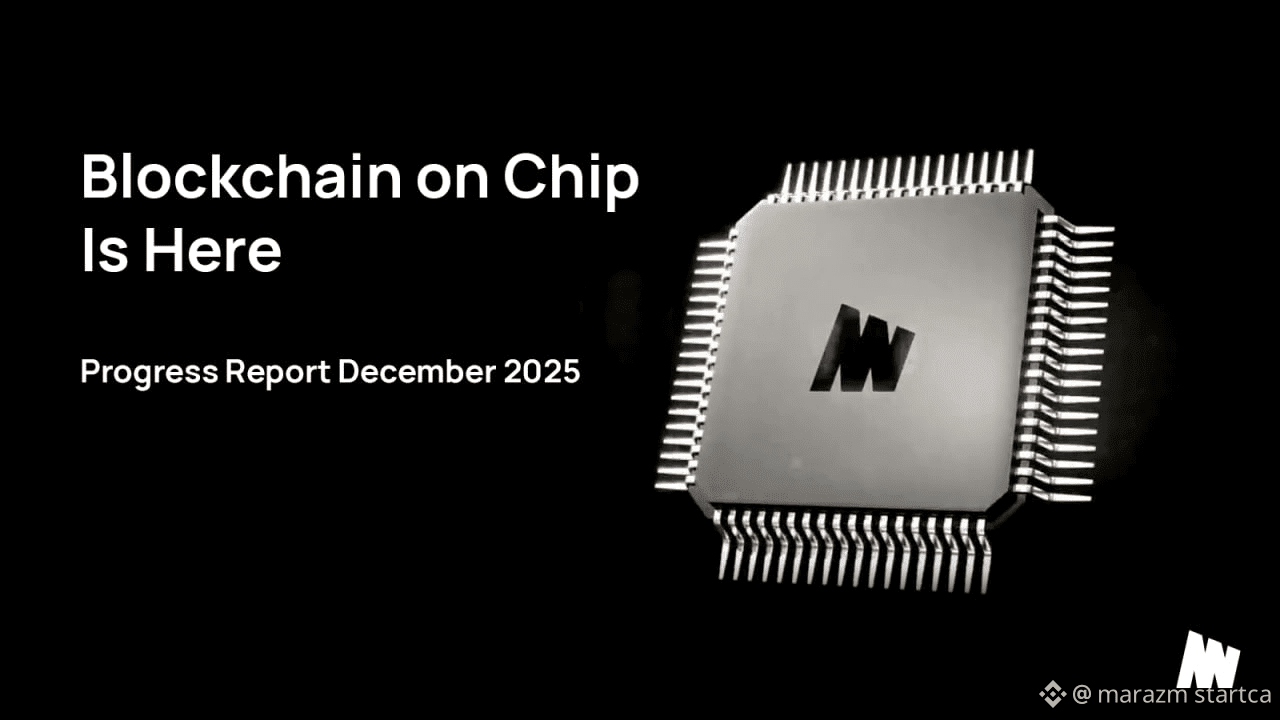

Minima has reached a milestone the blockchain industry has discussed for more than a decade.
Disclaimer: Includes third-party opinions. No financial advice. May include sponsored content. See T&Cs.
0
0
Explore the latest crypto news
⚡️ Be a part of the latests discussions in crypto
💬 Interact with your favorite creators
👍 Enjoy content that interests you
Email / Phone number