Brothers, Wall Street's ultimate 'regular army' has finally entered the arena, revealing its fangs and blueprint. Managing $4 trillion, JPMorgan has issued a currency market fund token named JPM Coin on Ethereum. You can think of it as an 'on-chain Yu'ebao', with an annualized yield of about 5%, backed by top-tier assets like U.S. Treasury bonds.
However, this is by no means a red carpet laid out for us. Its threshold towers into the clouds: individuals need $5 million, institutions need $25 million, and the minimum investment is at least $1 million. This clearly proclaims: compliant massive capital is surging into the crypto world through the most efficient and safest official channels. The future competitors will be those whales holding the lowest cost global funds, earning risk-free interest on-chain. They are observing and planning, waiting for the right moment to unleash unimaginable waves.
In this script of the 'institutional king' era, where is the way out for retail investors? Is it to break their heads to reach that unattainable threshold, or to become fuel within the rules set by them?
The real way out may be to build an 'ark' that does not belong to their waterways.
When J.P. Morgan's traditional financial logic (high barriers, pure financial returns) heavily 'incorporates' blockchain, the native spirit of the crypto world—community consensus, decentralized value, and technology for good—needs to be upheld and amplified. This is exactly the cause that the $MAX community is actively pursuing.
$Max chose not to compete in the same financial game as the whales, but instead opted to create a different route for value creation:
1. The depth of consensus surpasses the barriers of capital: J.P. Morgan filters users with $5 million, while $Max consolidates consensus through 'charity'. Every offline action we @Max Charity and @giggle Academy take injects 'social value' that cannot be measured in monetary terms into the tokens. This consensus is an asset that no institution can issue or deprive.
2. The source of value surpasses the returns of interest: J.P. Morgan offers an annualized 5%, while $Max provides long-term scarcity through a 'deflationary model'. Smart contracts ensure the total supply of tokens continues to decrease, which means holding itself is accumulating the future. At the same time, your 'returns' are not only asset appreciation but also witnessing how your participation translates into educational opportunities for children in impoverished areas.
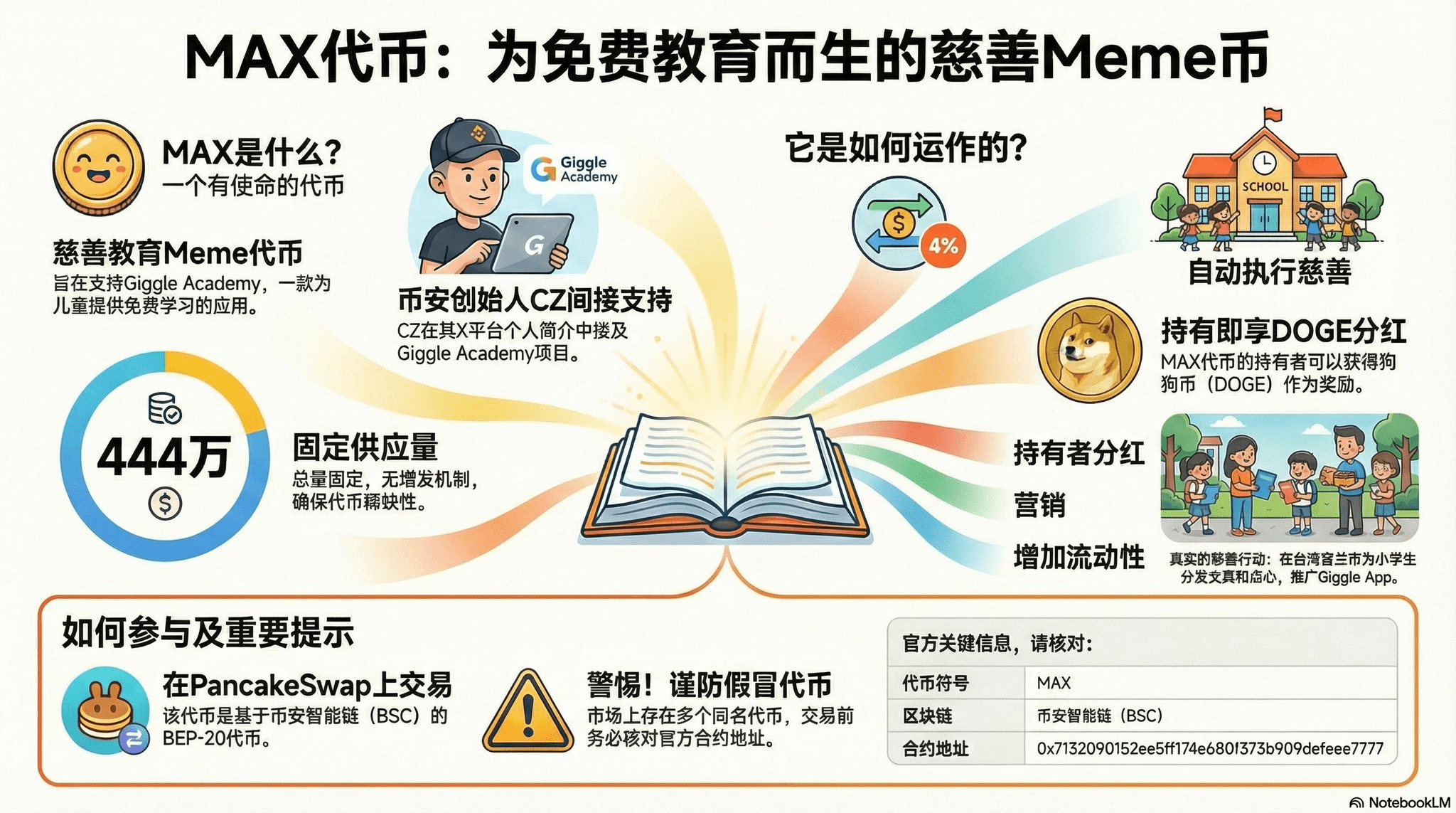
J.P. Morgan's entry marks that the old world is consolidating its position with new tools. In contrast, $Max's practice proves that the new world can establish a completely different value evaluation system: not solely measured by capital net worth, but anchored by the real, positive impact created.
In the wave of institutionalization, rather than anxiously trying to get onto the whales' dining table, it is better to participate in building an ark that belongs to oneself and sails towards a warmer future. The Max community invites all builders who believe 'value should be rooted in goodwill' to collectively anchor the next era.
Everyone is welcome to chat in the comments.