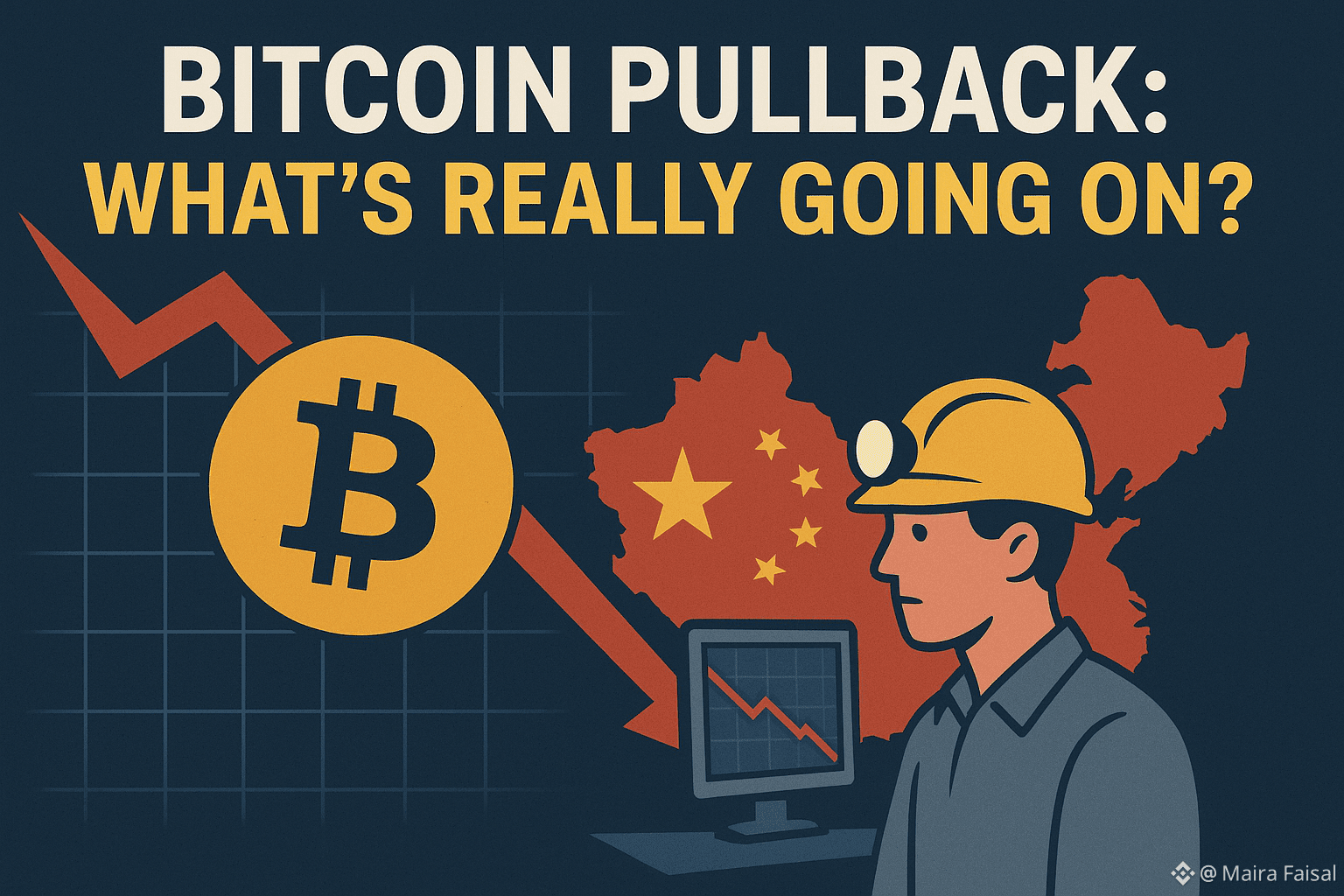
$BTC Bitcoin’s sudden dip has everyone looking for answers, and most explanations miss one key point: this move is driven by supply-side pressure, not collapsing demand.
According to market chatter and on-chain observations, renewed regulatory tightening around Bitcoin mining in China has once again shaken the network. In regions historically known for heavy mining activity, operations were reportedly forced offline in a short time window. When miners go dark suddenly, the impact is immediate and very real.
Why mining crackdowns affect price (short term)
When miners are pushed offline:
They lose daily revenue
They still need cash to pay electricity bills, staff, and relocation costs
Some are forced to sell $BTC holdings
The market senses uncertainty, and traders react fast
For example, during previous China-led mining crackdowns:
Network hashrate dropped sharply
$BTC Bitcoin price wobbled for weeks
Difficulty adjusted
Mining power migrated to other countries
The network came back stronger
We’re seeing a similar pattern again. A temporary dip in hashrate creates short-term sell pressure, which often gets misinterpreted as “Bitcoin demand is dying.” In reality, this is a supply shock, not a structural weakness.
Big picture perspective 🧠
This is not new. This is not the end. And it’s definitely not a long-term bearish signal.
Bitcoin has survived:
China bans (multiple times)
Miner exoduses
Regulatory shocks
Macro panic events
Each time, the network adjusted, decentralized further, and moved on.
What could happen next?
Short-term volatility may continue 📊
Difficulty adjustment stabilizes the network
Mining redistributes globally
Selling pressure fades once miners resettle
Long term, Bitcoin doesn’t care where miners are located — that’s the whole point of decentralization.