
@KITE AI :The convergence of artificial intelligence (AI) and blockchain is redefining how digital systems reason, transact, and operate autonomously. At the heart of this shift is KITE Coin, a purpose-built token designed to bridge intelligent computation with trust-minimized financial rails.
Rather than treating AI and blockchain as parallel innovations, KITE Coin fuses them into a single, composable economic layer—one where autonomous agents can verify data, execute value transfers, and coordinate actions without centralized oversight.
The Problem: Smart Machines, Weak Money Rails
AI systems excel at prediction, optimization, and decision-making—but they struggle with trust, settlement, and ownership. Traditional payment rails are slow, permissioned, and opaque, while most blockchains lack native intelligence to interpret real-world context.
This mismatch creates friction:
AI agents can’t easily pay each other.
Data authenticity is hard to verify at scale.
Automated decisions still depend on human intermediaries.
The result? Powerful intelligence constrained by outdated infrastructure.
KITE Coin’s Role in the AI–Blockchain Stack
Kite AI introduces KITE Coin as the economic glue between AI agents and decentralized finance (DeFi). The token functions across three critical layers:
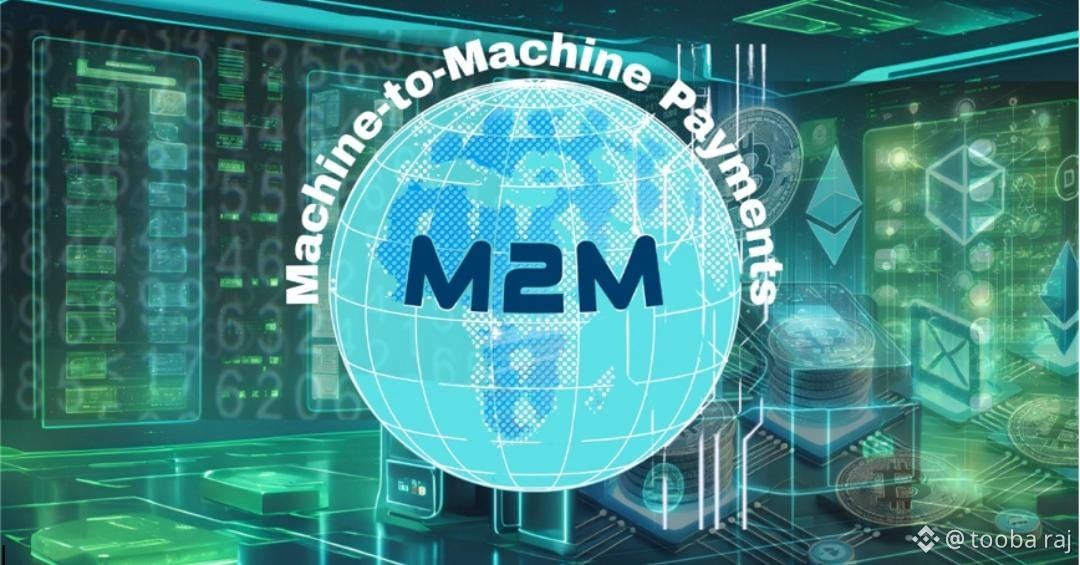
1) Machine-to-Machine Value Exchange
KITE Coin enables autonomous payments between AI agents—no banks, no custodians. Agents can pay for data, compute, APIs, or services in real time, with on-chain settlement ensuring transparency and finality.
2) Verifiable Intelligence
By anchoring AI actions and data attestations on-chain, KITE Coin helps make machine decisions auditable and tamper-resistant. This is crucial for applications like:
Algorithmic trading
Supply-chain optimization
AI-managed treasuries
3) Incentives for Honest Computation
Staking and slashing mechanisms align incentives so that agents are rewarded for accurate outputs and penalized for manipulation—bringing economic discipline to AI behavior.
AI Agents as On-Chain Economic Actors
With KITE Coin, AI agents evolve from passive tools into active market participants. They can:
Hold wallets
Execute smart contracts
Earn and spend tokens
Coordinate with other agents via programmable incentives
This marks a shift from human-centric finance to agent-centric economies, where software entities transact continuously at machine speed.
Real-World Use Cases Emerging
The convergence enabled by KITE Coin unlocks practical, scalable use cases:
Autonomous Commerce: AI agents negotiating prices and settling payments instantly
AI Oracles: Intelligent data feeds that validate and monetize real-world information
DeFi Automation: Self-adjusting strategies for lending, liquidity, and risk management
Enterprise AI Accounting: Transparent, on-chain tracking of machine-driven transactions
Each use case benefits from blockchain’s trust guarantees and AI’s adaptive intelligence.
Why KITE Coin Matters Long-Term
Most blockchain tokens fuel networks. KITE Coin fuels thinking networks.
As AI systems become more autonomous, they require:
Native money
Clear incentive structures
Verifiable execution environments
KITE Coin addresses all three—positioning itself as infrastructure for the autonomous digital economy, where value flows as seamlessly as data.
Final Thoughts
The fusion of AI and blockchain is no longer theoretical—it’s operational. Through KITE Coin, intelligent agents gain the ability to reason, transact, and coordinate on-chain with minimal friction and maximum transparency.
In this emerging landscape, blockchains provide the trust, AI provides the intelligence, and KITE Coin provides the economic heartbeat that binds them together.

