The Bank of Japan's interest rate hike in December is imminent, and the market is panicking: will this trigger volatility in U.S. stocks and affect cryptocurrencies? Here’s the conclusion—its impact on U.S. stocks is limited, but BTC is still trapped in high volatility in the short term. Controlling risks below the 85000 mark is more important than bottom-fishing!
Let's talk about Japan's interest rate hike: it seems like tightening, but in fact, it's a return to 'ultra-loose normalization.' Since March 2024, there have been three rate hikes totaling only 60 basis points; the pace is slow, the magnitude is small, and the ceiling is low. The core focus is on stabilizing the exchange rate rather than suppressing the economy. Don't be intimidated by a 250% GDP debt scale; much of Japan's debt is internal and has a long duration. With the central bank and fiscal coordination, as long as interest rates are controllable, a crisis is unlikely, which is fundamentally different from the Fed's aggressive tightening.
For the US stock market, the pricing anchor has never been in Tokyo: US economic profits, technology capital expenditures, and Federal Reserve policies are key. Although the ¥93 trillion carry trade could theoretically flow back, the Federal Reserve is currently in a rate-cutting cycle, and high-risk positions have already been digested in advance, making a large-scale capital withdrawal 'tsunami' unlikely to recur. Unless Japan is forced to accelerate interest rate hikes or the Federal Reserve suddenly turns hawkish, this is merely a known variable, not a systemic risk.
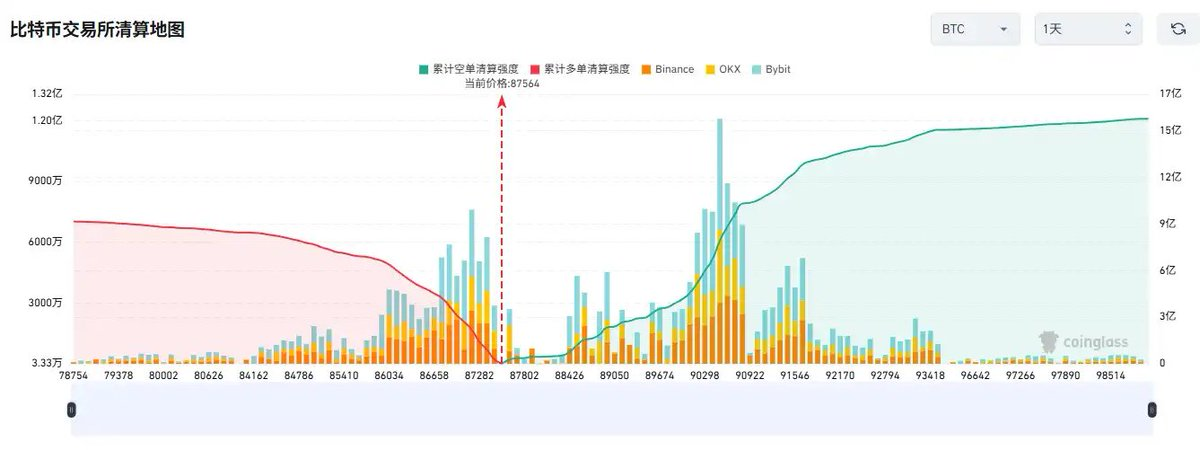
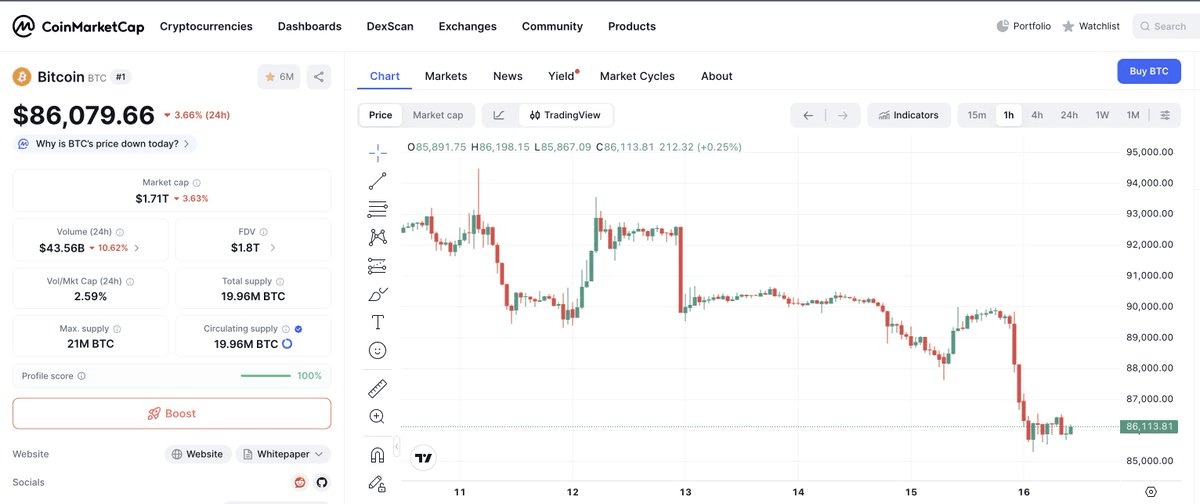
Looking at BTC's sharp drop: the 85,000 level is under pressure, essentially indicating 'the long-term narrative is positive but short-term bearish factors are piling up' — ETF funds are flowing out (BlackRock's IBIT saw a $2.3 billion outflow in a month), liquidity expectations are weakening, and deleveraging combined with low volatility structures is suppressing prices. Before the BOJ meeting and the release of US non-farm payroll data, the market will likely maintain 'high volatility + weak range fluctuations'; to return to a one-sided upward trend, we need to wait for positive ETF net inflows and clear signals of rate cuts, among other hard indicators.
Key operational suggestions (not investment advice):
1. First write down the 'bottom line': calculate the maximum drawdown you can withstand in the next month (-20%? -30%?), to avoid emotional sell-offs;
2. Scale back, don't go all in: Reduce crypto positions from 80% to 60%-70%, raise stablecoin allocation to 30%-40%, prioritize reducing small tokens, and slightly reduce BTC;
3. Wait for signals: Use positive ETF fund flows and stable prices as conditions for replenishing positions; reduce holdings further if weakness follows the event.
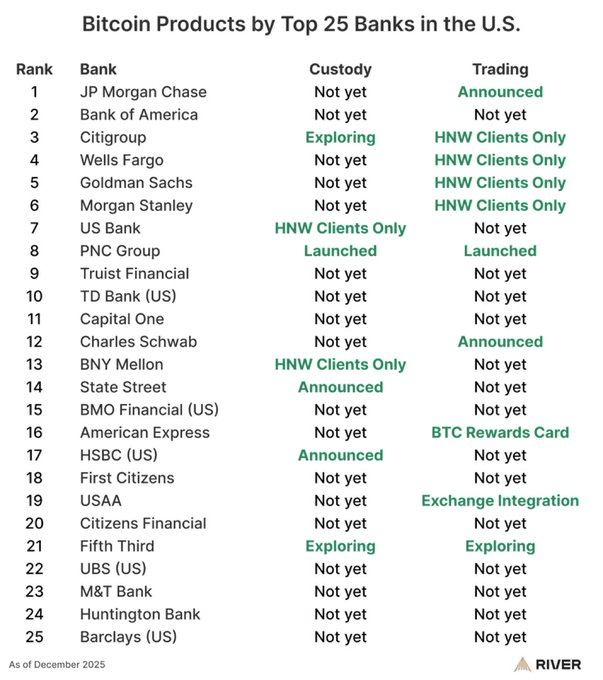
Additionally, here’s a key signal: 14 of the 25 largest US banks are developing Bitcoin products, the long-term narrative hasn't stopped, but in the short term, don't go against volatility head-on. The big non-farm payroll data will be released tomorrow; today's drop has already been priced in. For $BTC it's a buffer regardless — good data will lead to a direct rebound, and bad data is already mentally prepared for.
Current core logic: Japan's interest rate hike will not trigger a major wave in the US stock market, but cryptocurrencies are still in an 'event-sensitive period.' Controlling positions and patience are more crucial than trying to guess the bottom during volatile times.