
The key? I didn't heavily invest all at once, nor did I rely on insider information, purely the result of method + execution!
True financial freedom starts with mastering your own trading system!
I spent a year and a half, refining my profit model through countless painful lessons of liquidation.
The first million is the hardest, rely on persistence;
The second, only took three months;
The third, 40 days;
The fourth? 5 days to receive funds!
Attention!: 75% of my money was earned in the last six months! That's how the acceleration came!
Today, I will share a summary of my years of trading experience for free, hoping to help everyone!
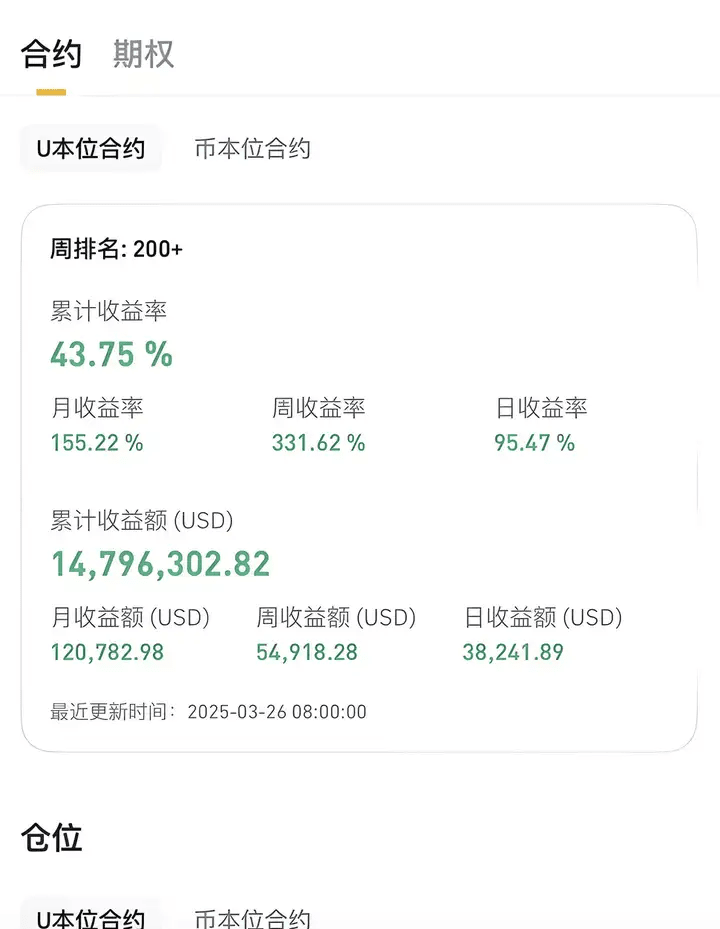
Can you turn 5000 into 1 million by trading cryptocurrencies? Let’s talk about something practical! Check out how my method earned over 30 million in ten years!
1. Only engage in high buy low sell of btc/eth
2. Primarily use the important moving average cluster above the 4H level to judge the entry points for short positions in batches. For example, if the MA60 moving average above the 4H level continuously suppresses the price, then take this moving average as the timing for entering short positions. Stop-loss: Place it above the previous high after a spike upward followed by a drop; for instance, if the resistance is at 2440, and the spike reaches 2450, then the stop-loss should be placed above 2450.
3. Generally, use the support below the same level or one higher level as the entry point for batch long positions. Stop-loss: Place it below the previous low after a spike downward followed by an upward move; for example, if the support is at 2320 and the spike reaches 2310, then the stop-loss should be placed below 2310, around 2300.
4. Stop-loss principal: 20% of the total principal; if reached, no more trades should be opened that day. Daily operations generally focus on two trades, with a single stop-loss controlled at 10%. The position size for single trades should remain consistent.
5. Try to enter positions in batches, don’t load all your bullets at once! Try to follow the trend when opening trades; if the main theme is bearish, try to go short, and vice versa.
① When the overall market trend is good, chase hot coins.
② Control the risk-reward ratio, keeping it around 3:1
③ Daily stop-loss retracement is 15%-20% of the principal; if reached, no more trades should be opened that day.
④ Daily review
6. Smash market: Wait in cash for batch entry; if there’s no opportunity, just stay in cash. In this market, not losing money is equivalent to making money.
7. Lock in stop-loss: When the daily trading has not triggered a stop-loss and the same level K-line pattern has not shown signs of pattern destruction, you can avoid bringing in a lock-in stop-loss pattern! If either of the two conditions is not met, then you must bring in the lock-in. ETH: Lock in after a gain of 20 points; BTC: Lock in after a gain of 350 points.
8. Move stop-loss to lock in profits: ETH: Move stop-loss after a gain of 35 points, using 3/5 minute levels to do so. BTC: Move stop-loss after a gain of 500 points, using 3/5 minute levels to do so.
9. 1. Never think about making a fortune in one go. 2. Only trade in your own market! Learn to stay out of the market; don’t force trades. 3. Avoid night trades. 4. Try not to open trades on weekends. 5. After being stopped out, control your mindset.
There’s a simplest method for trading cryptocurrencies that lets you maintain 'everlasting profits' and make 30 million!
This method has achieved an 80% win rate! The trading method you must know for cryptocurrency trading【5-0 trading pattern】once mastered, the crypto world will be your "ATM".
The 5-0 trading pattern is a harmonic trading model that technical analysts use to identify potential reversal points in the market. This pattern is characterized by a unique five-wave structure, providing a systematic approach to predicting and capturing market direction changes.
By combining Fibonacci retracement and extension levels, the 5-0 trading pattern can accurately identify possible reversal areas. Especially for traders looking to enter on reversal trades, this model is a high-probability trading tool.
Analysis of the structure of the 5-0 pattern
The 5-0 trading pattern is essentially a technical chart pattern composed of five consecutive price fluctuations (or 'legs'), labeled XA, AB, BC, CD, and DE. This pattern typically appears after a long-term trend, indicating that the original trend may reverse or pause.
Each wave follows specific Fibonacci retracement and extension ratios, making the 5-0 pattern a structurally rigorous and logically clear tool that can reveal reversal areas that ordinary technical indicators may fail to detect.
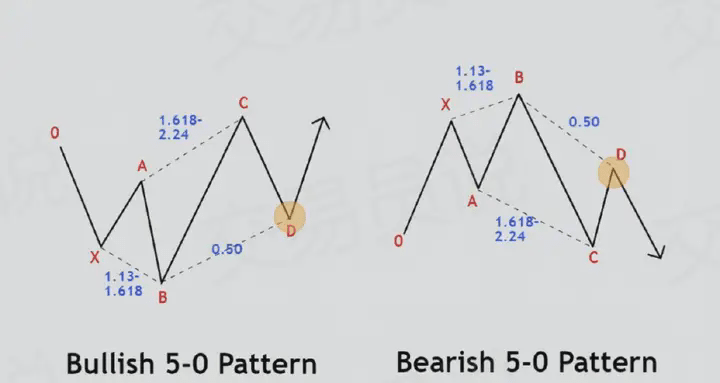
Below are detailed descriptions of each price structure:
0X: Initial trend.
XA: The retracement of the 0X wave, usually around the 38.2% to 50% Fibonacci retracement levels.
AB: The extension wave that surpasses the XA wave, usually reaching the 113% to 161.8% Fibonacci retracement level of the XA wave.
BC: The extension wave that surpasses the AB wave, usually reaching the 161.8% to 224% Fibonacci retracement level of the AB wave.
CD: The final wave of the completed pattern, usually coinciding with the 50% Fibonacci retracement level of the BC wave.
How to draw the 5-0 trading pattern
Drawing the 5-0 trading pattern requires a systematic approach, whether manually or by using automated tools.
To manually draw the 5-0 trading pattern, traders must follow these steps:
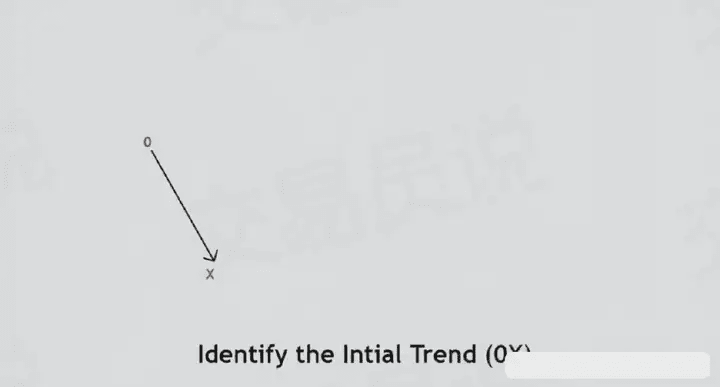
1. Identify the initial trend (0X): First, observe a strong trend in the market that will serve as the foundation for the entire pattern, forming the XA wave.
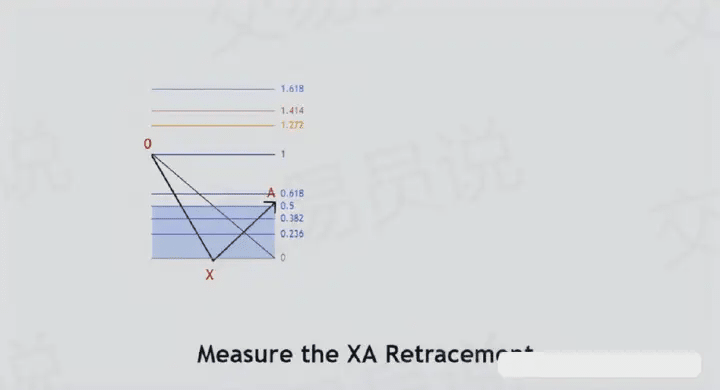
2. Measure the retracement of the XA wave: Use the Fibonacci retracement tool to measure the retracement extent of the XA wave, ensuring it is within the 38.2% to 50% range of the XA wave. This step is to confirm the first adjustment phase of the pattern.
3. Find the extension of the AB wave: Identify the AB wave, which must surpass the high/low of the XA wave. Confirm that the amplitude of the AB wave exceeds 100% of the XA wave using the Fibonacci extension tool; this is one of the key characteristics of this pattern.
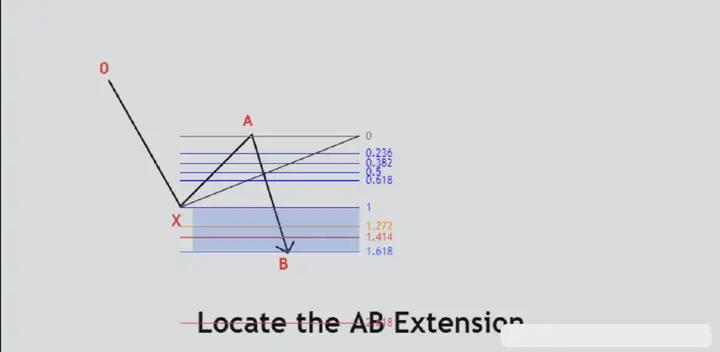
4. Draw the extension of the BC wave: Measure the BC wave (the extension part of the AB wave); its extent is usually between 161.8% and 224% retracement of the AB wave.
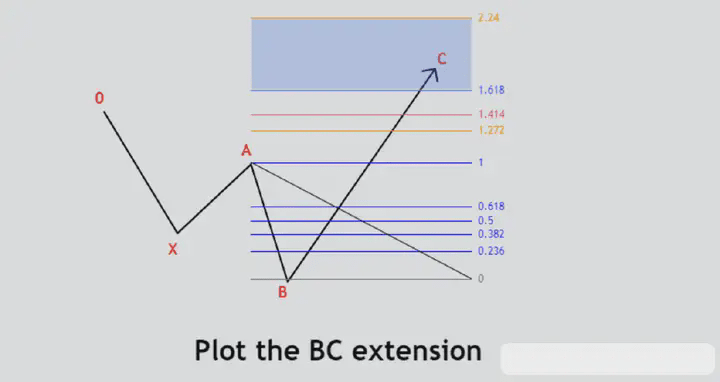
5. Verify the CD wave: Finally confirm whether the CD wave retraces approximately 50% of the BC wave. This step will confirm the completion of the 5-0 pattern and mark potential reversal points.
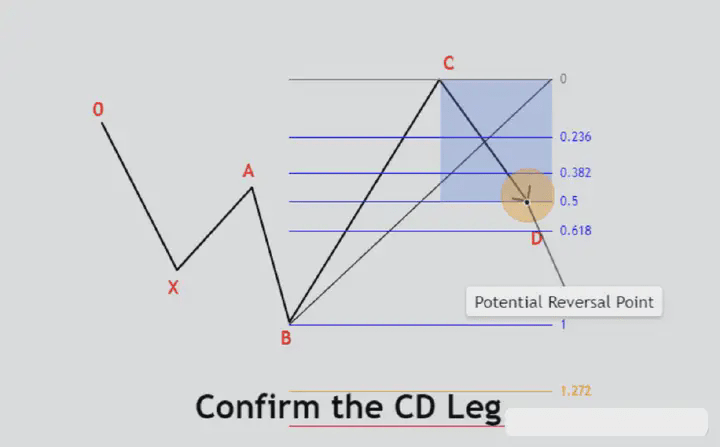
For traders who prefer automated solutions, chart platforms like TradingView, MetaTrader, and ThinkorSwim offer harmonic pattern recognition indicators. These tools can automatically detect and mark 5-0 trading patterns on price charts, significantly simplifying the analysis process.
When using, simply enable the harmonic pattern tool, check the 5-0 trading pattern option in the settings, and the system will automatically scan for potential pattern structures.
Automated tools are especially beneficial for traders operating in multiple varieties or across multiple time frames, saving time and improving efficiency.
How to trade using the 5-0 pattern
The key to trading the 5-0 pattern lies in recognizing the completion of the DE segment and trading according to the expected reversal. Here are several steps to effectively trade this pattern:
1. Identify the pattern
The first step in trading the 5-0 pattern is to identify it on the price chart. Traders can manually draw this pattern according to the aforementioned steps or use the automatic harmonic pattern recognition indicators provided by the trading platform (if available) to assist in identification.
Remember, confirming the validity of the pattern is crucial; ensure that all waves (XA, AB, BC, CD, and DE) conform to specific Fibonacci ratios. The accuracy of identification will significantly affect the reliability of the trade.
2. Wait for the pattern to complete
Patience is key when trading the 5-0 pattern. Traders must wait for the DE segment to reach the expected Fibonacci retracement level before taking action.
The DE segment usually completes at the 50% retracement level of the BC segment. If you enter too early before the pattern is fully formed, you may incur unnecessary losses because the price does not reverse near the expected turning point.
Monitoring price behavior near the expected completion area of the DE segment helps confirm the validity of the pattern and reduces the likelihood of false signals.
3. Determine the entry point
Once the DE segment is complete, it marks a potential reversal area. Traders should enter as close to this completion point as possible.
For the bullish 5-0 pattern, where prices are expected to reverse upward, traders can establish long positions.
Conversely, for the bearish 5-0 pattern, prices are expected to reverse downward, so it is recommended to establish short positions.
Combining other confirmation signals (such as candlestick patterns: hammer, engulfing patterns, etc., or momentum indicators: relative strength index RSI, MACD, etc.) can further enhance the reliability of trading.
4. Set stop-loss and target levels
When trading the 5-0 pattern, risk management is a crucial aspect. To prevent unexpected price fluctuations or pattern failures, traders should set stop-loss levels beyond the completion point of the DE segment.
For bullish patterns, stop-loss levels should be set slightly below the DE point; for bearish patterns, it should be set slightly above the DE point. This stop-loss setting allows for natural development of trades while minimizing potential losses as much as possible.
Setting profit target areas is also an important step in trading the 5-0 pattern. Appropriate target prices can be determined through Fibonacci extension levels and previous significant support/resistance levels.
Common targets include the 38.2%, 50%, or 61.8% Fibonacci extension levels of the DE segment. Traders can also choose to take profits in batches, that is, reduce positions in phases at multiple target levels to lock in profits, while allowing some positions to continue holding to gain more as prices further develop in the expected direction.
Case study
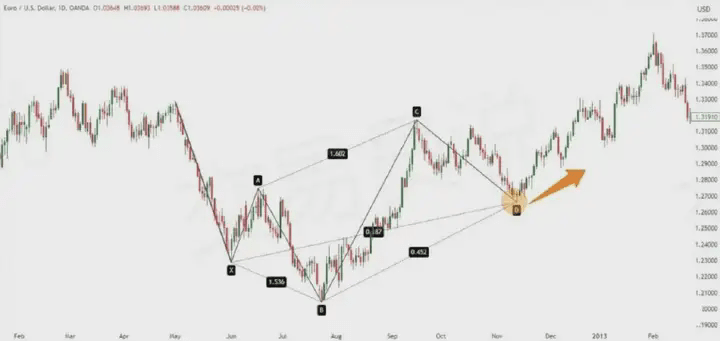
The structure of the 5-0 trading pattern is similar to the inverted head and shoulders pattern, where the second 'shoulder' is extended over time. In the following EUR/USD daily chart, we can draw a 5-0 pattern.
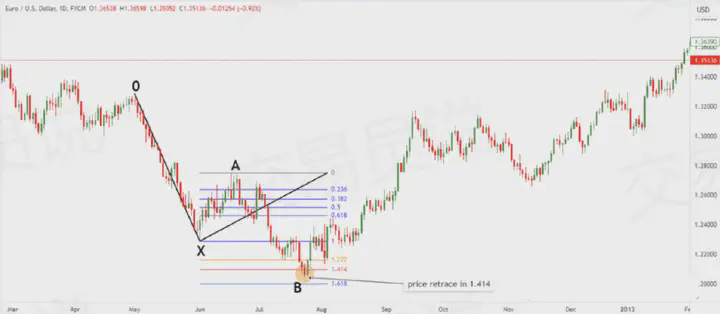
We drag the Fibonacci retracement tool from point X to point A. In this case, point B almost touches the 1.618 level, which complies with the rules of this pattern—it must fall between 1.13 and 1.618.
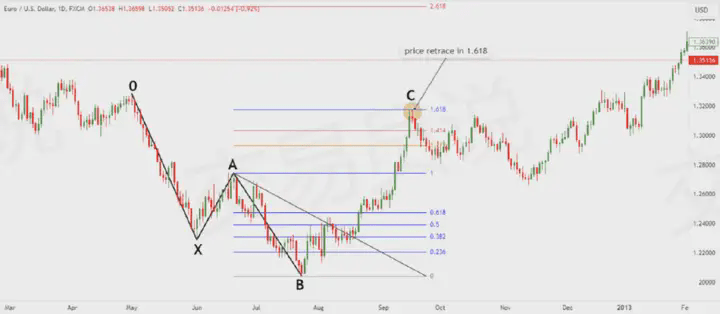
Next, reposition the Fibonacci tool from point A to point B. Point C should align with the 1.618 projection of the AB segment. In this case, point C successfully meets this condition, so we can proceed to the next step.
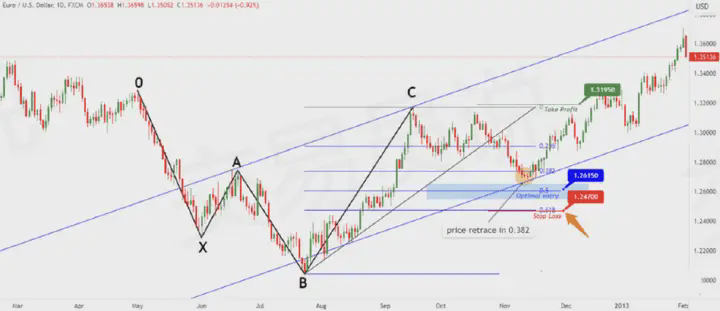
Now, move the Fibonacci tool from point B to point C to assess the trend of the DE segment. Pay attention to whether the price retraces to the 0.50 retracement level and begins to move upward. This indicates that the DE segment may be forming, and it is also a signal that the pattern is about to be completed.
To further confirm, a rising channel can be drawn. The first line connects points A and C; the second line connects point B. If the price remains within this channel, it will further enhance the validity of the pattern and serve as an additional buy signal.
After confirming the pattern, develop a trading plan... In this case, the best buying area is around 1.2615. The stop-loss should be set below the correction range at approximately 1.2470, which also corresponds to the 0.618 Fibonacci retracement level. To further confirm the entry signal, a descending trend line can be drawn, and wait for the price to break this trend line before executing the trade.
Finally, set profit targets to effectively manage trades. The first target can be set at 1.3110, aligned with the level of segment XA; the second target is 1.3195, which is the previous high of the pattern.
The following suggestions may help novice traders avoid excessive losses, or if you are preparing to gamble a large amount of trading capital, the second part of this article can remind you.
1. Overconfidence in entry signals leads you to trade excessively large positions. You must control your trading size to a certain safe level; do not let belief dictate your position size.
2. Establishing positions in a market with insufficient liquidity. Trading in a market with a wide bid-ask spread can easily lead to losses.
3. Persisting in a losing trade without initially setting a stop-loss. Investing against the market trend will definitely turn your small losses into big losses. Large losses are the biggest reason why trading cannot be profitable.
4. Invest in failed trades. This can turn small losses into big losses, and your arrogance increases the cost of losses.
5. Fantasizing about becoming rich quickly. The stronger the desire to be rich, the more likely novice traders are to take high risks, which ultimately leads to failure. Maintaining stability and calmness is the way to win this trading game.
6. Insufficient funds. Trading with an account that has insufficient funds can easily lead novice traders to establish overly large positions or take on more risk. Profiting becomes almost impossible, as the cost of each trade (fees, spreads, or commissions, etc.) will be a high percentage. Formal and more active trading requires at least a 5-digit account balance. When you are ready, the market will still be there.
7. Trade markets you do not understand. Trading in markets (stocks, CFDs, futures, or options) that you do not understand, combined with the omnipresent risks, forms the basis for failure. Before you achieve success, you must have sufficient knowledge of the market.
In trading, avoid these dangers and stick to trading markets you understand. Trading is a marathon, not a sprint. Before the race starts, be sure to determine the correct track and direction.
Playing around in the crypto world is essentially a battle between retail investors and institutions; if you don’t have insider information or first-hand materials, you can only get cut! If you want to layout together and harvest the institutions, feel free to find me! Welcome to follow Ah Xun for real trading learning and exchange, and to clearly understand market direction and strategies, regardless of what style the market is, knowing in advance allows for better mastery!
Ah Xun only trades in the real market; the team still has spots available for rapid entry.

