Decentralized Finance, commonly known as DeFi, is one of the biggest innovations in the crypto world. It allows people to use financial services like lending, borrowing, and trading without banks or middlemen.
💡How DeFi Works
DeFi is finance powered by code, not companies. DeFi runs on blockchains like Ethereum (mostly), BNB Chain, and Solana($SOL ).
Instead of banks, DeFi uses smart contracts, pieces of code that automatically execute transactions when conditions are met.
Your crypto wallet acts like your bank account, and stablecoins like USDT or USDC are commonly used inside DeFi.
🔥 Popular DeFi Use Cases
1.Lending & Borrowing (Be Your Own Bank)
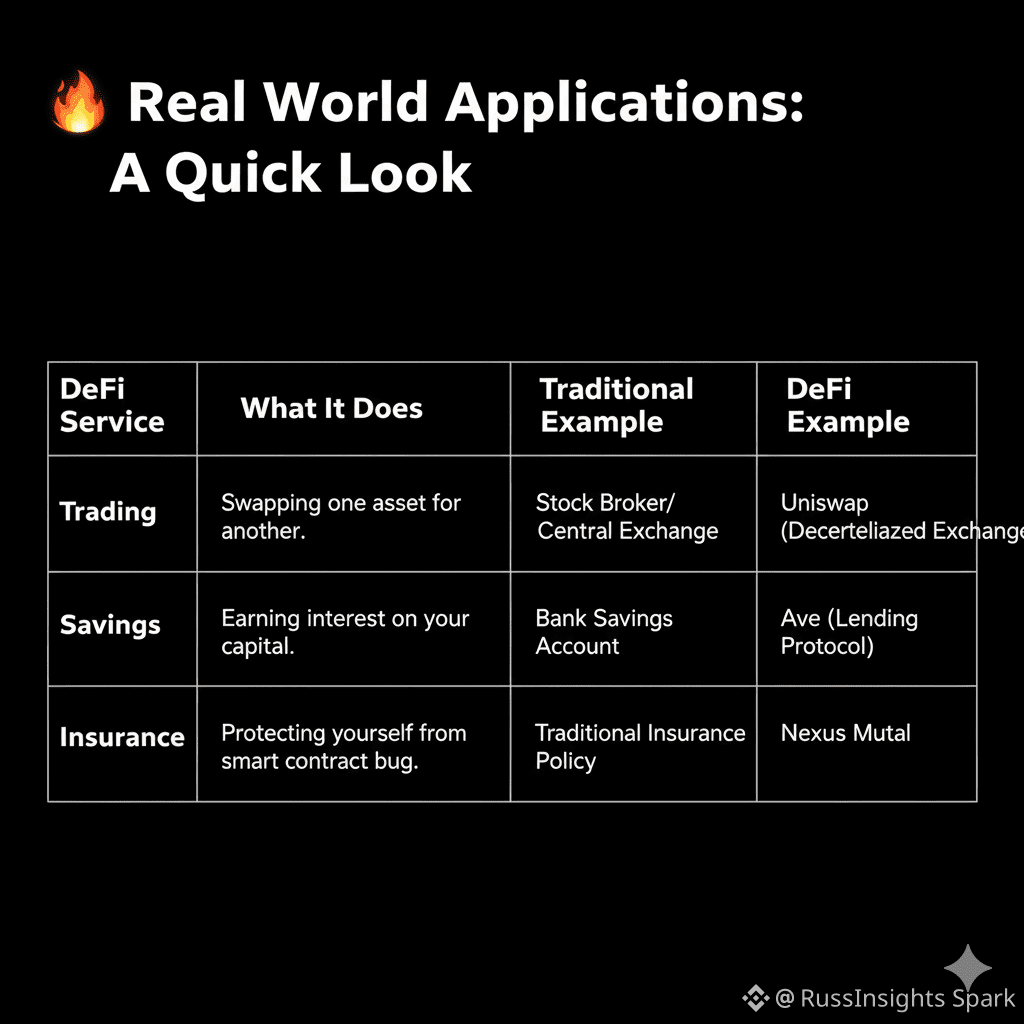
In traditional banking, your bank holds your savings and lends it out. In DeFi, you do this directly using a protocol like Aave or Compound.
How it Works: You put your crypto (ETH, USDC) into a smart contract pool. Borrowers can then borrow from that pool by putting up more collateral than they take (called overcollateralization).
The Result: You earn interest instantly, and the borrower gets liquidity. All managed transparently by code.
Examples: Aave, Compound
2.Staking (Earning Rewards for Security)
Staking is how certain blockchains (like Ethereum) stay secure. Instead of miners securing the network, coin holders lock up or "stake" their coins to validate transactions.
Simple Analogy: Think of staking as a high-interest savings bond where you lock up your coins to help secure the network and receive new coins as a reward for your service.
Example: You can stake ETH to help secure the Ethereum network and earn a regular yield.
3.Liquidity Pools (The New Way to Trade)
If you want to swap one coin for another (e.g: USDC for ETH), you usually need an exchange to match a buyer and seller. DeFi changes this with Liquidity Pools.
What is a Pool? A Liquidity Pool is a giant pile of two different tokens (e.g: ETH and USDC) locked into a Smart Contract.
How it Works: Users called Liquidity Providers (LPs) supply both tokens to the pool and earn a small fee every time someone trades using that pool. This eliminates the need for a third party.
Example: Platforms like Uniswap and PancakeSwap use these pools to allow instant trading directly from your wallet.
🔖Benefits of DeFi
Full control of your moneymoney
No middleman / third party
Transparent transaction
Accessible worldwide
Open 24/7
⚠️️Risks of DeFi
DeFi is powerful, but not risk-free.
Smart contract bugs
Scams and fake projects
Price volatility
👉 Always start small and use trusted platforms.
🛡️ Is DeFi Safe
Yes, if used carefully.
Tips for beginners:
Use popular platforms only
Never share private keys
Start with small amounts
Do your own research (DYOR)
✨ Your DeFi Takeaway
DeFi is all about access, transparency, and automation. By connecting your own secure wallet, you can use these protocols to perform financial actions instantly, 24/7, without permission from any central company. It's the future of financial empowerment!
🔥 Which DeFi function sounds most interesting to you right now: Staking, Lending, or Trading? Let me know below!