


For years, stablecoins were discussed as potential disruptors of global payments. In practice, however, most remained trapped inside crypto trading venues, disconnected from everyday financial life.
RedotPay’s US$107 million Series B changes that narrative, not through promises, but through scale, revenue, and real-world usage.
The round, led by Goodwater Capital with participation from Pantera Capital, Blockchain Capital, Circle Ventures, and continued backing from HSG, brings RedotPay’s total capital raised in 2025 to US$194 million. More importantly, it marks a clear inflection point: stablecoins are no longer infrastructure waiting for adoption, they are already powering global payments.

When Payments Move Faster Than the Narrative
RedotPay’s growth stands out because it has largely happened outside of hype cycles. While much of the crypto ecosystem remains focused on speculative innovation, RedotPay has quietly built a stablecoin-based payments platform used by millions.
As of November 2025, the company supports over 6 million users in more than 100 countries, processes over US$10 billion in annualized payment volume, and generates US$150+ million in annualized revenue. In 2025 alone, more than 3 million new users joined the platform, with payment volumes nearly tripling year-on-year.
These are not pilot numbers. They are indicators of product-market fit at a global scale.
The Real Problem RedotPay Is Solving
For a large portion of the world, the problem is not access to crypto—it is access to reliable money.
In many economies, consumers face inflation-driven savings erosion, capital controls, slow cross-border transfers, and fragile banking infrastructure. RedotPay addresses this by allowing users to store value in assets they trust such as dollar-backed stablecoins, while spending locally without friction.
This design choice fundamentally reframes stablecoins from a trading asset into financial infrastructure.
RedotPay’s product stack reflects this philosophy:
Stablecoin-powered cards that work globally at merchants
Global payouts using stablecoin rails for instant, predictable settlement
Multi-currency access and P2P marketplaces that bridge traditional finance and digital assets seamlessly
By hiding blockchain complexity behind a familiar fintech experience, RedotPay makes stablecoin usage intuitive, even for users who may not consider themselves “crypto users” at all.
Why This Investor Group Matters
The composition of RedotPay’s investor base is as meaningful as the capital itself.
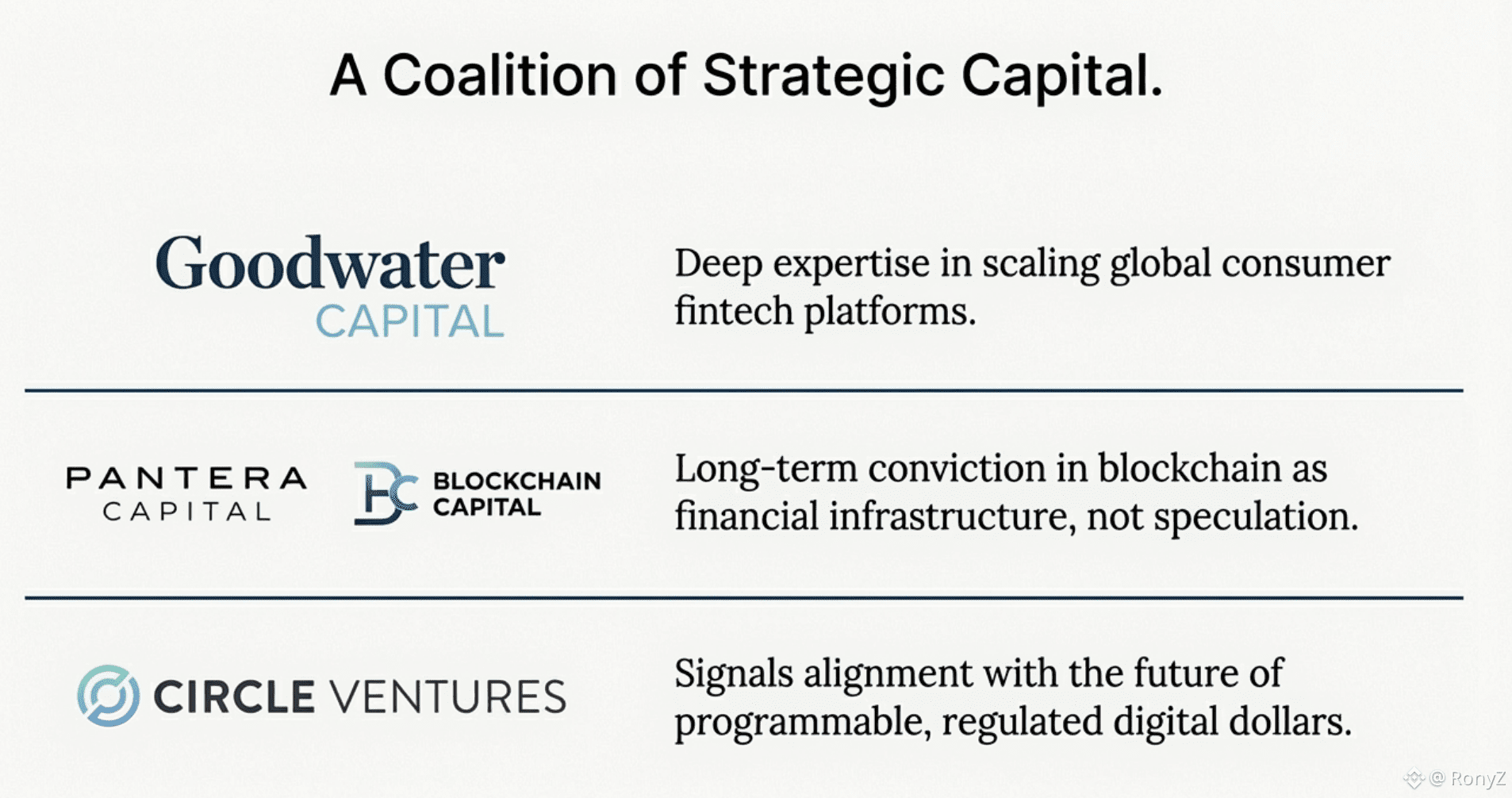
Goodwater Capital brings deep expertise in scaling consumer fintech platforms globally. Pantera Capital and Blockchain Capital represent long-term conviction in blockchain as financial infrastructure, not speculation. Circle Ventures’ participation signals alignment with the future of programmable, regulated digital dollars.
This is not capital chasing a trend. It is capital backing a payments company that already works.
Compliance as a Growth Strategy, Not a Constraint
One of RedotPay’s defining strategic choices is its compliance-first mindset. Rather than treating regulation as an obstacle, the company has positioned licensing, governance, and risk management as prerequisites for scale.
The Series B capital will be deployed to:
Secure licenses and strengthen regulatory engagement in new markets
Expand compliance and risk infrastructure alongside product growth
Pursue strategic acquisitions to deepen payments and wallet capabilities
Scale global engineering and product teams
This approach reflects an understanding that the next phase of crypto adoption will be led not by speed alone, but by trust, resilience, and regulatory credibility.
Stablecoins, Repriced
RedotPay’s trajectory forces a re-evaluation of how stablecoins are valued—not as instruments for yield or liquidity alone, but as payment rails capable of replacing legacy systems.
When millions of users rely on stablecoins for daily spending, savings, and cross-border transfers, the conversation shifts from “crypto adoption” to financial modernization.
In this context, RedotPay is not merely a fintech company using blockchain. It is an early architect of a parallel financial system—one that operates globally, settles instantly, and remains accessible to users regardless of geography.
The Bigger Picture
RedotPay’s US$107M Series B is not a headline about fundraising. It is a signal that the stablecoin payments thesis has crossed a critical threshold.
The question is no longer whether stablecoins can work in real-world finance. The question now is how fast they will scale—and who will lead that scale responsibly.
If current momentum is any indication, RedotPay is positioning itself not just as a participant in that future, but as one of its defining platforms.
