
Note: This article was written against the backdrop of October 2022, as it provides an in-depth analysis of SOL, and the article is of high quality, specially shared with everyone. Author of this article - Weibo: 区块文博 / Twitter @BTCwenbo
The article begins:
After the emergence of Polygon, Ethereum's congestion situation significantly eased, and on-chain transaction fees (Gas) dropped from tens of dollars to a few cents. However, Ethereum's transaction speed remained at around 13-15 transactions per second from its creation until the merger.
After the explosion of NFTs and DeFi, the number of transactions has surged massively, and the market has begun to regard transaction speed as a core indicator of a public chain's strength. Following Ethereum, platforms like Tron, Cardano, and the new Binance Chain (BNB Chain) have pushed public chain transaction speeds to hundreds and thousands of transactions per second.
But a few thousand is not the ceiling. In 2020, the public chain star Solana suddenly emerged, achieving an astonishing transaction speed of 65,000. It was dubbed the 'Ethereum killer'.
01
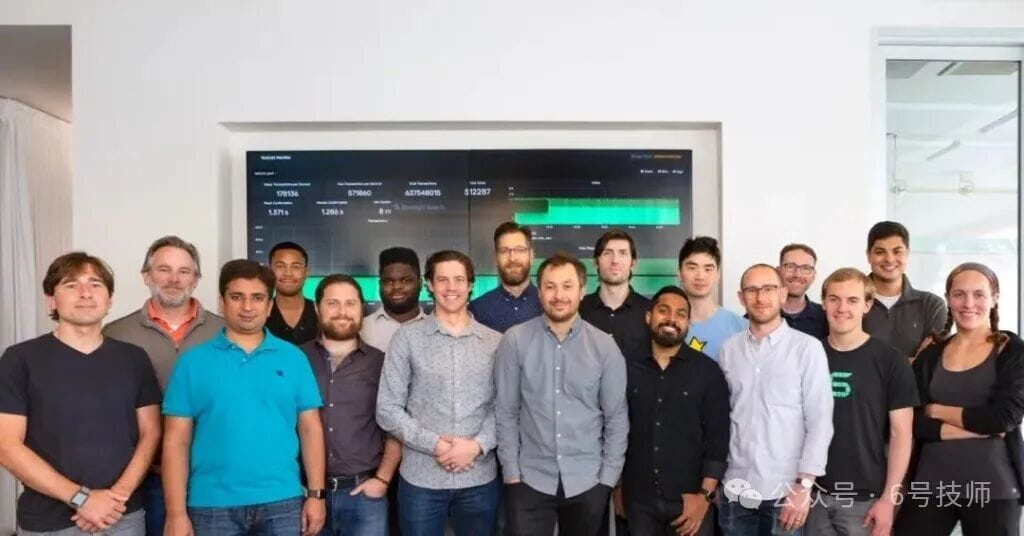 Solana founding team
When introducing the new Binance Chain above, the intelligence department mentioned that 2017 was the bull market for cryptocurrencies. The great success of Ethereum not only attracted many enthusiasts to invest in blockchain but also drew numerous tech giants into the blockchain field.
Among these tech giants are Qualcomm's senior manager Anatoly Yakovenko and his two colleagues. Qualcomm is the American company that designs mobile chips.
These three founders, along with a group of technical talents from tech giants like Apple, Google, and Intel, came together and decided to create a public chain that is fast, secure, and decentralized.
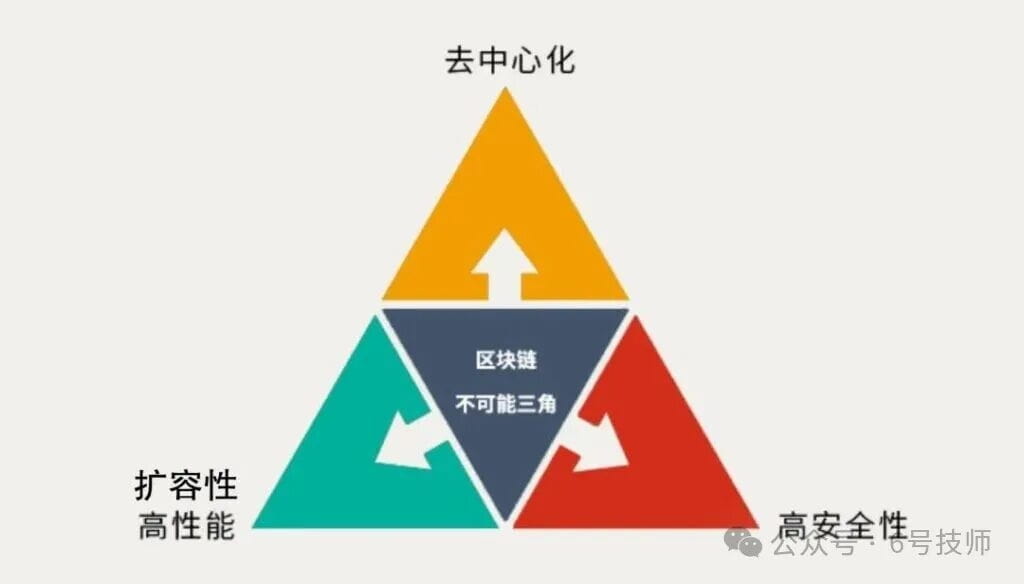
Creating such a public chain is not easy. Ethereum founder Vitalik Buterin once proposed the impossible triangle of blockchain. The three corners are decentralization, security, and scalability. The meaning of 'impossible' is that blockchain projects can only take care of two corners.
To achieve decentralization and security, scalability will be reduced, and transaction speeds will slow down, like Bitcoin. To achieve scalability and security, the decentralization of transactions will be weakened, like Binance Chain.
The Solana development team believes that the claim of impossibility is due to issues with the consensus mechanism. The existing consensus mechanisms are slow because after a block is created, the nodes packaging the block will broadcast to surrounding nodes, which will verify whether it is the latest block. As the number of nodes increases, the number of nodes that need to broadcast overall will also increase, and most of the time is spent on nodes broadcasting to each other.
So can we establish a global clock on the chain, selecting a large node specifically to timestamp transaction information, allowing everyone to pack and sort blocks according to the chronological order? This way, nodes will no longer need to broadcast, significantly reducing time, and decentralization and security will not be compromised.
This is Solana's unique Proof of History (PoH).
To give an inappropriate example, the old consensus mechanisms were like ancient people spreading news; by the time everyone knew, several days had passed. The Proof of History consensus mechanism is like a shared social circle, where everyone's messages are sorted chronologically from top to bottom, allowing everyone to instantly know what has happened.
Compared with consensus mechanisms like Proof of Work and Proof of Stake, Solana's transaction speed is remarkably fast. During the mainnet test, Solana's transaction speed reached 50,000 per second, and peak speeds even reached 110,000 per second. Alipay's peak transaction speed during the 2015 Double Eleven was only 80,000.
From the data on paper, this chain has indeed solved the triangle problem. Solana is not content to be called a 'third-generation blockchain' alongside Cardano and directly calls itself a 'fourth-generation blockchain'.
However, in the bull market environment at that time, Solana, which was just a white paper without products, did not attract much attention among more than 10,000 cryptocurrencies.
02
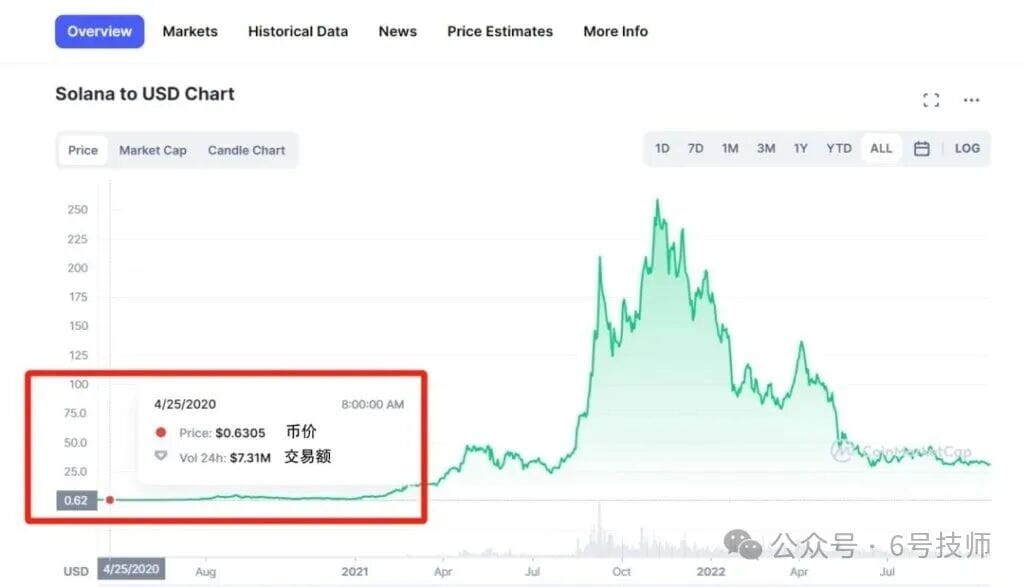
The price of SOL tokens experienced a long period of silence, image source Coinmarketcap
In 2020, the Solana mainnet officially went live. However, it was still not very popular, and its issued token SOL hovered around $0.6.
Until Solana met its benefactor, SBF (Sam Bankman Fried), the founder of the exchange FTX.
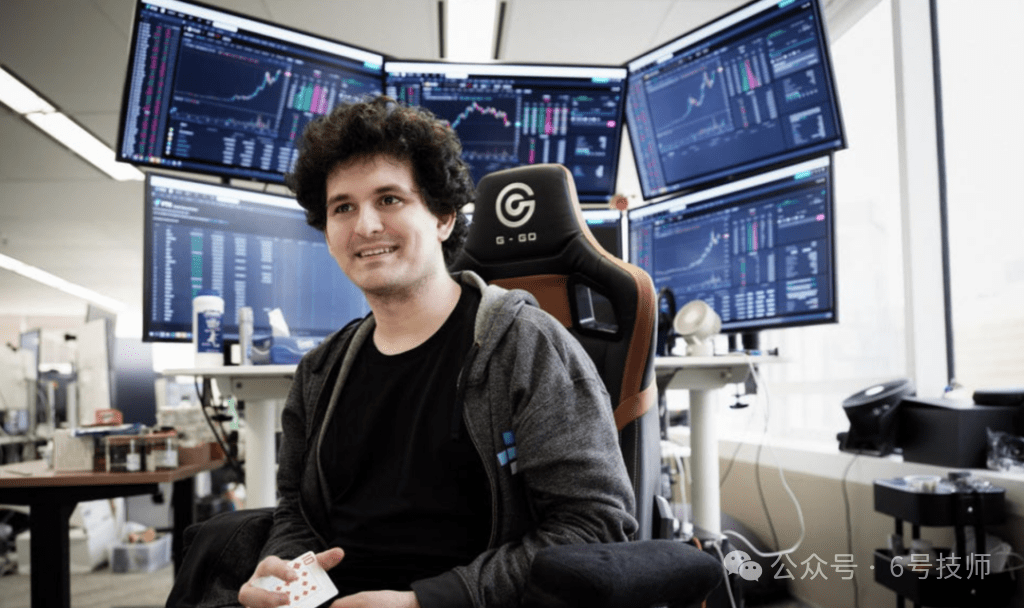
This MIT graduate (the Tsinghua of the United States) was worth billions at the age of 29 and ranked second among the wealthy in the cryptocurrency world published by Forbes, known as a genius trader. He immediately recognized the potential of the Solana project.
In July 2020, FTX announced that it would use Solana as the underlying public chain to build its own decentralized exchange. This announcement was akin to Elon Musk tweeting about Dogecoin, garnering attention from both within and outside the cryptocurrency community, and upon a closer look, it turned out that this project had a solid foundation! Thus, many people jumped in.
In just one month, the price of SOL surged from $1 to $2.7, an increase of 170%.
Later, SBF continued to praise Solana, even specifically mentioning it at the global blockchain conference in 2021.
This has attracted more developers to join. In November 2020, Solana held its first hackathon, with 1,000 registered developers. By the third hackathon, the number of registrations had directly exceeded 13,000, and today the applications on Solana have surpassed 1,300, forming a stable ecosystem.
In June last year, Solana successfully obtained $314 million in investments. After that, Solana skyrocketed, and the price of SOL quickly surged to $200. From August to September last year, the market cap increased by over 460%, breaking into the top ten cryptocurrency market caps.
03
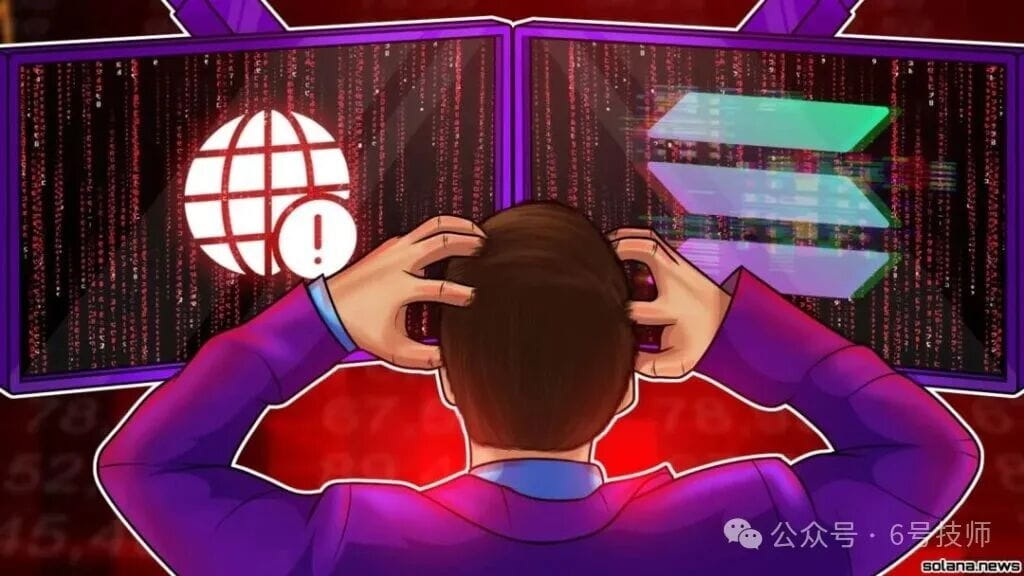
However, this rapidly rising public chain soon faced a 'cooling down'.
In September last year, just when the market cap was about to rise, Solana experienced an outage due to nodes stopping their services. All applications, browsers, and supporting systems on the chain were unresponsive. The downtime lasted for 18 hours.
This was the first time a blockchain experienced a complete outage. Some users questioned whether Solana was truly a decentralized public chain, but it did not attract much attention, and the price still maintained around $165.
As a result, in January this year, Solana experienced a second interruption. Within less than 30 days between April and May, Solana crashed twice. Users joked that Solana was either crashing or on the way to crash.
However, more users found that during previous outages, while both suffered from DDoS distributed attacks, Ethereum was unaffected, whereas Solana experienced a 5-hour interruption. This raised questions about whether Solana's nodes are more susceptible to attacks.
Such doubts have grown larger against the backdrop of the cryptocurrency bear market, and the price of SOL tokens directly halved to $45 during May to June this year.
However, in reality, according to an outage event in May, blockchain organization ViaBTC analyzed that unlike Ethereum's underlying design, Solana users cannot pay extra to have their transactions prioritized. Therefore, when significant arbitrage opportunities arise (like buying and selling NFTs), some users will use arbitrage bots to send transactions to ensure their transactions are prioritized, similar to using a bot to grab train tickets during the Spring Festival. A large influx of transactions led to the Solana network crashing. It is reported that the peak number of transactions before the network crash reached 6 million per second, far exceeding Solana's capabilities.
This flaw in the underlying design also explains why Solana experiences a complete outage when it crashes. After the outage incident, the Solana development team stated that they are introducing a Gas fee mechanism similar to Ethereum and building a new fee system.
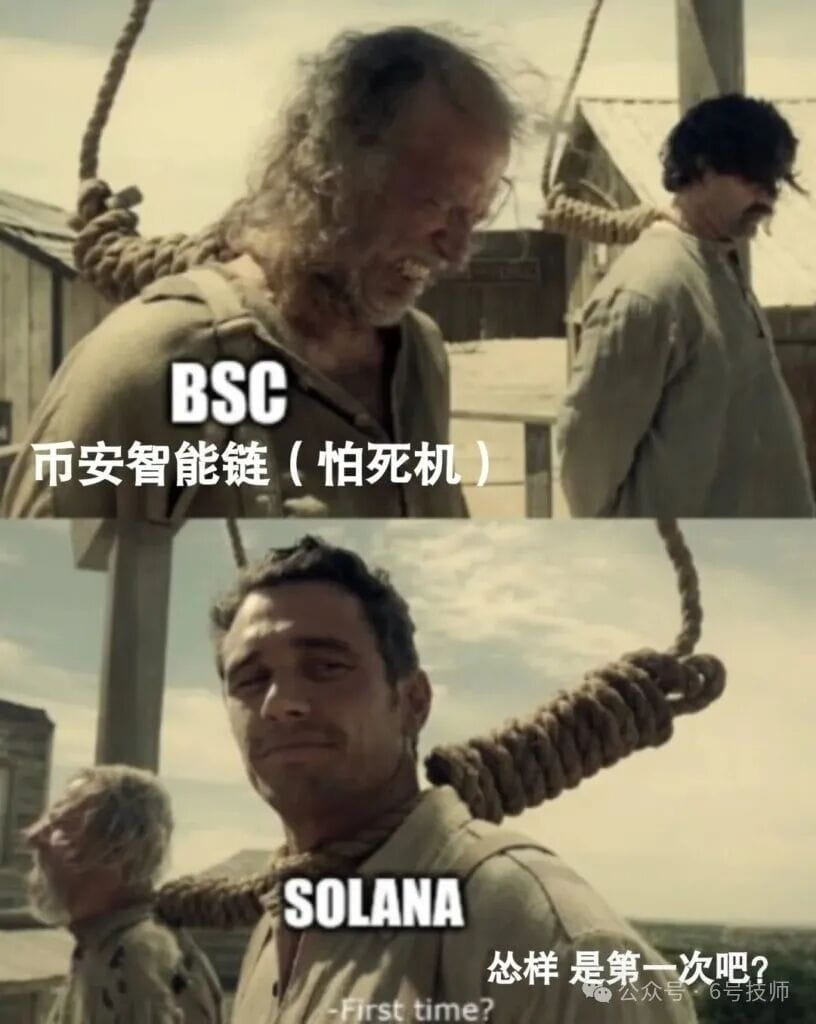
After the truth was revealed, the price of SOL remained stable in June. Users even began to play with memes, comforting users of Binance Chain during its downtime.
04
In this way, amidst the jokes in the cryptocurrency community and the ups and downs of outages, Solana gradually built its own ecosystem.
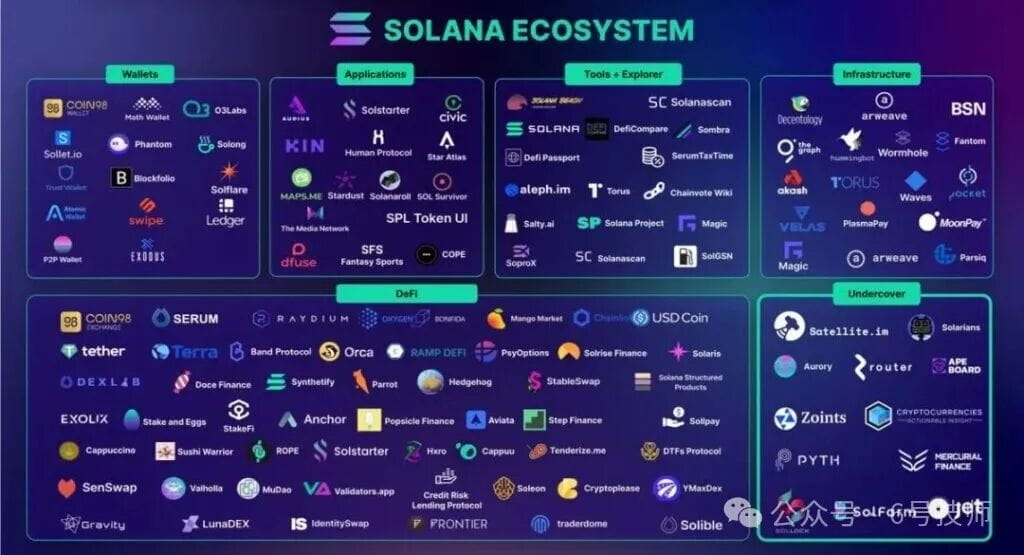
According to DappRadar data, the number of applications on the Solana chain has surpassed 1,300. In the nearly two years of the new emerging public chains, this development speed is actually quite fast. The directions of these applications are mainly concentrated in DeFi and NFT. Here, I will share some interesting insights.
In the DeFi sector, it is essential to mention Serum. This is not only FTX's first decentralized exchange built on Solana but also Solana's first decentralized exchange. With the built-in on-chain order book feature, transaction confirmation only takes 0.4 seconds, and transaction fees are only $0.0001, nearly free. Currently, the locked amount in this application is $65 million.
In derivatives trading, Solana launched Mango Market. This is a decentralized margin trading platform. Users on the platform can get up to 5 times leverage, and even earn interest on deposits and margins. However, recently this application was attacked by hackers, resulting in a loss of $100 million.
In the NFT sector, in addition to NFT games and metaverse NFT platforms, Solana has also launched a relatively complete NFT market, including one named Solsea, which is very similar to Opensea. To visually showcase artworks, Solsea's biggest feature is the creation of virtual exhibition halls for artworks, allowing buyers to appreciate the artworks more intuitively. Not only is the transaction speed fast, but the platform's transaction commission is also capped at only 2%.
Conclusion
Now Solana's transaction speed has dropped to 3000
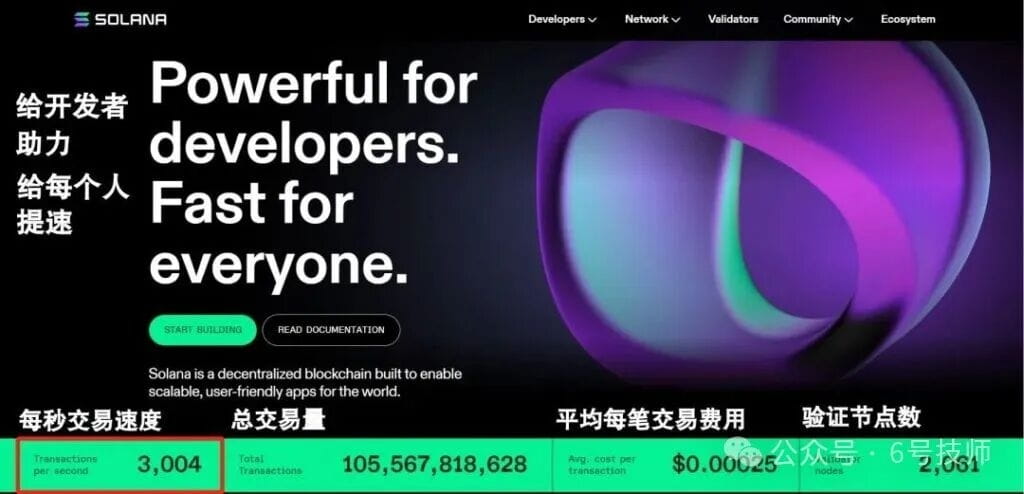
Although Solana has encountered many bumps along the way, technically receiving a lot of criticism, no one denies that Solana has indeed brought significant surprises to the blockchain. When the new public chain dark horse Aptos appeared this year, some viewed it as the next Solana, which indirectly proves Solana's status.
As for whether Solana can achieve further significant development after the bear market, the intelligence department expressed expectations. However, before that, it should properly resolve the issues of outages and security.
Follow me to learn more cryptocurrency insights. Having been through the rain, I am willing to hold an umbrella for the investors! I am B Circle Life, follow me, and let’s walk together on the cryptocurrency journey! Don’t forget to like and share!


